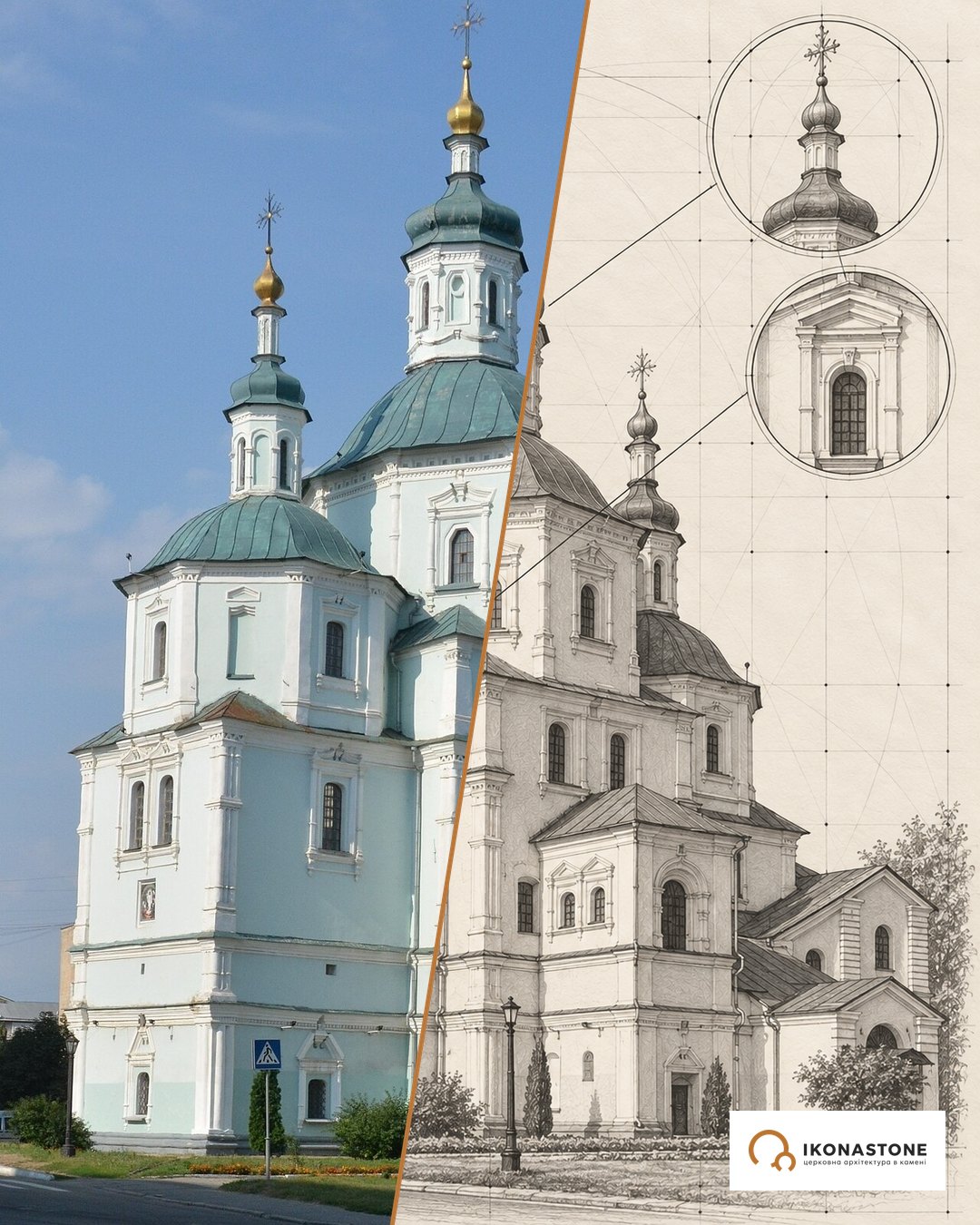
The Transfiguration Church in Velyki Sorochyntsi: a hetman's burial church with nine tops
In the local tier of the Sorochyntsi iconostasis, St Uliana and the Prophet Daniel have the faces of the donors: Hetman Danylo Apostol and his wife Uliana. The founder looks at his church from the iconostasis and rests beneath it, in the crypt.
In brief
| Address | 1 Leheidy Street, Velyki Sorochyntsi village, Myrhorod District, Poltava Oblast |
| Built | 1718–1725; consecrated 1732 |
| Founder | Myrhorod colonel, later hetman Danylo Apostol |
| Type | nine-part cruciform church; originally nine-domed, five-domed after 1811; Baroque with features of the transitional stage from the Ukrainian Renaissance |
| Material | ordinary and moulded brick; walls rendered and whitewashed |
| Status | architectural monument of national importance; burial church of the Apostol family |
History
The church stands in the centre of the village, on the high right bank of the Psel, and is still its main vertical accent. In 1718 the Myrhorod colonel Danylo Apostol began building it, conceiving it as a family burial place. According to the Great Ukrainian Encyclopedia, the building was essentially completed in 1725 and consecrated in 1732, by which time Apostol was hetman, with his participation.
Two years later, in 1734, the hetman was buried in the crypt beneath the church. Next to him were laid his son Pavlo, colonel of Myrhorod (died 1736), and his wife Uliana of the Iskrytskyi family (died 1742). Tourist guides also mention the hetman’s daughters among those buried here.
In the early 1730s, around 1730–1732, the Poltava workshop of the icon painter Vasyl Reklinskyi made a seven-tier iconostasis for the church. According to an art-historical essay on ebk.net.ua, the iconostases were made in Poltava and assembled on site without the master’s participation; the same workshop worked for St Nicholas Cathedral in Nizhyn in 1734. In fact these are three iconostases, each with its own Royal Doors. The Great Ukrainian Encyclopedia gives the width as 23 m, other sources as 22 or 20 m. Originally there were 125 icons; according to the guide “100 Great Wonders of Ukraine”, 114 have survived.
On 3 April 1809 Mykola Gogol, who was born in Velyki Sorochyntsi, was baptised in this church.
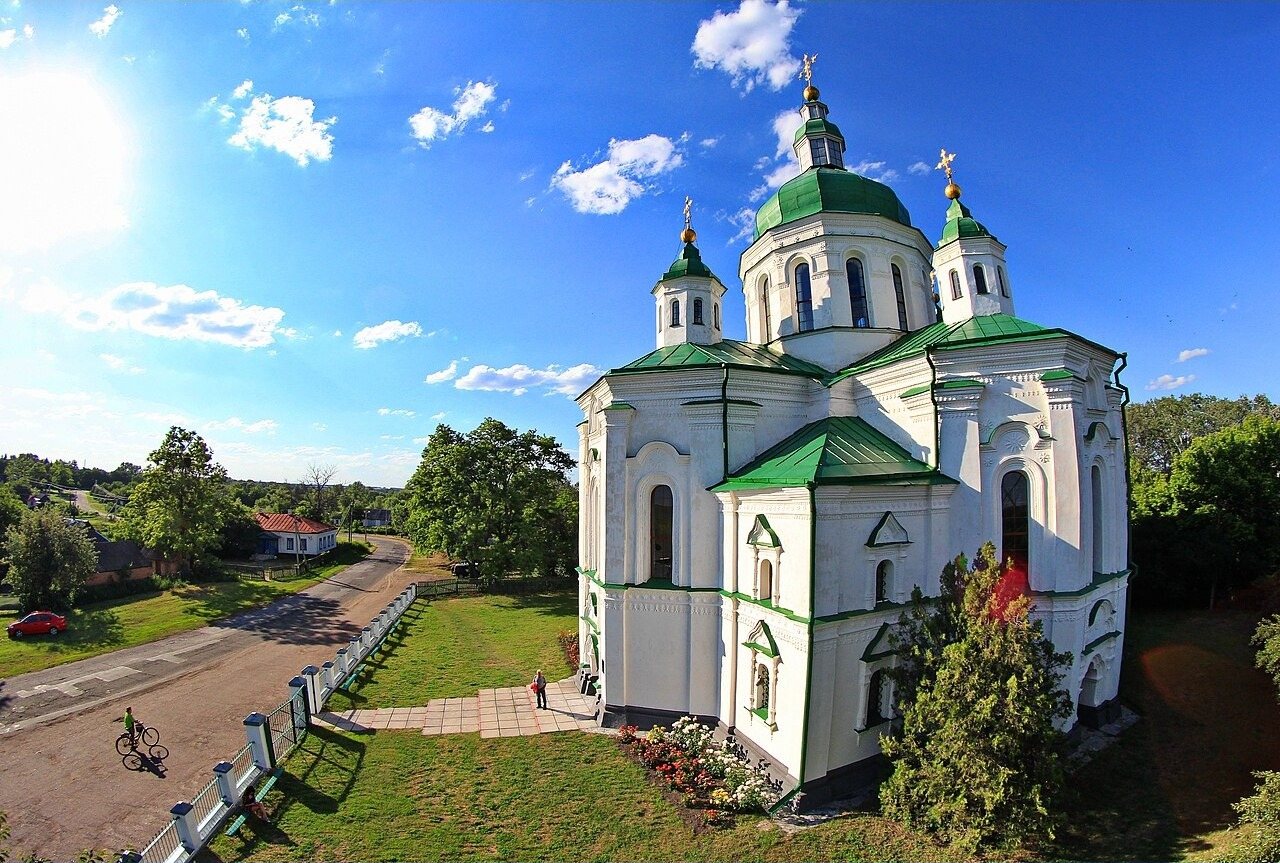
In 1811 the church survived a fire. Afterwards the domes over the volumes between the arms were never restored, and the nine-domed church became five-domed. In 1867 a wooden bell tower was built nearby. At the end of the 19th century, besides the main altar of the Transfiguration of the Lord, there were two side altars, of the Holy Trinity and of the Protection of the Mother of God; each had its own iconostasis.
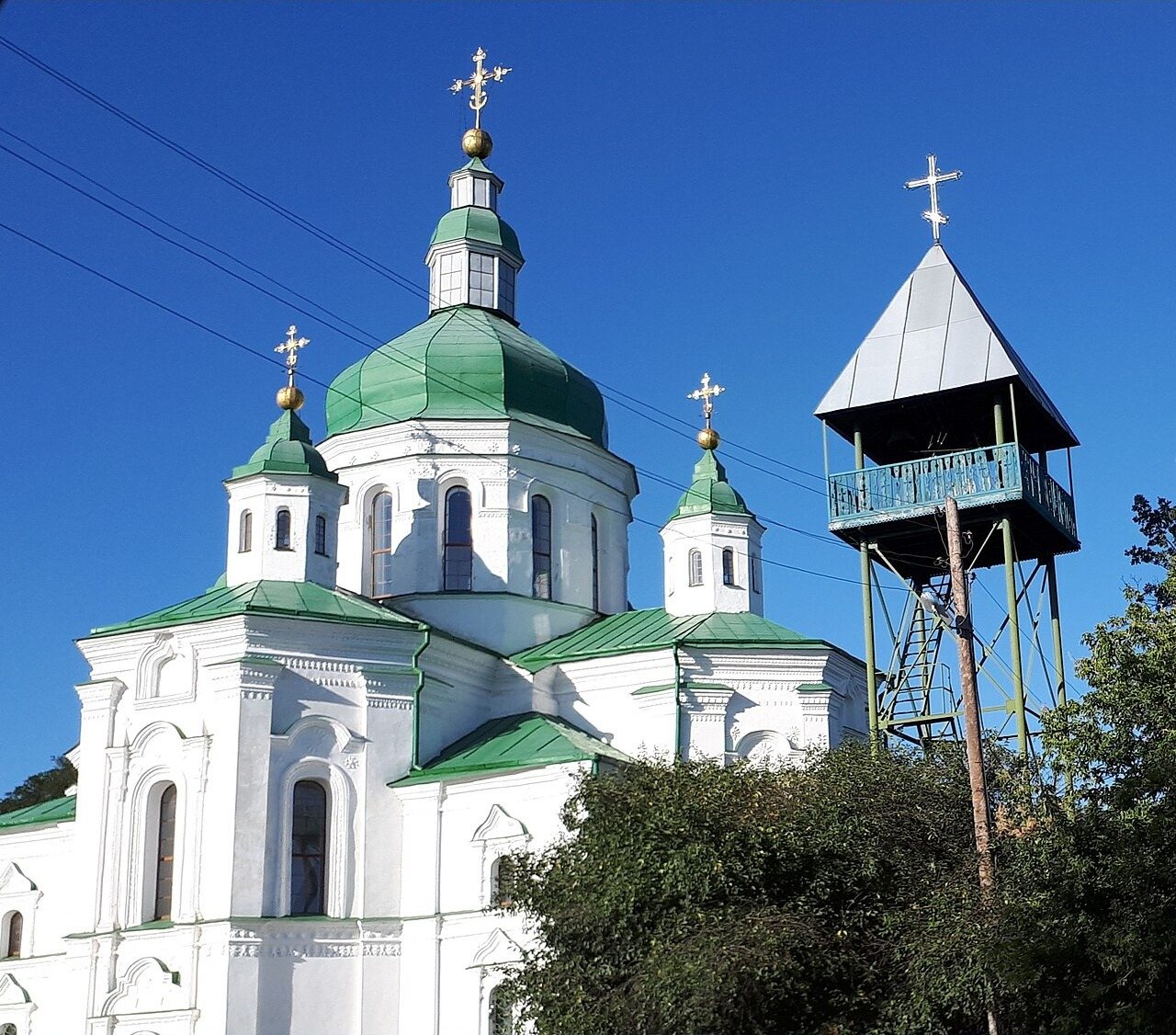
In 1937 the church was closed and the bell tower destroyed. In 1941 the German occupation authorities allowed services to resume, and in 1960 the Soviet authorities banned them again. During the war the church was damaged and lost the tops of its domes. Restoration lasted a long time, from 1964 to 1988, and the iconostasis was restored by conservators in the 1980s–1990s. In 1992 the church was returned to the Orthodox community, and in 1996 a new bell tower on a metal frame appeared nearby.
Architecture
The Great Ukrainian Encyclopedia calls the Sorochyntsi church the only masonry church in Ukraine with a cruciform nine-domed composition known to architectural historians. The plan is cruciform and nine-part: the arms of the cross are faceted, and square two-storey volumes are inserted between them. Originally each of the nine parts had its own top.
The centre of the church is a twelve-sided drum carrying a vault 26 m high, crowned by a tiered Baroque dome with a lantern. The transition from the square base to the twelve-sided drum is made through pendentives and two-tier squinches. The arms are covered by truncated octagonal vaults with small light drums. In the interior, the transverse arches are braced with iron tie rods.
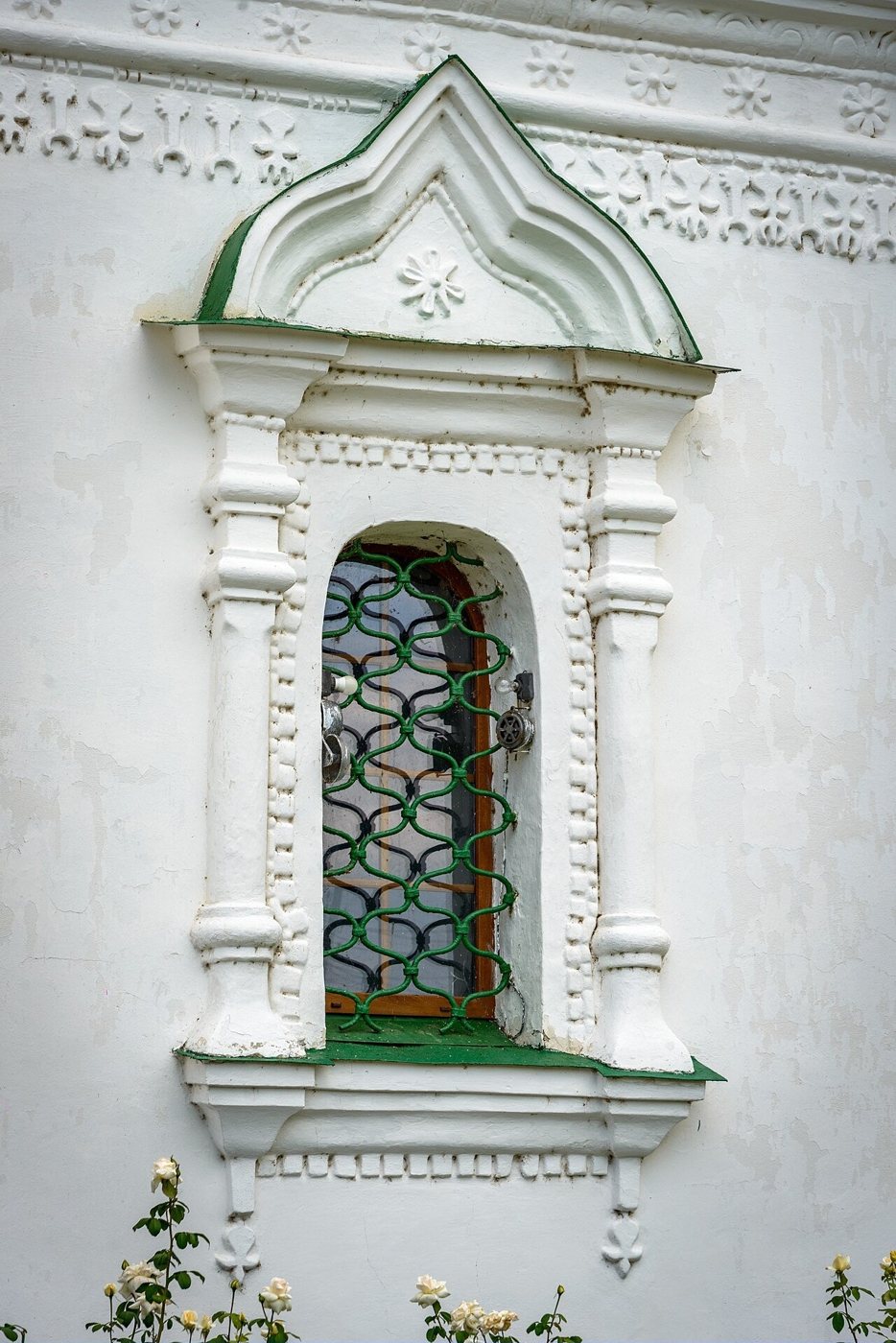
A frieze divides the facades into two tiers, and pilasters accentuate the edges of the facets. The three portals have trefoil arches; the western one is the most richly decorated. The windows are topped by ogee-shaped hood moulds, a detail which, researchers suppose, points to the participation of a master from the Tsardom of Muscovy. The roofs and domes are covered with roofing steel over wooden rafters.
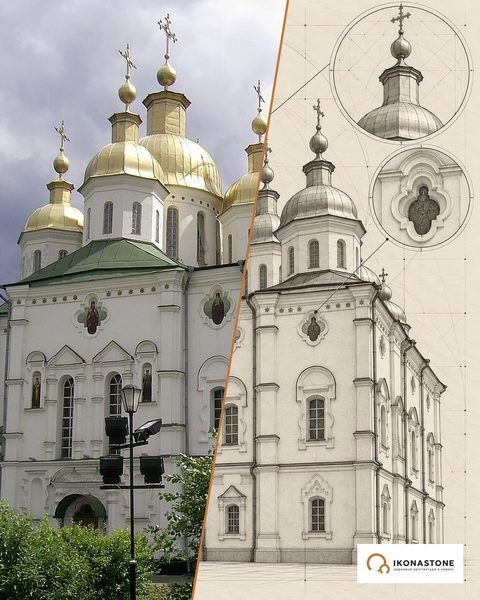
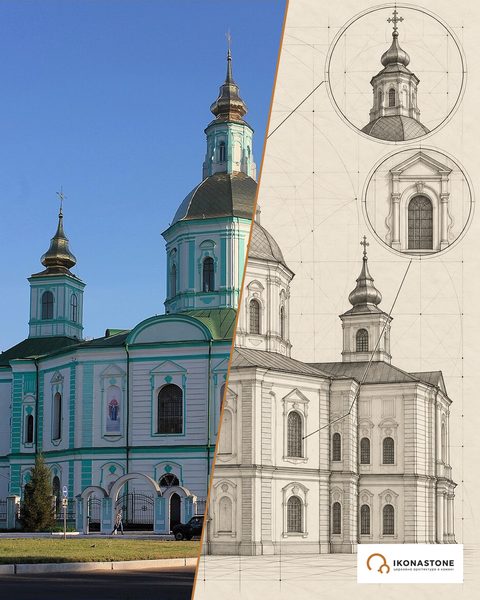
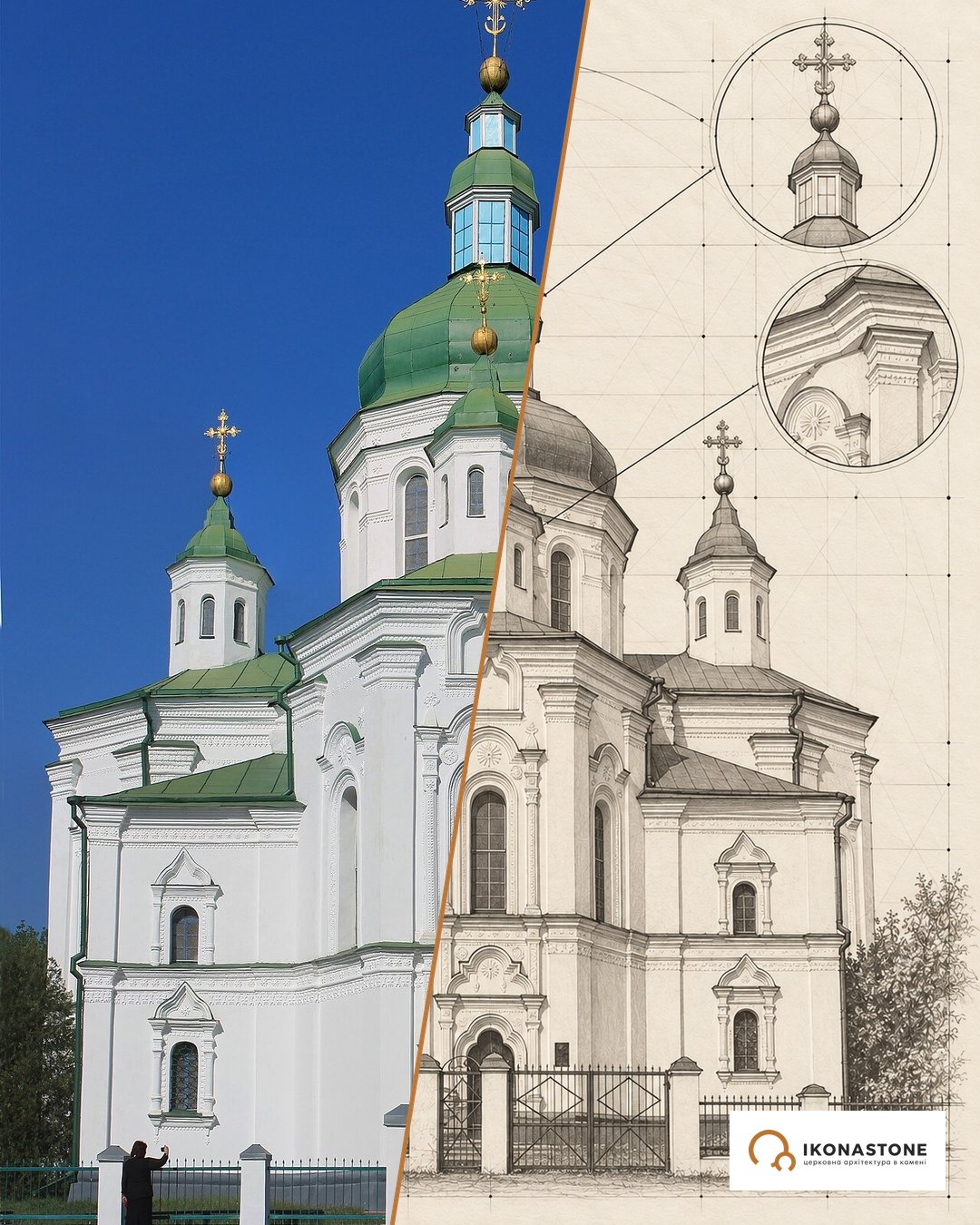
Below are two elements of the church: in a photo and in a drawing. The drawings show the form, not exact dimensions.
The central dome with a lantern
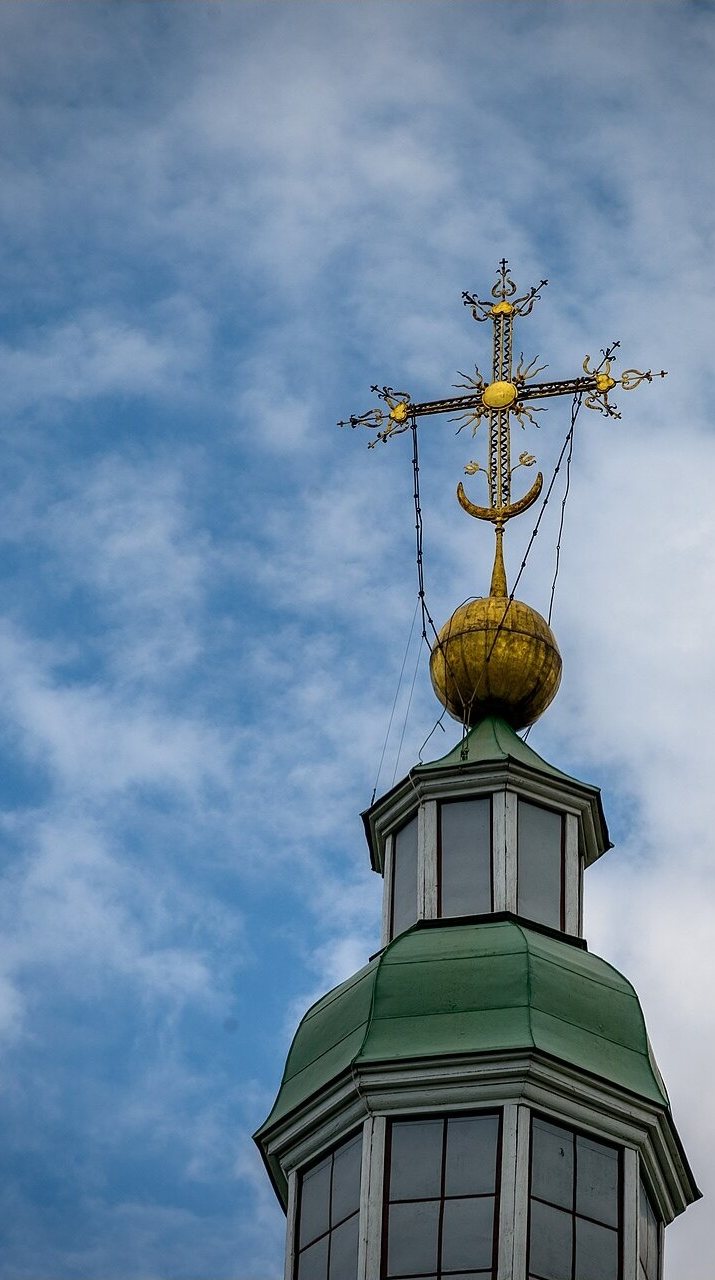
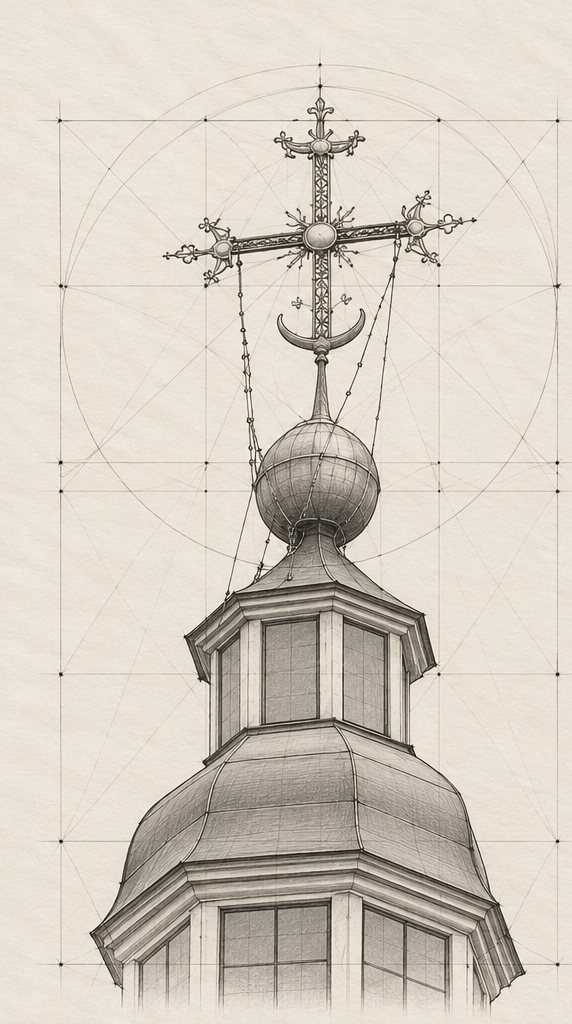
The tiered Baroque dome with a lantern stands on a twelve-sided drum. Beneath it is a vault 26 m high.
The western portal
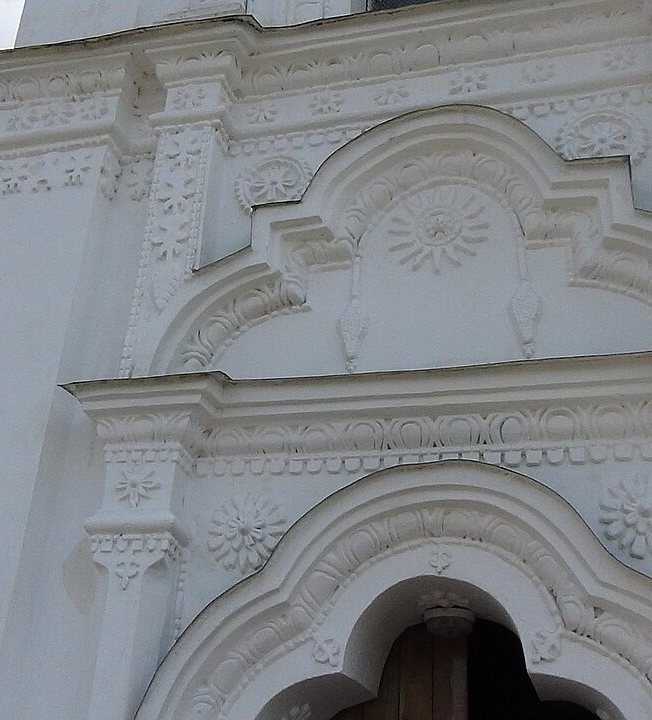
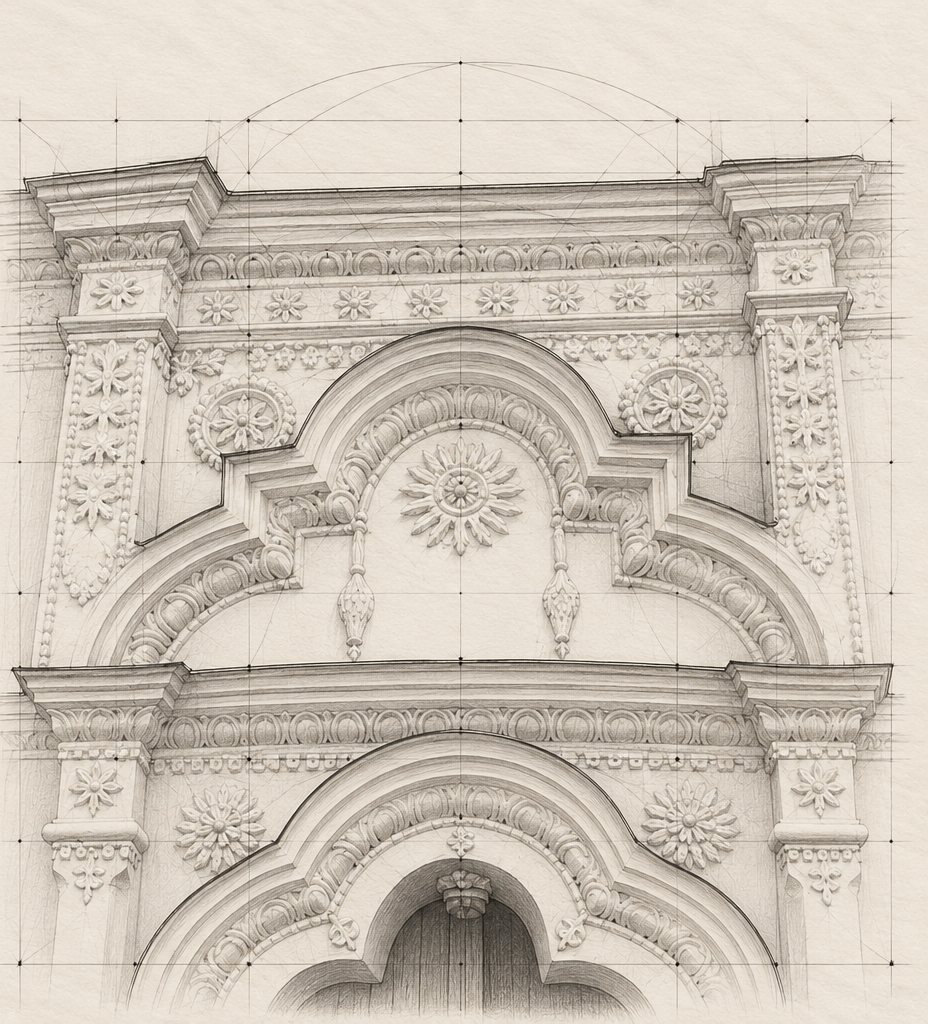
All three portals of the church have trefoil arches, but the western one is the most richly decorated. According to castles.com.ua, the volume “Monuments of Urban Planning and Architecture of the Ukrainian SSR” compares the portals to triumphal arches.
Details that are easy to miss
Portraits in the local tier. The Great Ukrainian Encyclopedia singles out the icons of the local tier for the highest craftsmanship, among them the images of St Uliana and the Prophet Daniel bearing a portrait likeness to the donors. That is where to look for the hetman and his wife.
Nine domes, of which five remain. The fire of 1811 changed the silhouette for good: the four domes over the corner volumes were never restored. Today’s five-domed church is only an echo of Apostol’s design.
The iconostasis that survived. In a 2003 radio discussion the art historian Liudmyla Miliaieva called it the only complete iconostasis in the Poltava region to have survived. Similar ones, she said, were lost, including the one at the Vydubychi Monastery, whose commission is linked to Apostol’s wife. As early as 1918 the artist Opanas Slastion warned that the iconostasis was in a critical condition.
The dispute over the Mother of God “with heart-shaped lips”. The art historian Dmytro Horbachov believed that some of the icons may have appeared not in the 1730s but in the 1740s, and saw Rococo influence in them; he referred to Stepan Taranushenko, who noticed echoes of Boucher. Miliaieva disagreed with some of his attributions. The dispute remains open.
A restoration that suffocated the icons. After the icons returned from Kyiv, where they had been restored for about twenty years, participants in the same 2003 discussion complained that during restoration the church had been “sealed up”, deprived of natural ventilation, and the paint began to flake. Wooden icons need air no less than light.
A prophet in a turban. Daniel in the local tier is painted in an Eastern turban and a light zhupan embroidered with flowers, holding a scroll and a stone; Iuliania wears a golden embroidered robe, a green skirt and a red cloak. Still, not all researchers believe in the portrait likeness: in the early 1730s the hetman and his wife were no longer young, and the known portraits of Apostol do not resemble the youthful prophet.
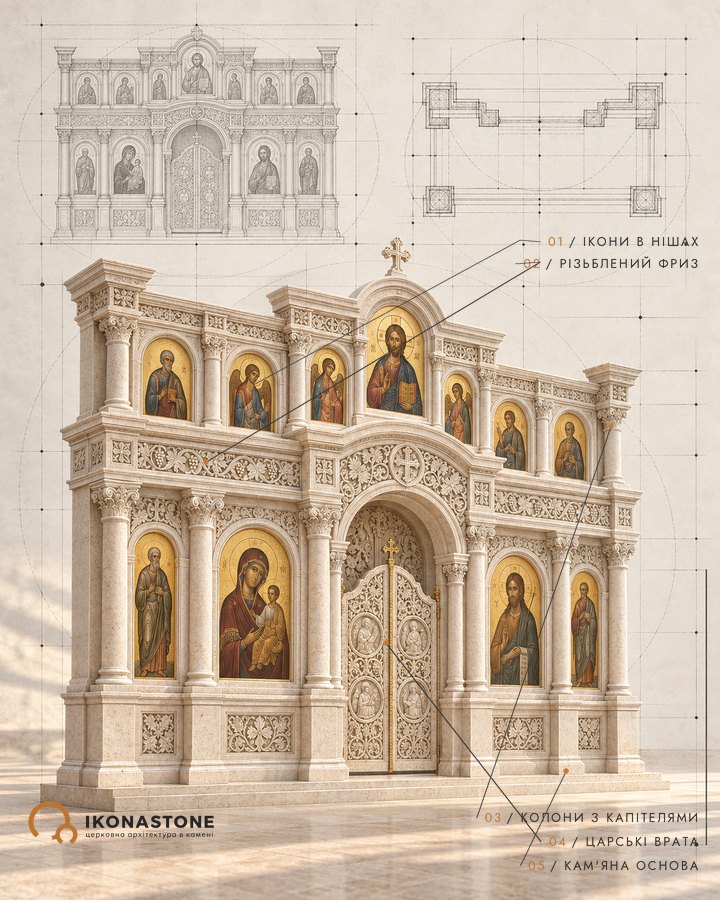
Sunflowers in the carving. The gilded carving of the iconostasis combines Western European acanthus and bunches of grapes with Ukrainian poppies, cornflowers and sunflowers. Above it all are wooden sculptures around a double-headed eagle.
A conversation in the Deesis. On the right-hand iconostasis the Deesis is unusual: Christ has turned towards the Mother of God, and they seem to be talking. Before the Second World War the iconostasis was sent for restoration to the Kyiv Pechersk Lavra, which, according to the guide, is what saved it.
Underground passages: a story. A local priest, according to the travel site castles.com.ua, said that the church had been a fortress with underground passages to the Psel. The author herself calls these the usual legends about underground passages; there is no confirmation of this version.
Iron in the arches. The transverse arches are braced with iron tie rods, an engineering solution that is easy to mistake for a later patch, although the Great Ukrainian Encyclopedia lists it among the church’s structural materials.
Photo gallery
Stone and material
The church was built of two kinds of brick: ordinary and standardised moulded brick, from which the cornices and surrounds were formed. The walls were rendered and whitewashed inside and out. The decoration (rosettes, lilies, trefoils, beads, egg-and-dart) was carved into the damp render: the craftsman had to work quickly, before the layer set, and every movement of the chisel remained for ever.
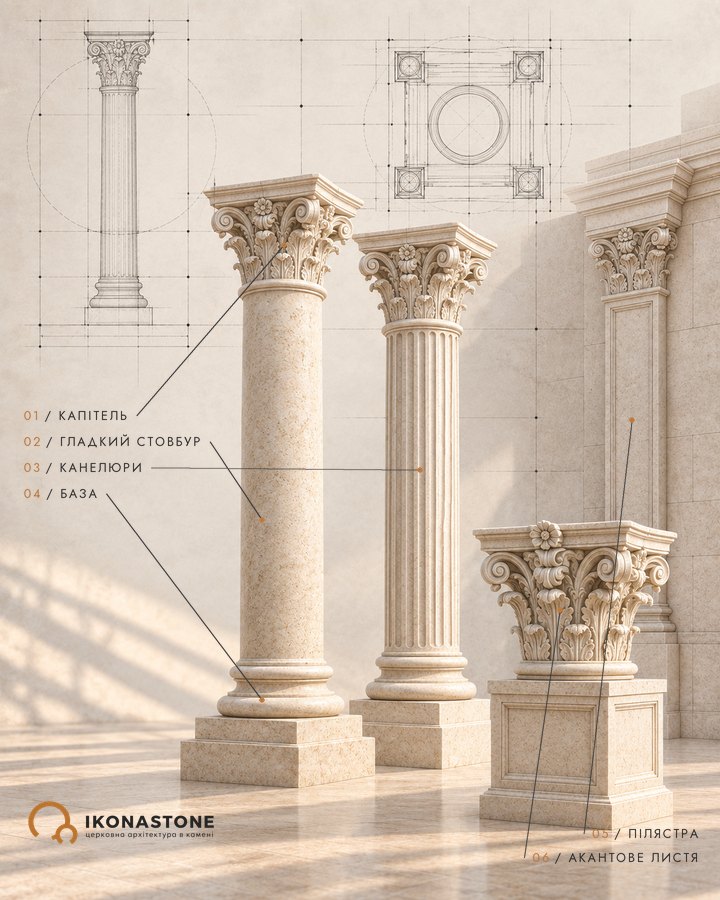
This is the same logic every stone carver knows: a material has a moment when it still yields and a moment when it no longer does. Render allows a certain amount of time for this, but stone is different: what the chisel removes cannot be put back. That is why decisions about profile and relief are made before the first blow, not during the work. Columns, pilasters and capitals are designed the same way.
Another Baroque church of the Poltava region is the Holy Cross Exaltation Cathedral in Poltava. How a multi-tiered sanctuary screen is arranged is explained in our articles the tiers of the iconostasis and the Ukrainian iconostasis.
FAQ
Who built the church in Velyki Sorochyntsi?
The founder was the Myrhorod colonel and later hetman Danylo Apostol. Construction began in 1718, the building was essentially completed in 1725, and it was consecrated in 1732 with Apostol himself taking part.
Is Hetman Danylo Apostol buried in the church?
Yes. The church was conceived as a family burial place. In 1734 the hetman was buried in the crypt, followed later by his son Pavlo (died 1736) and his wife Uliana (died 1742).
Why is the church called nine-domed if it has five domes?
Originally the church had nine tops. After the fire of 1811 the domes over the volumes between the arms were not restored, and the church became five-domed.
What is special about the iconostasis?
It was made in the early 1730s by the Poltava workshop of the icon painter Vasyl Reklinskyi. The iconostasis has seven tiers and fills the entire width of the church (23 m according to the Great Ukrainian Encyclopedia, 22 or 20 m according to other sources). It unites the main iconostasis and two side ones with more than a hundred icons.
Is it true that Gogol was baptised here?
Yes. According to the Great Ukrainian Encyclopedia, Mykola Gogol, who was born in Velyki Sorochyntsi, was baptised in this church in 1809.
Sources
- ВУЕ: Спасо-Преображенська церква у Великих Сорочинцях
- Радіо Свобода: «Про і контра» — іконостас у Великих Сорочинцях (2003)
- Travels.in.ua: Преображенська церква, Великі Сорочинці
- ebk.net.ua: Іконостас Спасо-Преображенської церкви у Великих Сорочинцях
- 100 великих чудес України: Церква у Великих Сорочинцях
- Castles.com.ua: Великі Сорочинці
- Encyclopedia of Ukraine: Velyki Sorochyntsi
- Town
- Velyki Sorochyntsi village, Poltava Oblast
- Built
- 1718–1725, consecrated 1732
- Type
- nine-part cruciform church, originally nine-domed, now five-domed; Baroque
- Material
- ordinary and moulded brick, render, whitewash
- Research depth
- 16%