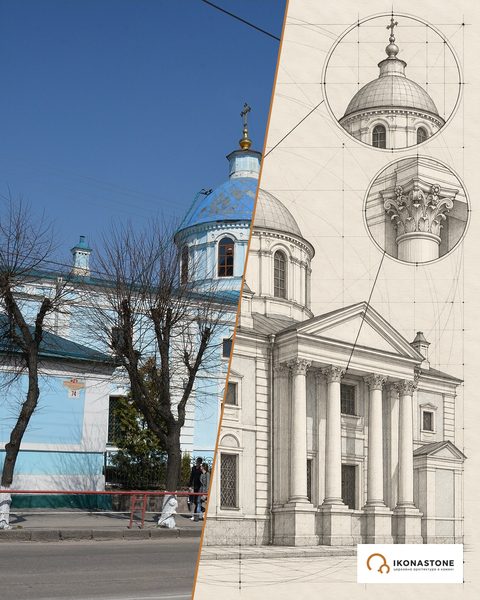
The Transfiguration Cathedral in Odesa: a church built twice
The city lost this cathedral twice. The first time was in 1936, when the bell tower was blown up so that, as it fell, it would bury the church beneath it. The second was on a July night in 2023, when a missile struck the sanctuary of the reconstructed cathedral.
In brief
| Address | 3 Soborna Square, Odesa |
| Built | 1795–1809 (consecrated in 1808 or 1809); rebuilt until 1903; destroyed in 1936; reconstructed in 1999–2010 |
| Type | single-domed cathedral, cruciform in plan, with a refectory and a bell tower; Classicism |
| Dimensions | about 90 × 45 m in plan; bell tower 72 m (according to other sources, 77 m to the cross) |
| Material | masonry; marble and artificial marble in the interior |
| Status | part of the Historic Centre of Odesa, a UNESCO World Heritage Site (since January 2023) |
History
The site for the church was blessed in 1794, when Odesa itself was being founded; the first stone was laid about a year later. The original design was drawn up by the engineer V. Vanrezant, and from 1798 the construction was continued by the Italian Francesco Frapolli. At first the church was dedicated to St Nicholas. It was consecrated as the Transfiguration Cathedral in 1808; according to other sources, on 25 May 1809.
From then on the cathedral grew together with the city. In 1827–1837 a bell tower was added to a design by Frapolli and Giorgio Torricelli, and in the 1840s a refectory designed by D. Heidenreich, which joined the bell tower to the old church. The last major rebuilding, in 1900–1903, cost the city treasury 220,000 roubles and made the cathedral one of the largest churches in the empire. St Innocent of Kherson and Prince Mikhail Vorontsov with his wife were buried here; its chief holy object was the Kasperivka Icon of the Mother of God.
In 1936 the cathedral was destroyed. According to RISU, the explosions went on for three days: the bell tower was blown up, and its fall brought down the walls. The Vorontsov crypt was desecrated.
In 1996 the foundation was excavated. On 23 April 1999 the Cabinet of Ministers included the cathedral in the programme for recreating lost monuments, and on 5 September of the same year the start of construction was blessed. The money was raised from donations. In January 2005 the lower church was consecrated, in November the remains of the Vorontsovs were returned to the crypt, and in July 2010 the cathedral was solemnly consecrated.
On the night of 23 July 2023 a Russian missile hit the cathedral. In the words of Archpriest Maksymian Pohorelovskyi of the Odesa eparchy, “the altar simply vanished”; the missile pierced two floors, damaged the sacristy, and part of the church was left without a roof. The Kasperivka Icon, which was at the epicentre, survived. In 2024 about 3,200 m² of roofing, the central dome and the doors were restored, and the mosaic icon of the Transfiguration was restored as well. As of August 2025 the heating was being restored with funds from the Italian government, and work on the interior was continuing; no firm completion date was given at the time. According to English-language Wikipedia, the heating system was restored by December 2025.
Architecture
The cathedral is single-domed and cruciform in plan, and now has two storeys: a winter church below and a summer church above. The bell tower adjoins the main volume through the refectory. According to English-language Wikipedia, the reconstructed cathedral is about 90.6 metres long and 46.6 metres wide.
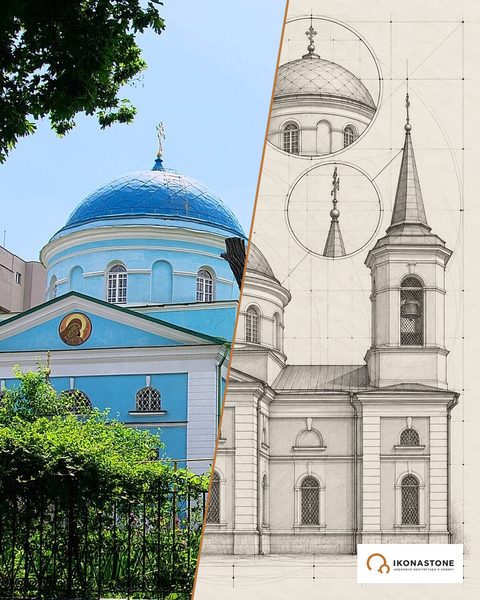
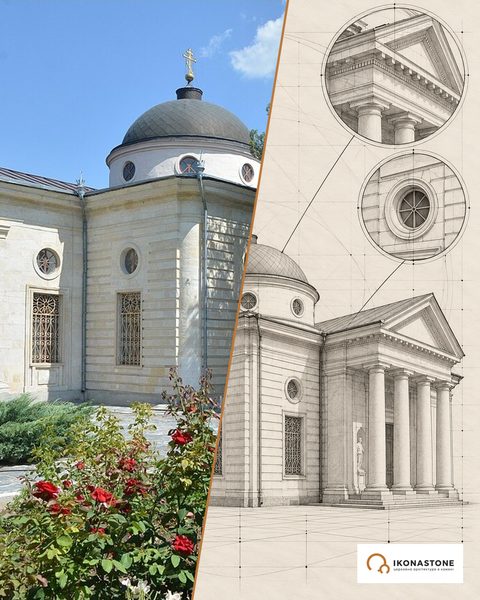
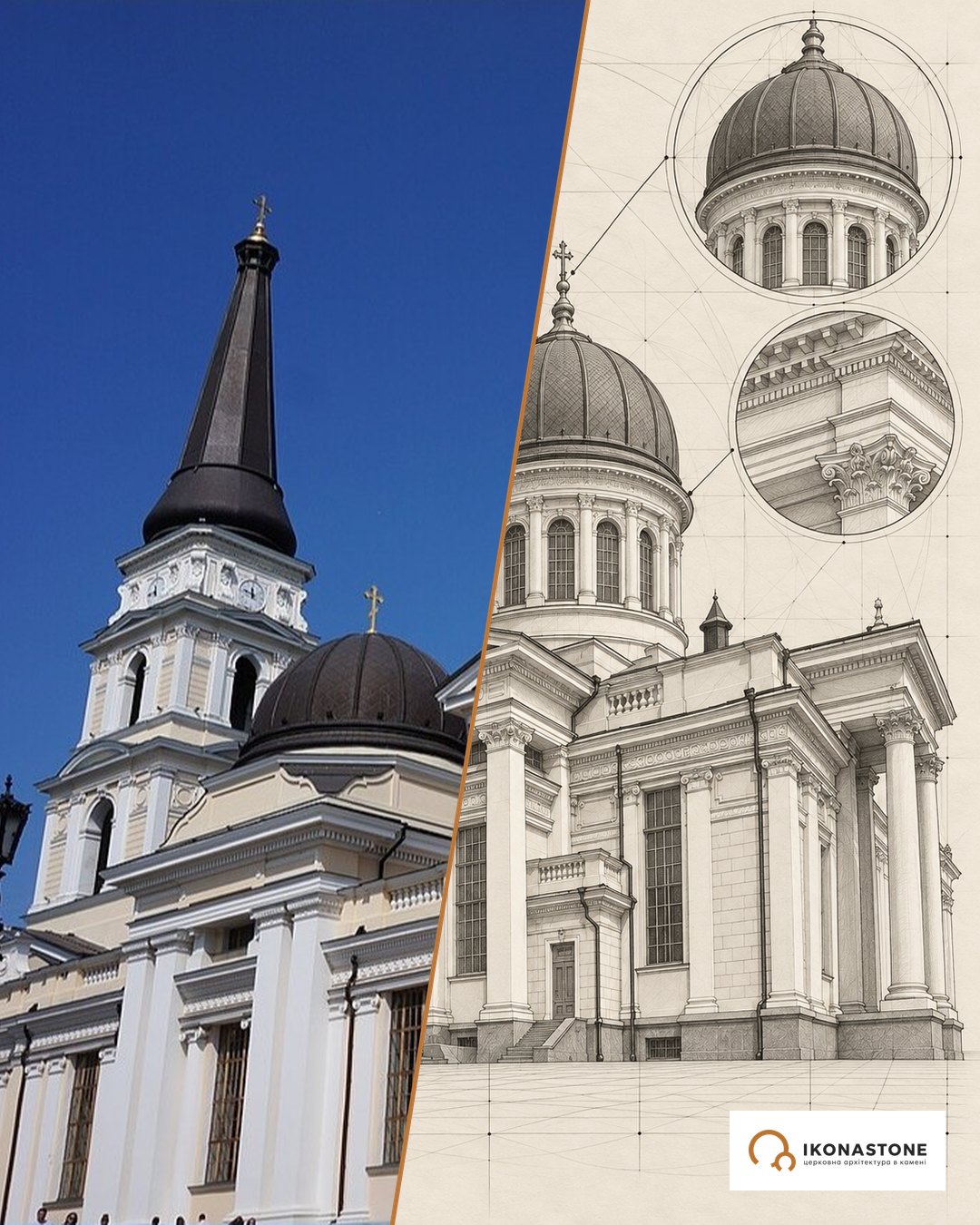
Below are two elements of the church: in a photo and in a drawing. The drawings show the form, not exact dimensions.
The bell tower
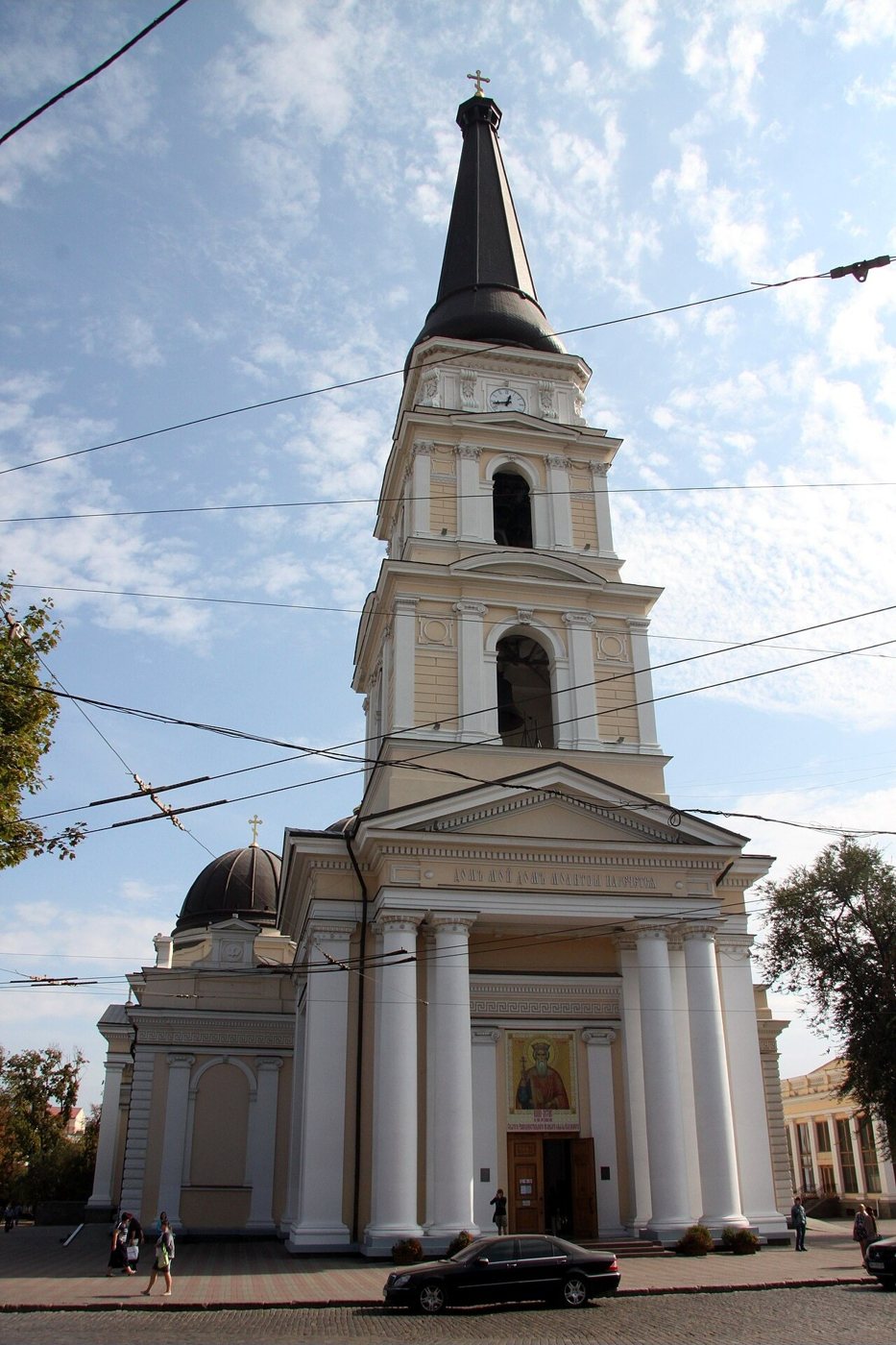
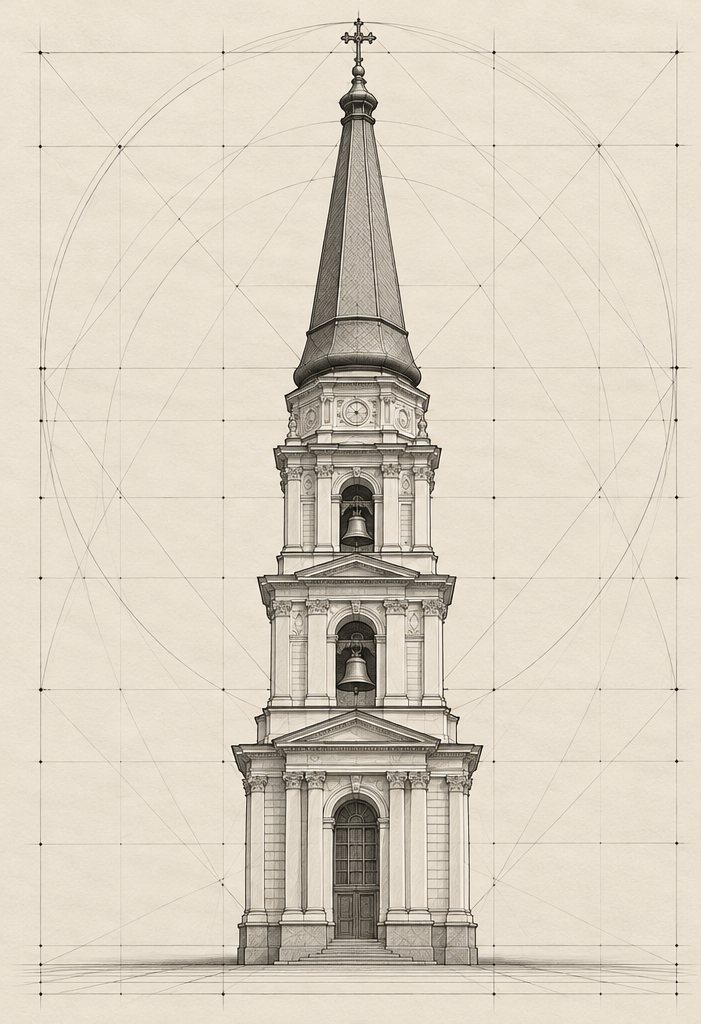
The 72-metre bell tower (according to archival data) was the main vertical of Soborna Square. It was precisely this tower that was chosen in 1936 as the instrument of destruction. The reconstructed bell tower holds the main bell, about three metres tall and weighing more than 14 tonnes, installed with donations.
The dome
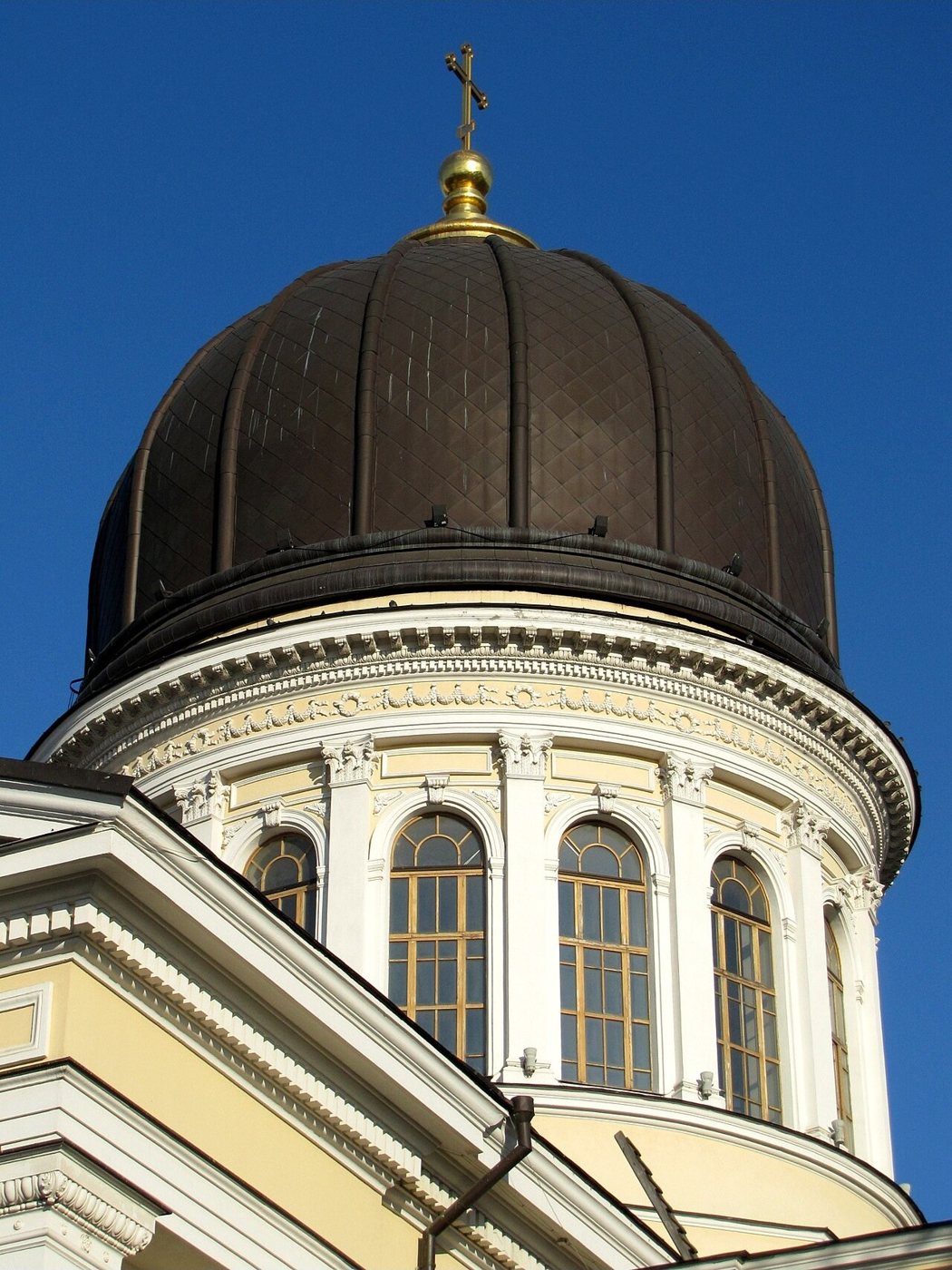
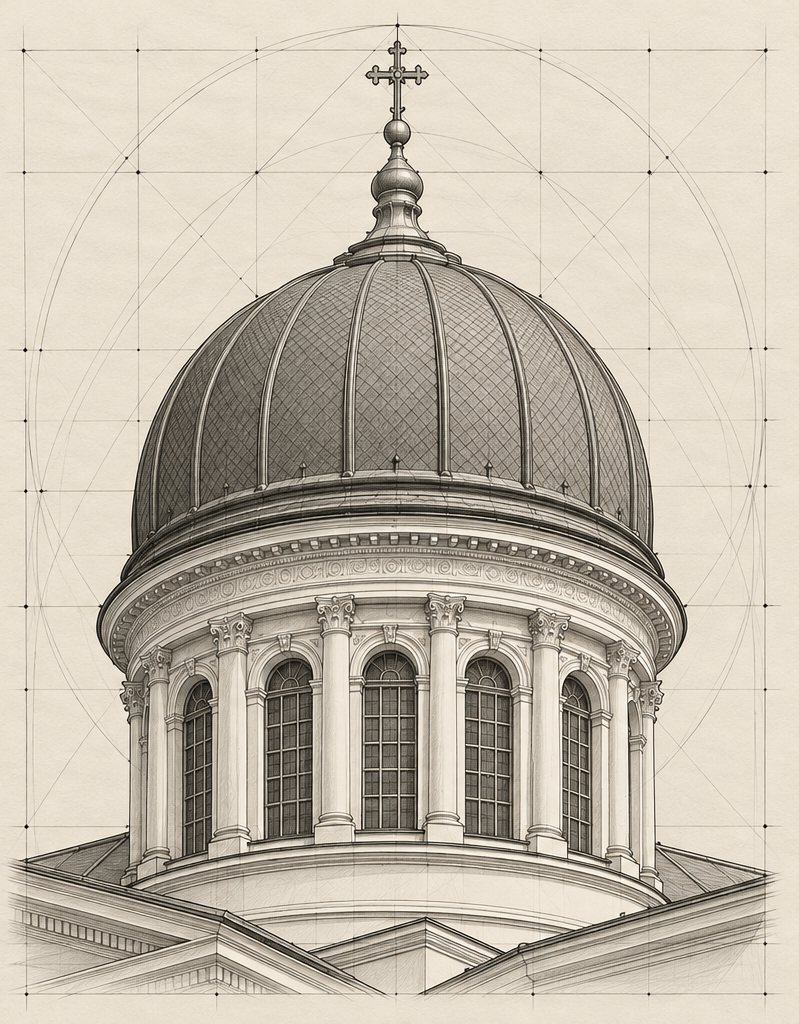
The overall style of the cathedral is Classicism, but the dome, according to English-language Wikipedia, has eclectic features. After the 2023 strike the central dome was repaired as a priority, together with the roof.
The lower church
The lower church, dedicated to St Innocent, lies about six metres below ground. Its St Andrew’s Hall holds about two thousand people. During the 2023 strike the lower church survived, but its glass was blown out.
Stone and material
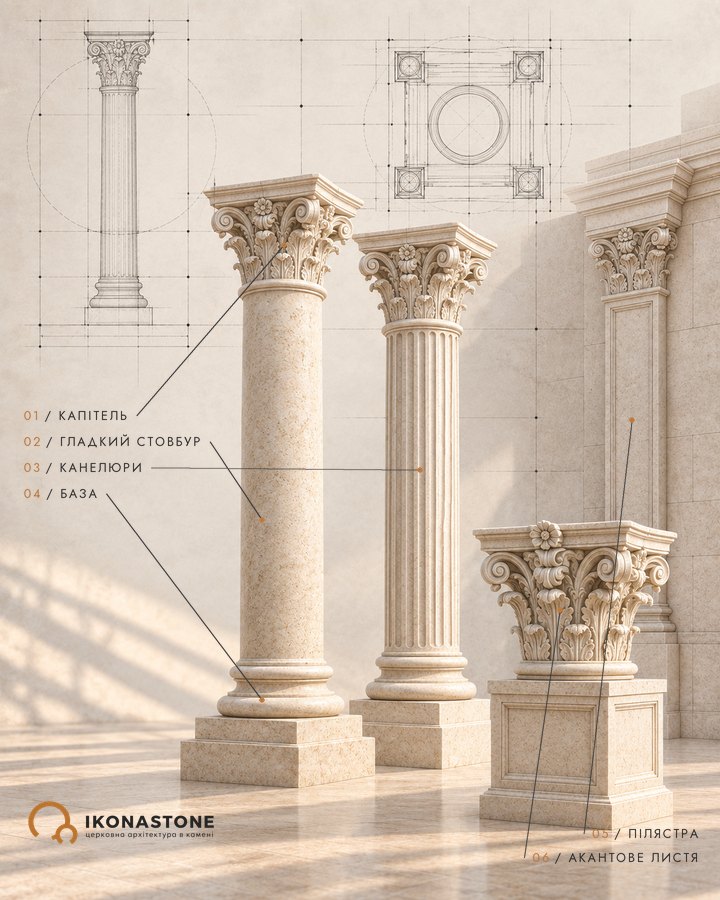
Before 1936 the interior of the cathedral relied on marble, both real and imitation. The Corinthian columns were faced with artificial white marble, the floor was laid with white marble slabs, and the iconostasis was made of grey-and-white polished marble. In the reconstructed cathedral the main iconostasis is again of marble. The published sources do not specify what material the walls of the reconstructed church are built of.
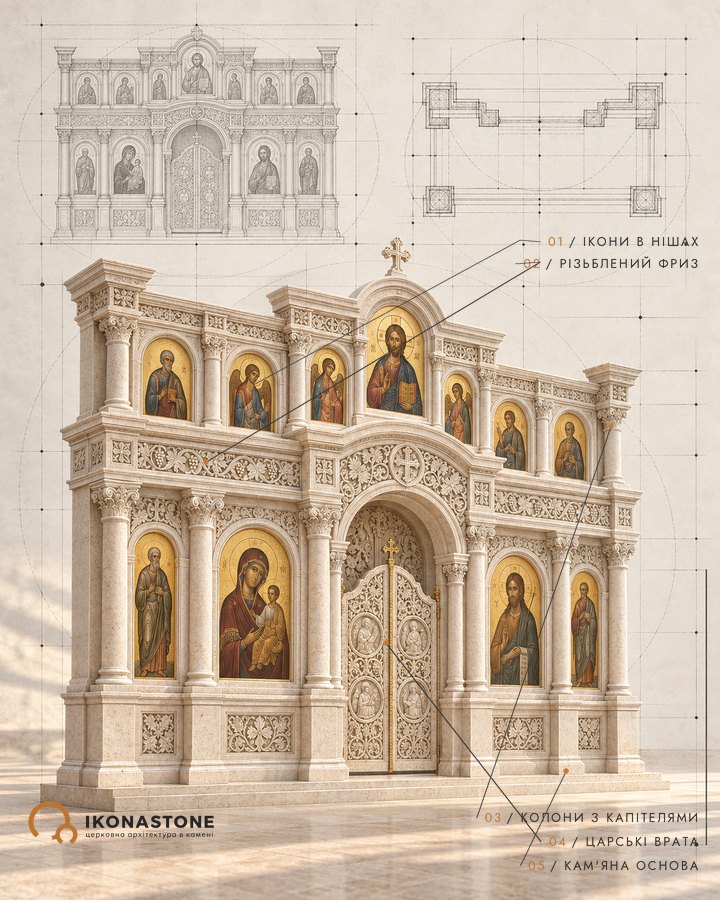
In the 19th century artificial marble was not a deception but an honest compromise: it gave the sheen of stone where real slabs would have been too heavy or too expensive. A marble iconostasis is a different story: there stone is not imitated, because it is the stone that carries the form. How a stone iconostasis is made and how it differs from a wooden one we explain separately, and the rows of icons are covered in the article Tiers of the iconostasis.
FAQ
Where is the cathedral located?
In the centre of Odesa, at 3 Soborna Square. The square was planned as the central one by the city's first architect, Franz de Volan.
When was the cathedral built?
The site was blessed in 1794, when Odesa was founded; construction began in 1795. The church was consecrated as the Transfiguration Cathedral in 1808 (according to other sources, in 1809). It took on its final appearance after the rebuilding of 1900–1903.
What happened to the cathedral in the 20th century?
In 1936 the Soviet authorities destroyed it: the bell tower was blown up, and its fall wrecked the church. Reconstruction began in 1999 on the surviving foundation; the cathedral was solemnly consecrated in July 2010.
What is known about the damage of 2023?
On the night of 23 July 2023 a Russian missile hit the cathedral. The sanctuary was completely destroyed, the missile pierced two floors, and part of the church was left without a roof. In 2024 about 3,200 m² of roofing, the central dome and the doors were restored; as of August 2025 interior works were still under way.
Sources
- Wikipedia: Transfiguration Cathedral, Odesa
- Державний архів Одеської області: Спасо-Преображенський кафедральний собор — духовний символ Одеси
- РІСУ: Одеса. Собор, що преображає
- Суспільне: «Попали в саме серце собору» (2023)
- Суспільне Одеса: Спасо-Преображенський собор готують до зими (2025)
- Офіс Президента: Президент оглянув руйнування Спасо-Преображенського собору (2023)
- Town
- Odesa
- Built
- 1795–1809, rebuilt until 1903; destroyed 1936; reconstructed 1999–2010
- Type
- single-domed cathedral, cruciform in plan, with a bell tower; Classicism
- Material
- masonry; marble and artificial marble in the interior
- Research depth
- 17%