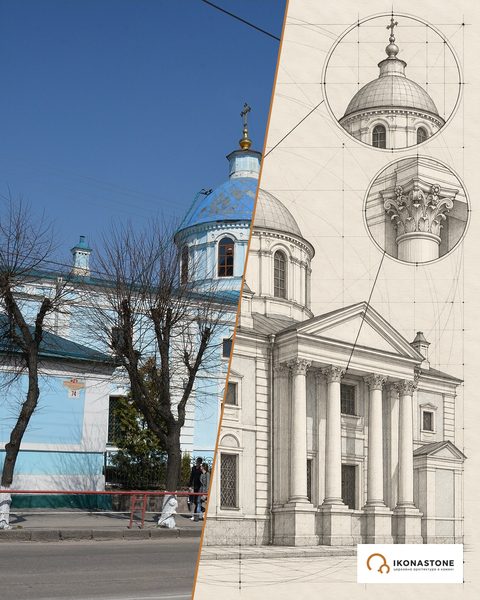
St Nicholas Church in Mykolaiv: the Greek church of a shipbuilding city
A city that grew out of a shipyard might be expected to pray in the Admiralty church. Yet the most enduring turned out to be the church of the Greek merchants: according to researchers, it was never closed for long. And it stands on a street named after the man who conceived it.
In brief
| Address | 4 Faleievska Street, Mykolaiv |
| Built | 1803–1817; consecrated in 1817 (the first, wooden church dates from 1790) |
| Type | single-domed Classical church with a two-tier bell tower |
| Material | masonry (“stone” in the sources) |
| Status | architectural monument of national importance (protection No. 140034) |
| Today | a cathedral of the Mykolaiv eparchy of the UOC |
History
At the end of the 18th century Prince Potemkin wanted to found a monastery for men on this site, but after his death the plan came to nothing. On 17 December 1789 Mykhailo Faleiev, the builder of Mykolaiv whose name the street bears today, informed Archbishop Ambrose of his intention to build a church here. A wooden Greek church of St Nicholas was founded in 1790. It stood for about twenty years; neither a description nor an image of it has survived. What has survived are the parish registers, from 1804 to 1925, though with gaps.
The masonry church took fourteen years to build, from 1803 to 1817. Researchers name a lack of funds as the main reason for the slow pace: the church was built on the parishioners’ donations, both in money and in building materials. Among the donors the sources mention Greek merchants, officials of the naval department and other townspeople. The construction was largely overseen by Archimandrite Zacharias Petropoulo and Archpriest Karp Pavlovskyi. Services here were at first held in Greek, so in the city the church was simply called the “Greek” one. Greek trading rows stood along the street, and the street itself later became Nikolska, after the church on its corner.
The Greek church is not the oldest in Mykolaiv: merchants built the Cathedral of the Nativity of the Mother of God as early as 1800, and in 1802 the Dormition Church in Ternivka was converted from a mosque. But the Nativity Cathedral was closed in 1936, and the city’s Admiralty Cathedral, according to RISU, was destroyed in the same year. The Greek church, according to O. Kravchuk’s study, was never closed for long, and services continued even in the 1920s and 1930s.
After the Mykolaiv eparchy was formed, the church received the status of a cathedral. It was restored, bells were installed in the bell tower, the Intercession side chapel was added on the south, and a place for the blessing of water was arranged by the north doors.
Architecture
The church was built to a standard design in the Classical style. RISU describes its forms as “simple and laconic”: there is no excess of stucco, only the volume, the dome and the vertical of the bell tower.
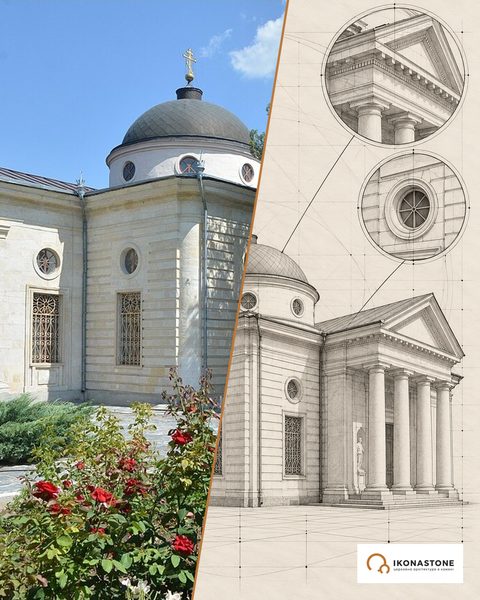
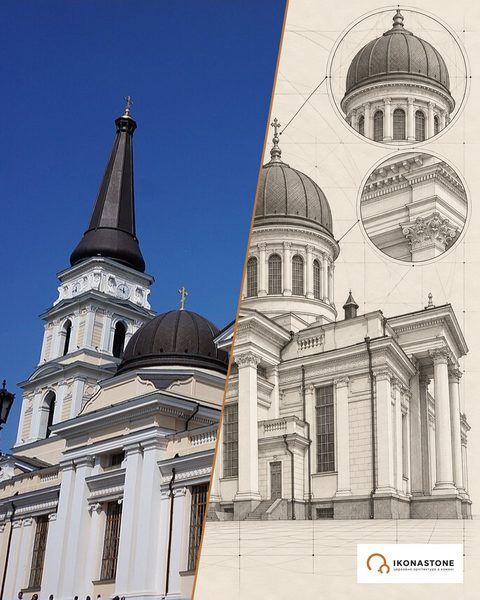
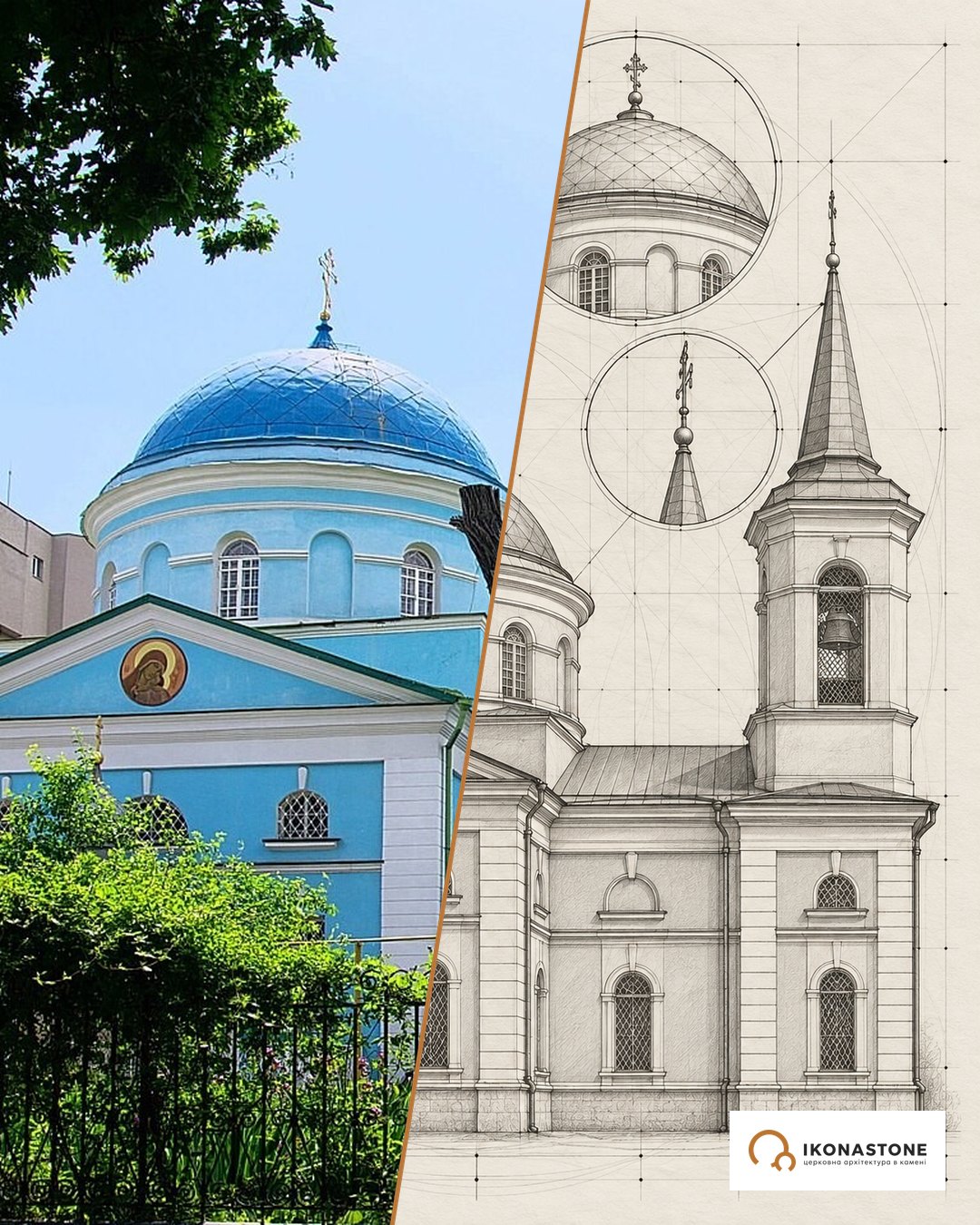
Below are two elements of the church: in a photo and in a drawing. The drawings show the form, not exact dimensions.
A dome on a massive drum
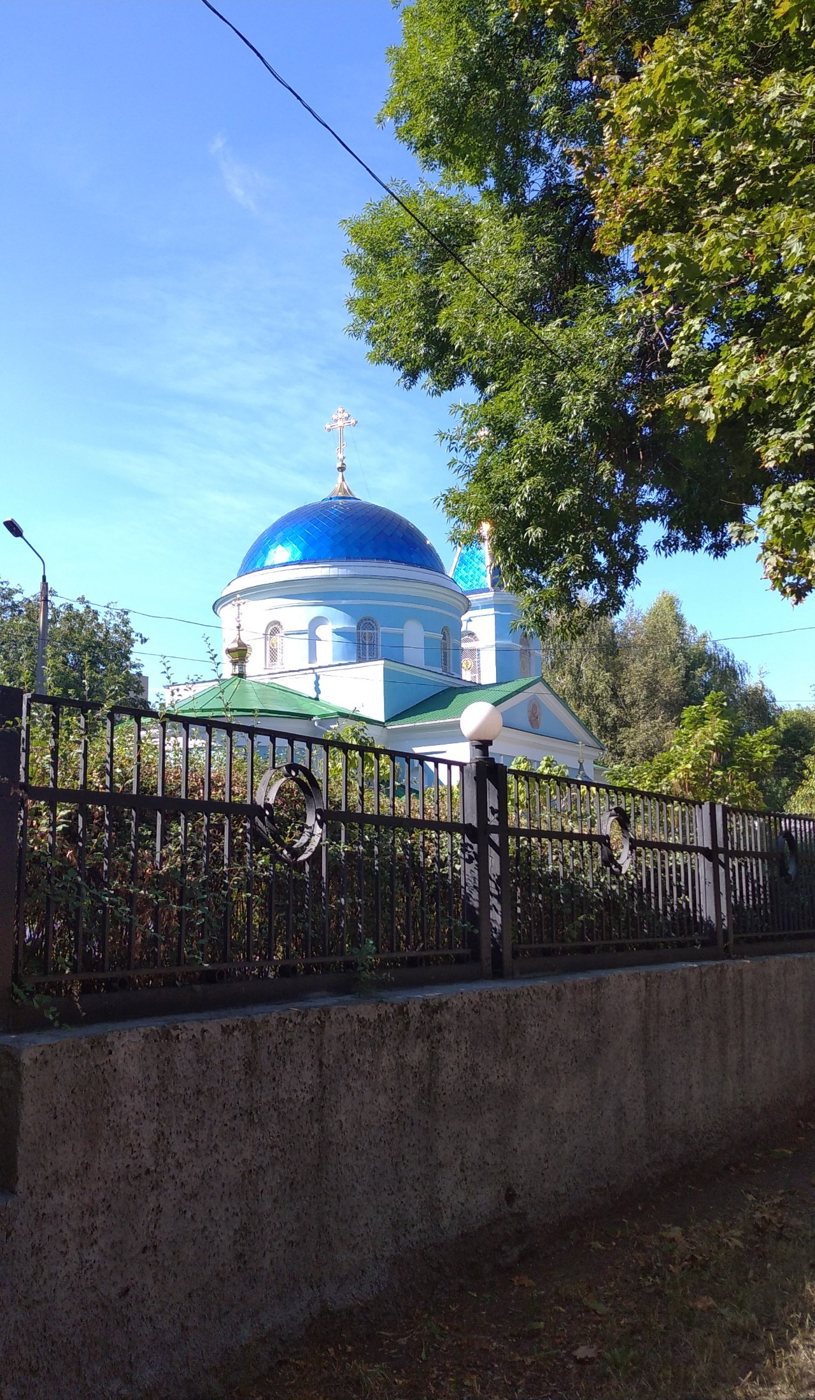
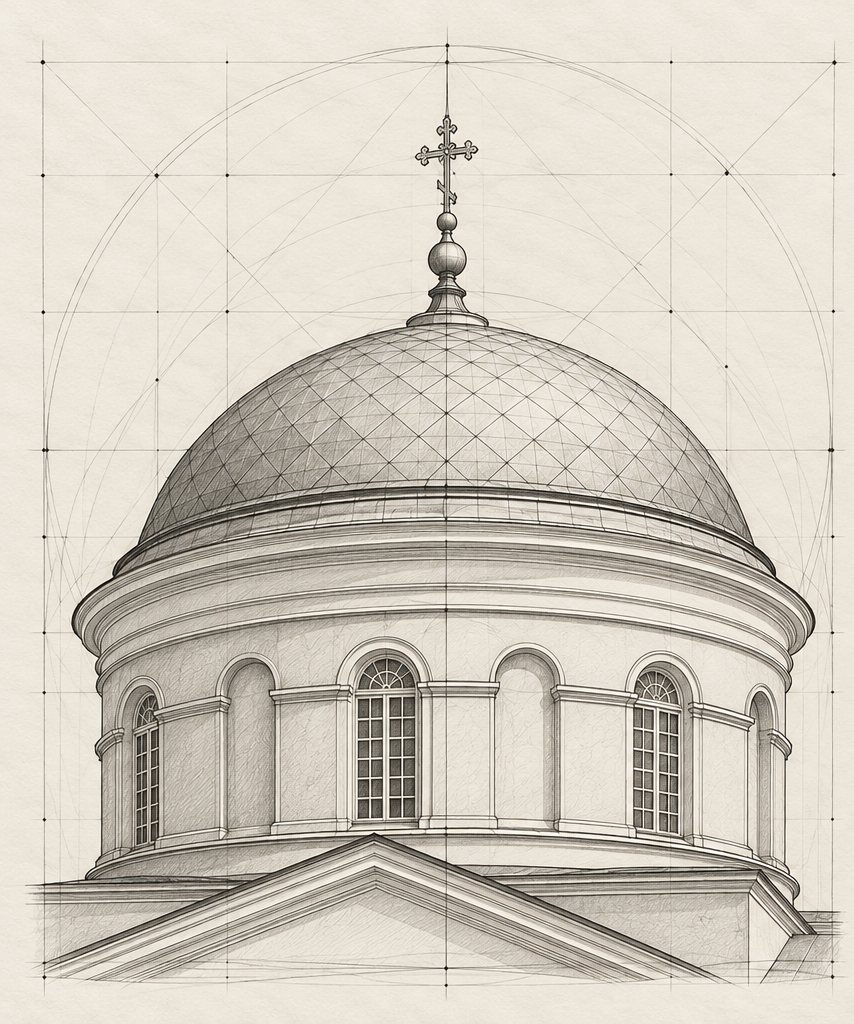
The main volume is crowned by a massive drum with a hemispherical dome. For Classicism this is the principal gesture: a single dominant feature, not scattered across several tops. The dome here does not play, it stands, and in this it fits well into a regular city laid out with a ruler.
A two-tier bell tower with a spire
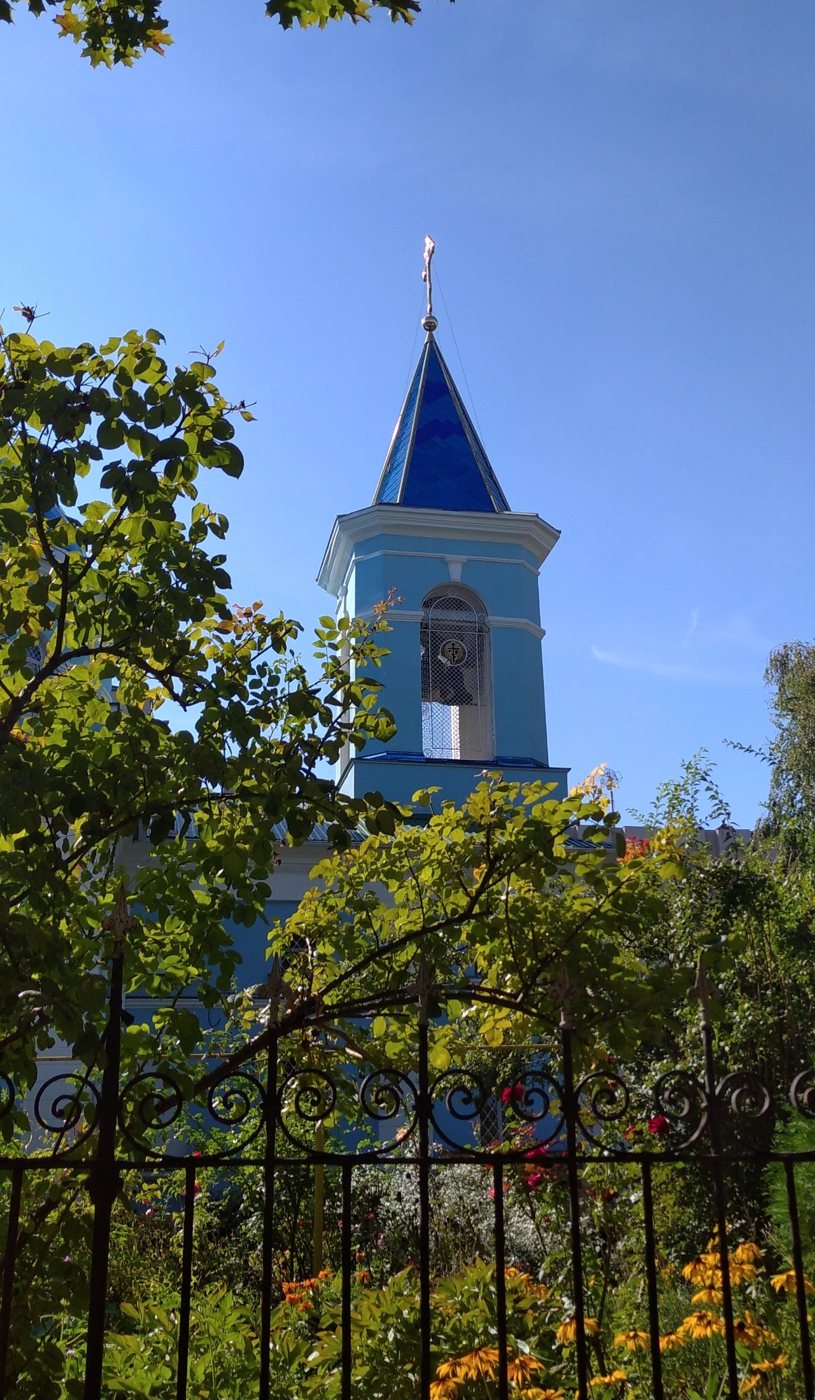
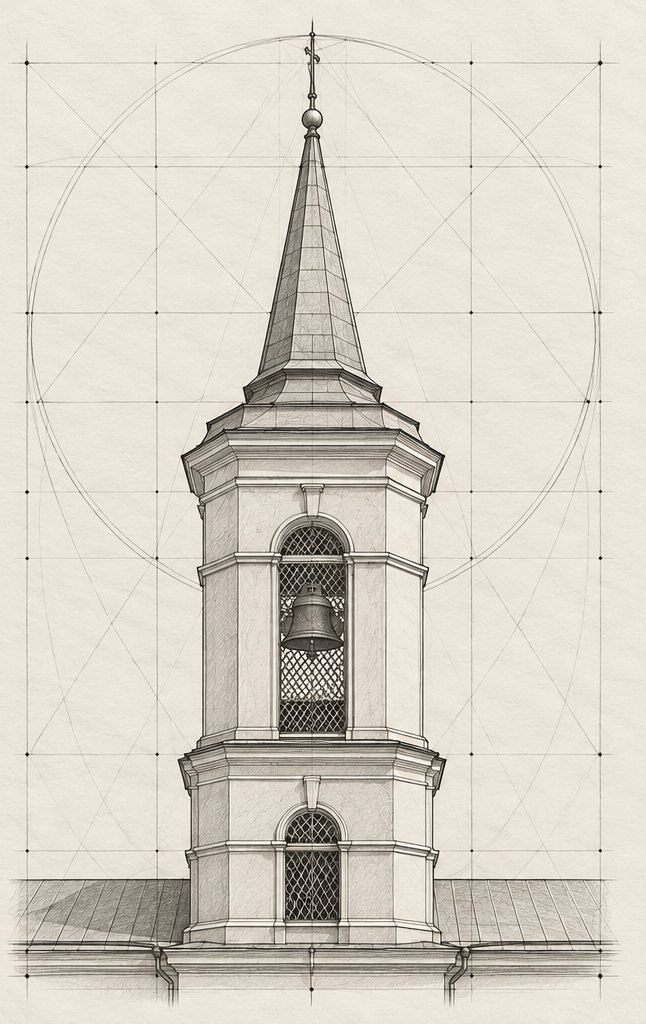
The bell tower has two tiers and a tall spire. In a shipbuilding city such a spire is involuntarily read as a mast: a slender vertical next to the heavy dome.
The side chapel and the place for blessing water
The later additions, the Intercession side chapel on the south and the place for the blessing of water by the north doors, appeared after the church had become a cathedral. Originally, according to the sources, the church had a single altar.
Stone and material
The sources call the church a “stone” one, as all masonry churches were called at the time; the specific material of the walls is not given in the published descriptions. But one detail is known that you will not find in a drawing: the church was built partly not with money but with materials that the parishioners brought themselves.
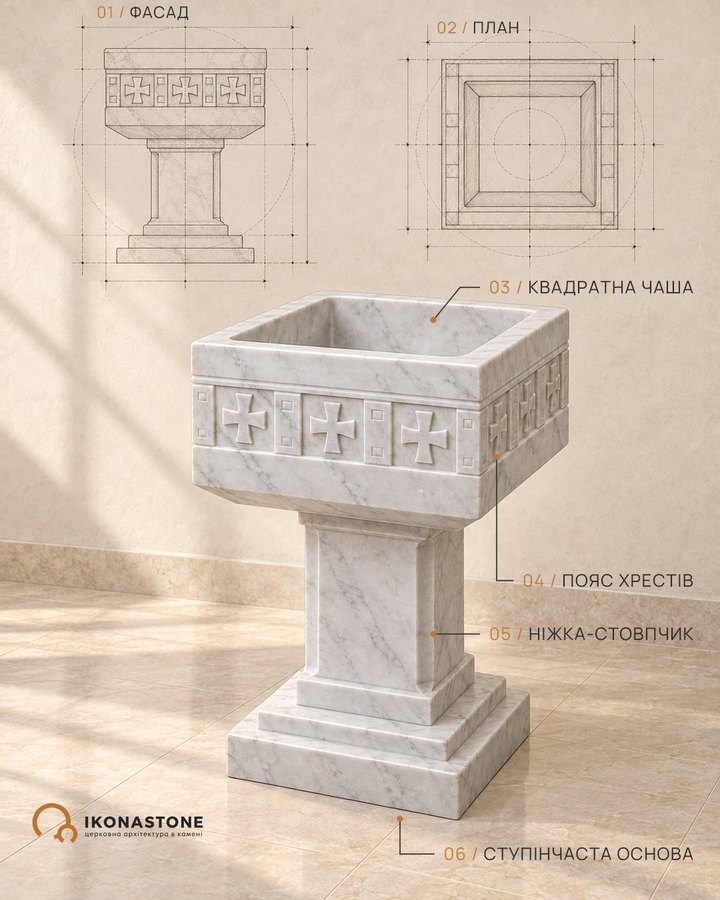
In such a church every batch of material is a separate contribution, and the wall becomes a kind of chronicle of the community, though without signatures. The place for blessing water by the north doors is a reminder of another object in which stone works every day: stone fonts and basins. Another Greek church of the steppe region, built in the same years, is examined in our article on the Greek Church in Kropyvnytskyi.
FAQ
Where is the church located?
In the centre of Mykolaiv, at 4 Faleievska Street. The neighbouring Nikolska Street was named after this very church.
Why is it called the Greek church?
The church was founded by the city's Greek community, mostly merchants, and services were at first held in Greek. That is why the people of Mykolaiv called it the "Greek" church.
When was the church built?
A wooden church was founded in 1790 and stood for about twenty years. The masonry church was built from 1803 to 1817 and consecrated in 1817.
What is the church's protected status?
St Nicholas Church of 1817 is an architectural monument of national importance (protection No. 140034, Cabinet of Ministers resolution No. 700 of 13 June 2024).
Sources
- Town
- Mykolaiv
- Built
- 1803–1817
- Type
- single-domed Classical church with a bell tower
- Material
- masonry (described as "stone" in the sources)
- Research depth
- 16%