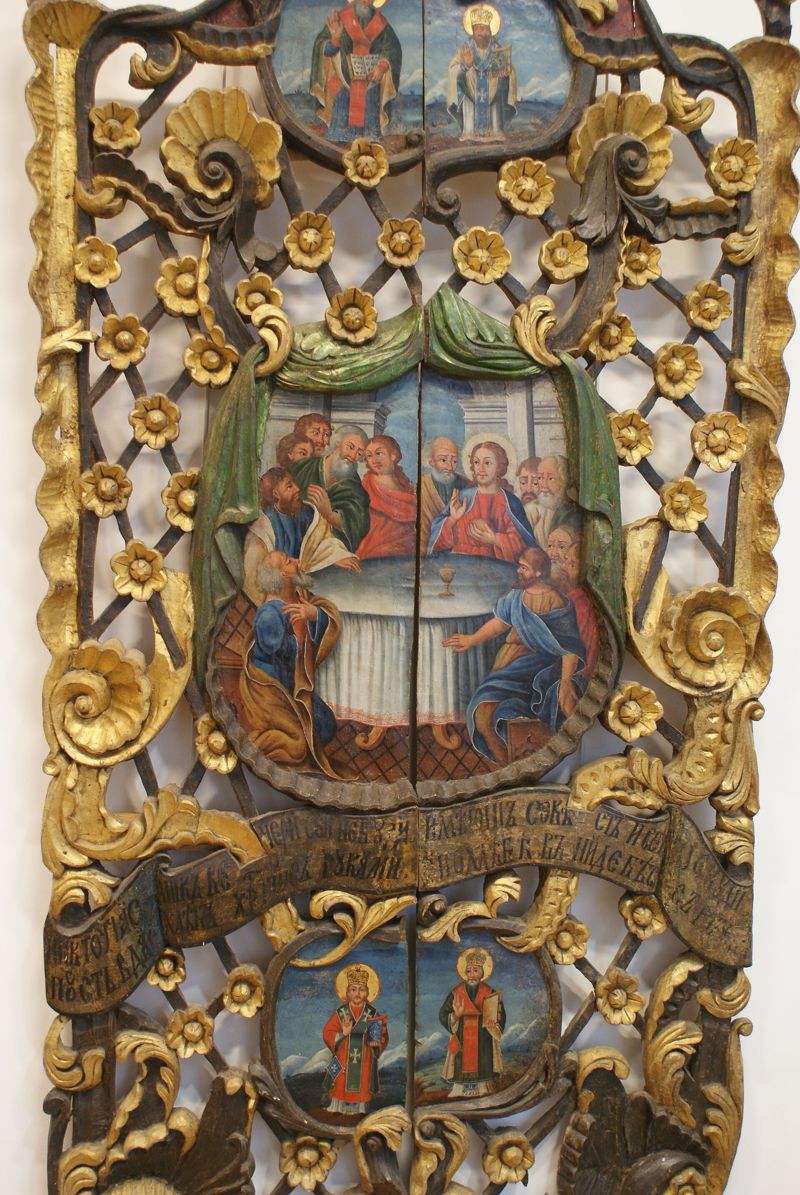
The Stone Iconostasis: When It Is Appropriate and What It Is Made Of
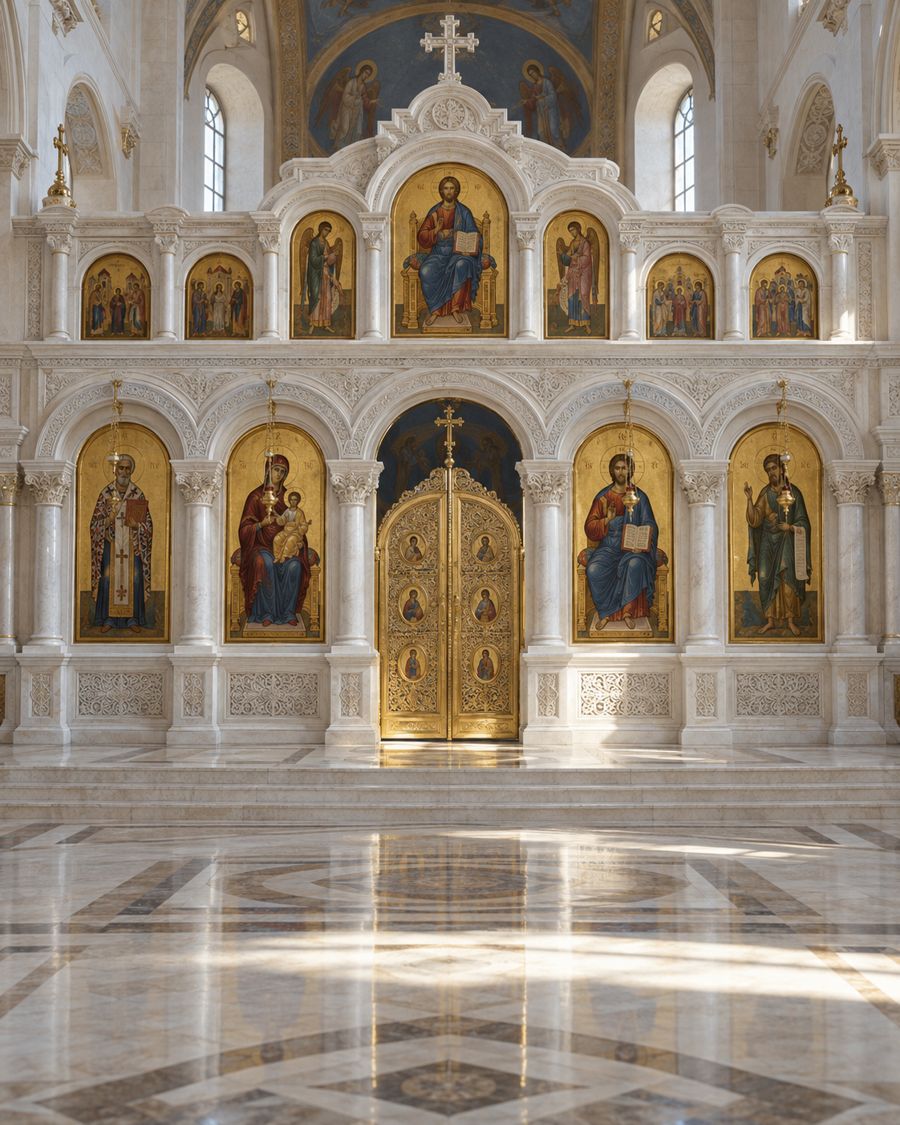
We are used to imagining the iconostasis as golden and carved, of lime or oak, with gilding that catches the candlelight. Wood did indeed become the principal material of the Eastern Christian church. But the history of the sanctuary screen did not begin with wood. It began with marble slabs and colonnettes, and in this forgotten beginning lies the answer to the question of whether stone is appropriate in a modern church.
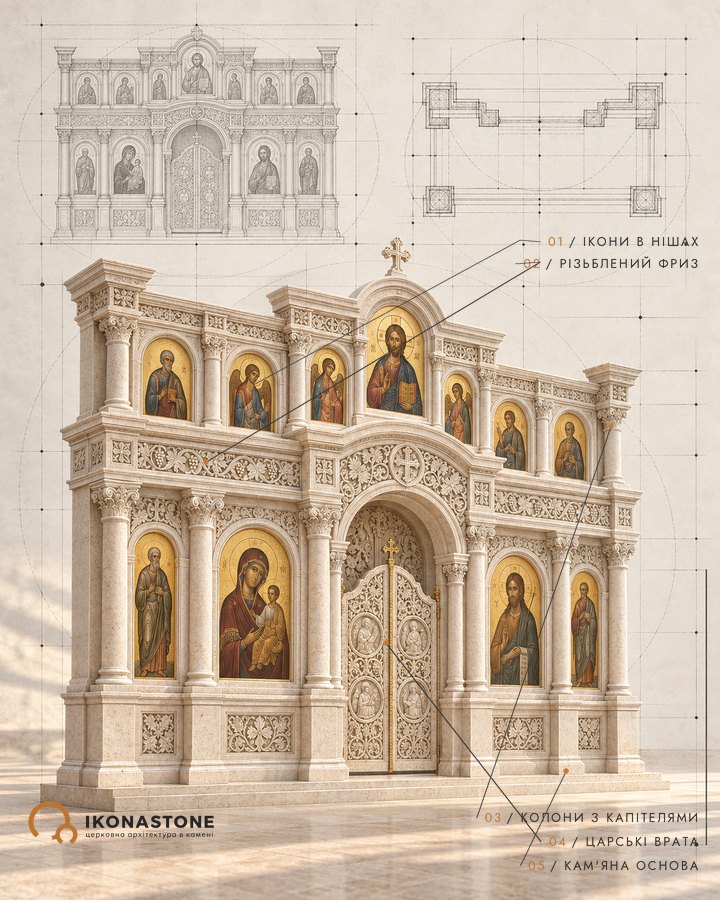
Stone does not forgive carelessness: it cannot be planed down on site, patched with filler or reworked in a week. That is why a stone iconostasis begins not in the workshop but on paper: with measurements, a calculation of the foundation and a conversation with the priest. This article is about what kind of structure it is, what it is assembled from and where it should stand.
In brief
- The earliest sanctuary screen of Christian churches, the Byzantine templon, was mostly made of marble.
- Marble and stone screens exist in modern churches as well, for example in Odesa and Belgrade.
- The main advantages of stone: durability, immunity to fire, and resistance to damp and cold, which matters in unheated buildings.
- The main limitations: weight, requirements for the floor structure and foundation, and more complex installation.
- Stone is rarely the only material: carved doors and crestings are often made of wood, and details of metal.
- Icons in a stone iconostasis come in three kinds: on panels in a stone frame, on stone, and mosaic.
Where did the stone sanctuary screen come from?
The ancient ancestor of the iconostasis is the templon. It appeared in Christian churches around the 5th century, at first as a low barrier around the altar table, similar to Western chancel rails. The earliest archaeological evidence comes from the Stoudios Basilica in Constantinople, built around 463: there the screen wrapped around the sanctuary in a Π shape.
Templa were mostly carved from single-coloured marble, sometimes from polychrome. Colonnettes supported an architrave, a horizontal beam, on which images eventually appeared.
The best-known description belongs to the poet Paul the Silentiary: according to him, in Hagia Sophia in Constantinople (consecrated after its rebuilding in 563), twelve marble columns clad in silver stood on three sides of the sanctuary, and the architrave bore medallions with Christ, angels, prophets, apostles and the Mother of God. The Museum of Byzantine and Christian Art in Athens holds a fragment of a marble architrave from Thessaloniki: three figures, the Apostles James and Philip and the Evangelist Luke, carved in marble in the second half of the 10th century. They were once complemented by wax paints; these have not survived, so the marble now looks monochrome.
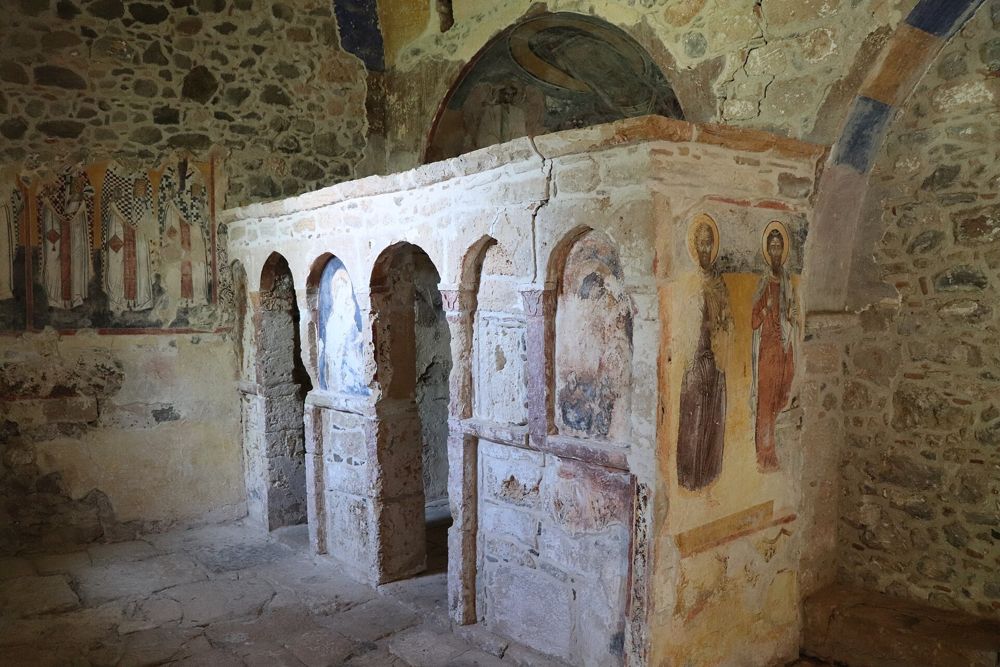
Later, icons appeared between the colonnettes: from the 11th to the 14th century they were placed in the openings between the columns, and churches with such screens survive in Greece and the Balkans. Marble did not disappear in later times either: in the Cathedral of the Annunciation in Athens (built 1842–1862), the built-in iconostasis is faced with marble, and the colonnettes around the royal doors are made of green Tinos marble. In the wider Balkan context, Dečani Monastery (built 1327–1331) is well known: its central iconostasis is of the templon type, with stone columns and a stone lintel; this templon has survived intact, even with its original 14th-century icons (the royal doors and the crucifix belong to a later period). The iconostases of the side chapels at Dečani, completed in 1818, are already of wood.
Over time the tall form of the iconostasis developed, in which wood became the predominant material. Stone did not disappear, but it ceased to be the main one.
Are there stone iconostases in Ukrainian churches?
There are, although they are few compared with wooden ones. The Ukrainian tradition is above all one of carved wooden walls. Nevertheless, stone does appear in the sanctuary screen.
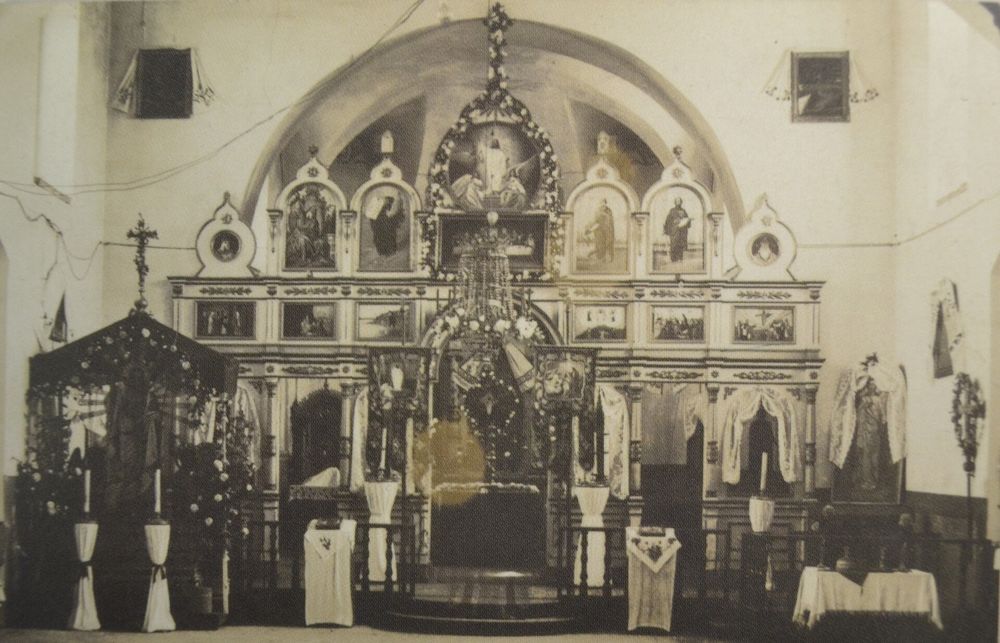
The upper church of the Transfiguration Cathedral in Odesa was consecrated in July 2010. Its present iconostasis is marble; it was made under the direction of O. A. Bezverkhnii, Honoured Builder of Ukraine, and the design drew on photographs from 1903 and on the structure of the original iconostasis of 1887–1889. The openwork royal doors and the carved crestings there are made of lime wood. The authors of the study note that the material and the single-tier structure of the central iconostasis recall Byzantine templa: low parapets of carved slabs or porticoes with colonnettes. In other words, marble is combined with wood, and the image with a distant prototype.
The scholar Ivanna Miakota, analysing the royal doors of Volhynia from the late 19th to the first third of the 20th century, mentions the Dormition Cathedral in Volodymyr: a sanctuary screen of stone was made there, and its royal doors combine stone and wood with oil and fresco painting, in a unified Byzantine style.
In Belgrade, the Church of St Mark has a marble iconostasis designed by the architect Zoran Petrović (1991/1992), and its icons, according to the church’s official website, are executed in mosaic. The author of the images is named as Đuro Radlović, and the work lasted from 1996 to 1998. This is an example of stone and mosaic working together.
Stone is not alien to the Ukrainian church; it has both ancient Byzantine roots and modern realisations.
What makes stone better than wood?
Durability. Wood needs care: it can be damaged by insects, humidity and cracking. Stone is protected from all of this.
Humidity and unheated churches. Wood responds to fluctuations in humidity and temperature: it swells and shrinks. At the Kyiv Art Museum, the temperature dropped to 10 degrees and humidity to 30–40 per cent, and 13 icons of the 14th–17th centuries cracked; the head of the department of early art attributed this to the wood drying out. She also named acceptable conditions: 18–20 degrees and humidity no higher than 65 per cent. A church is usually far from a museum climate, especially an unheated one. A stone screen does not deform under such fluctuations, whereas an icon panel remains sensitive; more on this below.
Fire resistance. Stone does not burn. For a church with candles and lamps this is significant: fire is one of the greatest risks for wooden furnishings. At the same time, the fire resistance of stone does not save the wooden icons that stand in it, so this argument is not absolute.
Ease of care. A wooden surface has to be renewed from time to time; a stone one usually only needs careful cleaning. The specific care regime depends on the type of stone and its finish, and is worth clarifying with the craftsman.
What are the limitations of a stone iconostasis?
| Limitation | What it means | What to do about it |
|---|---|---|
| Weight | Stone is much heavier than wood. | An assessment of the load-bearing capacity of the floor or slab, not “by eye”. |
| Floor structure and foundation | The load is transferred to the base beneath the screen. | A design and calculation by a structural engineer, a survey of the base. |
| Installation | The elements are large and must be lifted, levelled and fixed. | A plan for delivery and lifting, the width of passages, equipment. |
| Adjustments on site | Stone is hard to “trim” once in the church. | Accurate measurements and prior approval of the drawings. |
| Acoustics | Hard, smooth surfaces reflect sound. | Discuss separately with the church’s designer; there is no general rule. |
The acoustics of a stone screen are assessed for the specific church. In a large church with a long reverberation, this question is worth raising before the screen is made of stone, not after.
How is stone combined with wood and metal?
Stone on its own rarely meets every need. Carved royal doors, as in Odesa, are more conveniently made of lime wood: wood lends itself to fine carving and is lighter than stone. Lintels, some ornaments, fixings, light fittings and crosses are made of metal. That is why a modern stone iconostasis is most often composite: the base and columns of stone, the icon surfaces of wood or stone, the details of metal.
The composite approach has its own logic. Stone provides durability and form, wood provides fine carving and warmth, metal provides precise joints and accents. The main thing is to think through the junctions: different materials respond differently to temperature, so their connections should be designed in advance.
What icons are placed in a stone iconostasis?
Icons painted on panels, in a stone frame. The most traditional approach: the icon is painted on a wooden support, as it was centuries ago, and the stone structure serves as a frame and load-bearing framework. Such an image can be removed and restored without touching the screen. But it remains sensitive to humidity and temperature, so conditions in the church must be assessed in advance.
Icons on stone. The image is executed directly on the stone, by painting, carving, engraving or another technique. Such an icon works together with the screen rather than being inserted into it. This is a separate speciality and a separate line in our catalogue.
Mosaic. The image is assembled from smalt or stone. The Belgrade example shows that mosaic can cover the entire iconostasis. Mosaic harmonises well with a stone base but requires great skill and time; the church’s conditions for it should likewise be discussed with the maker.
The choice between these options is not only a technical question. It is a question of what image the community wants to see in decades to come, and who will be able to care for it. The style of painting and the iconographic programme are agreed with the priest.
What to decide before ordering?
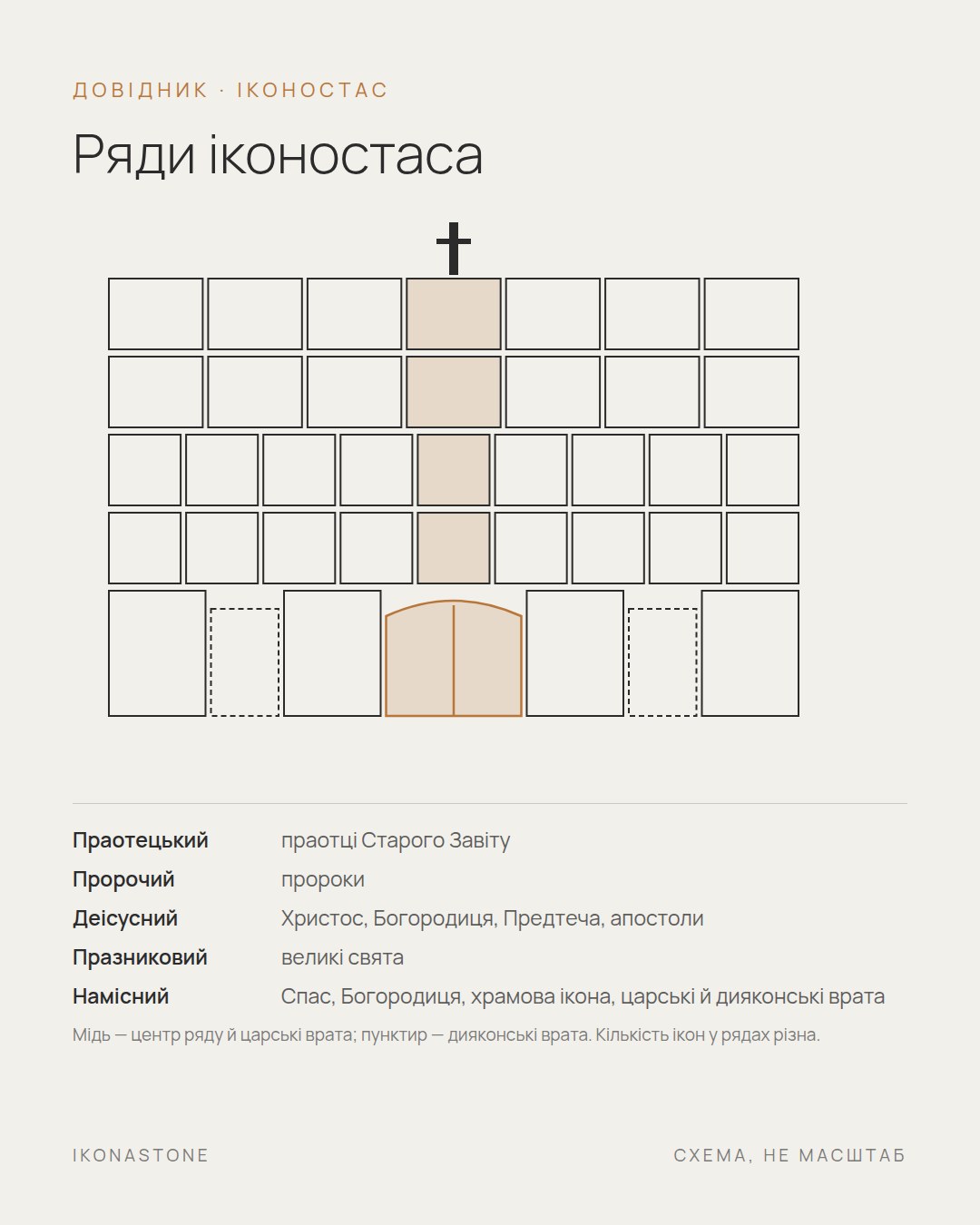
- Drawings. Overall height, width, number of tiers, the position of the royal doors and the side doors; the placement of the icons by tier.
- Measurements. The exact dimensions of the sanctuary arch and the walls, the condition of the floor, the plumbness of the walls, level marks. An error in measurements is much harder to correct in stone than in wood.
- Agreement with the priest. The height and structure of the screen, the icon programme, the place for especially venerated images. Practice differs between traditions and parishes, so the final word belongs to the rector.
- Foundation and floor structure. Whether the floor will bear the load; whether a slab or reinforcement is needed; a structural engineer’s assessment.
- Materials. The type of stone, the combination with wood and metal, the type of surface (polished, honed), resistance to the conditions in the church.
- Icons. Panel, stone or mosaic; who paints them; timescales; storage conditions during production.
- Installation logistics. The delivery route, the width of doors, lifting equipment, the assembly sequence, the period during which the church is unavailable for services.
- Status of the church. If the church is a listed monument, permits may be required for intervention in the interior.
In place of a conclusion
A stone iconostasis is neither better nor worse than a wooden one: it is different. It is appropriate where durability is needed, where the church is cold and damp, where the community is planning for centuries rather than decades. And where there is readiness for careful preparation.
IKONASTONE designs and makes stone iconostases, icons on stone and related elements; the catalogue can be found in the Iconostases section. On the structure of the screen itself, see the article What Is an Iconostasis, and on the central doors, the article Royal Doors.
FAQ
Do stone and marble iconostases exist, or is it only wood?
They exist. The earliest form of the sanctuary screen, the Byzantine templon, was most often made of marble. Marble or stone screens are found in modern churches too: for example, in the upper church of the Transfiguration Cathedral in Odesa and in the Church of St Mark in Belgrade.
How does a stone iconostasis differ from a wooden one?
In material, weight and behaviour in the building. Stone does not burn and does not react to humidity the way wood does, but it requires a calculated foundation and more complex installation. Carved elements and the royal doors are often combined with wood.
What icons are placed in a stone iconostasis?
There are three main approaches: icons painted on panels and set into a stone frame; icons executed directly on stone; mosaic icons. The choice depends on the church, the community's budget and agreement with the priest.
Is a stone iconostasis suitable for an unheated church?
Stone withstands cold and damp interiors without the deformations typical of wood. But icons painted on panels are sensitive to sharp changes in temperature and humidity, so the church's microclimate is assessed separately.
Will the floor structure bear the weight of a stone iconostasis?
That is a question for a structural engineer. The weight of stone is not estimated by eye: before ordering, measurements, information about the floor's foundation and, if necessary, a calculation for a footing or slab are required.
What needs to be agreed before work begins?
Drawings with dimensions, the height and number of tiers, the icon programme, the materials and the installation procedure. All of this is agreed with the priest and, if the church is a listed monument, with the relevant heritage protection authorities.
Sources
- Templon (Wikipedia, English)
- Remnants of a Carved Marble Chancel Screen from Thessaloniki (Liturgical Arts Journal, 2025)
- Iconostases in Balkan Churches, Part 2: Dečani Monastery (Orthodox Arts Journal)
- The Iconostases of the Transfiguration Cathedral in Odesa: Themes and Style (Tarasenko A., Akridina H., Art and Design, 2020, No. 2)
- Historicism and Eclecticism in the Aesthetic System of the Royal Doors of Volhynia, Second Half of the 19th to First Third of the 20th Century (Miakota I., Narodoznavchi Zoshyty, 2011, No. 5)
- Church of St Mark in Belgrade: the iconostasis (official website of the church)
- Church of the Annunciation of the Virgin Mary (Athens Cathedral) — Religious Greece
- In a Kyiv museum, 13 old icons cracked because of the cold (UNIAN)