St Elijah's Church in Ternivka: a steppe church under a pale blue dome
As you drive into Ternivka, the first thing you see is a pale blue dome. It stands over the steppe as if what matters most in this land is not the height of a hill but the height of a cross.
In brief
| Address | 13 Tsentralna Street, Ternivka village, Zaporizhzhia District, Zaporizhzhia Oblast |
| Built | 1904 |
| Type | single-altar church, cross-shaped in plan, with an attached bell tower |
| Material | masonry: brick walls on a stone plinth (the sources call it a “stone church”); oil paintings inside |
| Status | entered in the State Register of Immovable Monuments of Ukraine |
| Church | active Orthodox church |
Why this church
The Zaporizhzhia land remembers the Sich, but no Cossack churches survive here: they were built of wood, and from the 20th century onwards many of the region’s masonry churches disappeared or have come down to us as reconstructions. The Intercession Cathedral in Zaporizhzhia, for example, was recreated from archival sketches on the site of the one destroyed by the Bolsheviks: it took about fifteen years to build and was consecrated in 2007. And some of the region’s surviving old churches are now in occupied territory.
St Elijah’s Church in Ternivka is a genuine building of 1904 standing on land controlled by Ukraine. It is typical of a steppe village at the end of the imperial era: a small masonry church paid for by a landowner, with a bell tower at the entrance. At the same time it has what most of its neighbours lack — paintings that survived the Soviet village club.
History
The church was built in 1904 with money from a local landowner: according to some sources, Vasyl Protopopov, on whose land it stands; according to others, P. Holovachov. It had a single altar, dedicated to the Prophet Elijah, and was one of the first stone buildings in the village.
In 1931 the church was closed and turned into a village club; according to other sources, it housed a cinema. The interior was wrecked, and the paintings were partly plastered over and partly covered with wooden panels. This is probably what saved them. In 1942 services briefly resumed, but stopped again the following year — for about fifty years.
In the early 21st century the roof was repaired with the help of a sponsor. According to ZPRZ.CITY (2025), the building is well preserved, but the dome and the bell tower were not restored to their original form. The same outlet reports that the Zaporizhzhia District Prosecutor’s Office went to court to oblige the user of the monument — a religious organisation — to sign a heritage protection agreement.
Architecture
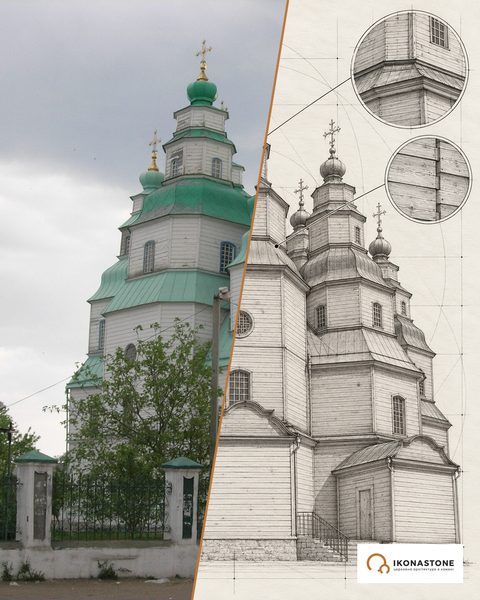
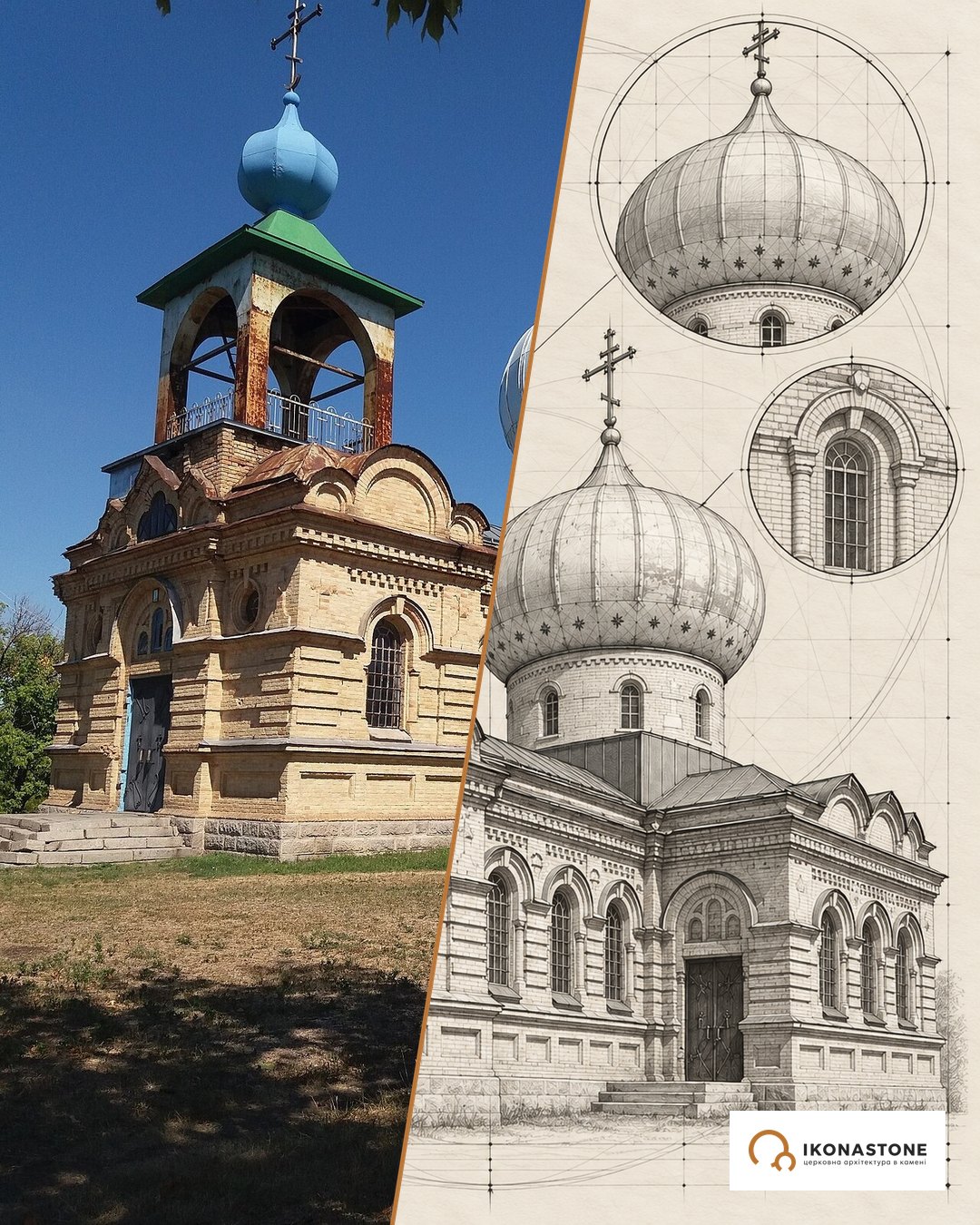
The church is cross-shaped in plan. A bell tower is attached to it, and over the centre rises a dome of unusual shape: broad and bulging, set on a light drum with windows, it resembles a turban. The dome is pale blue, and it is the first thing you see when entering the village.
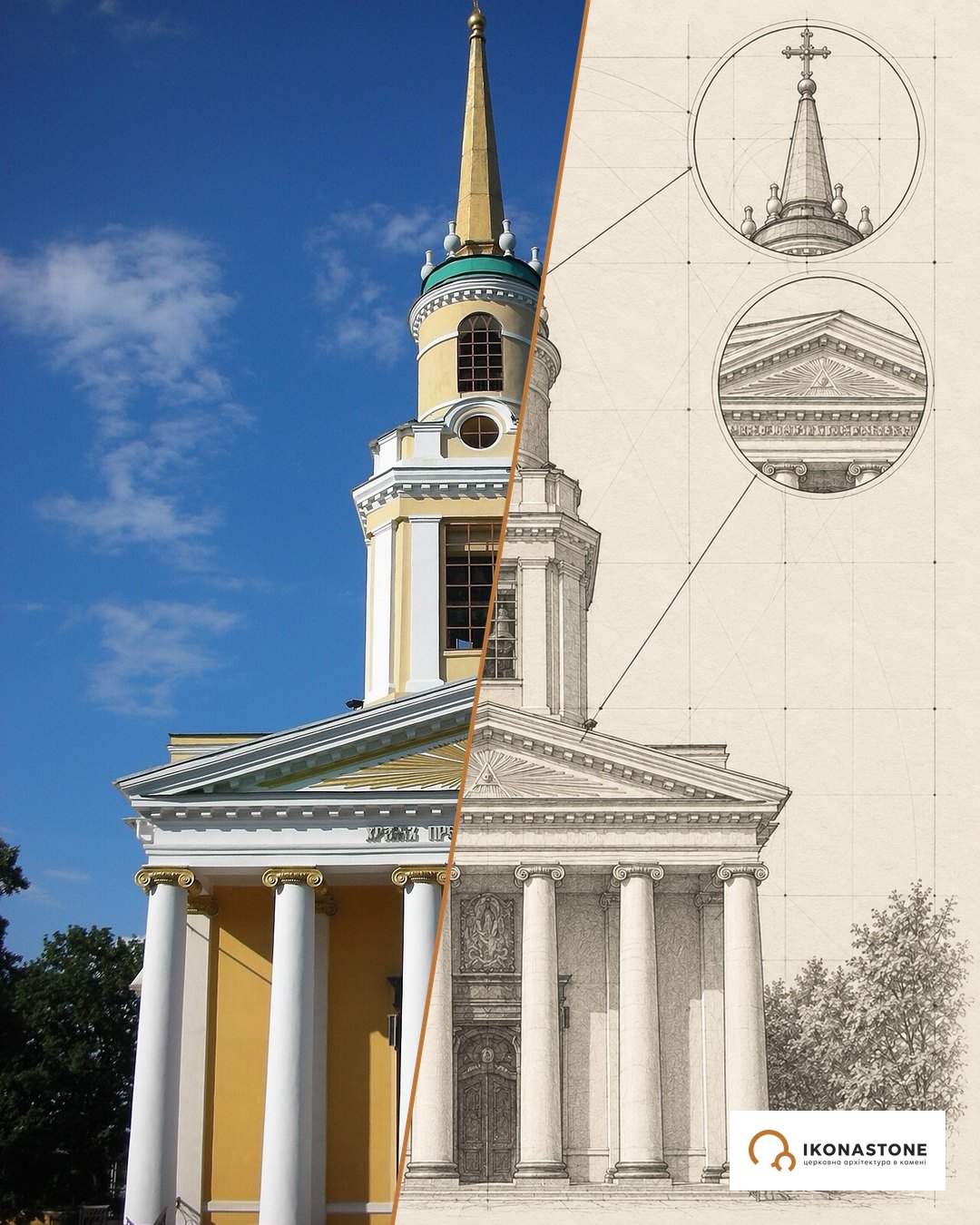
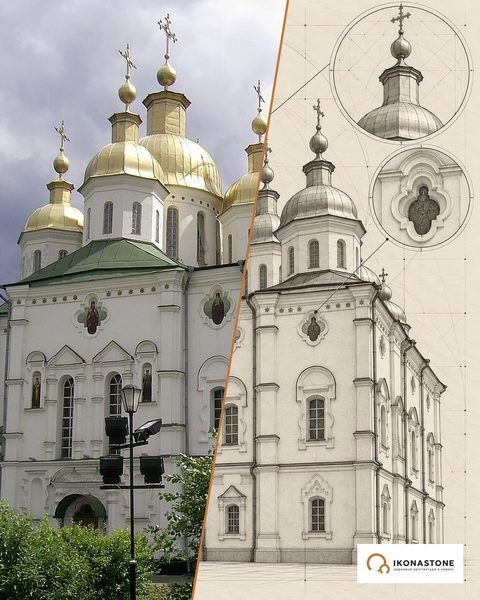
Below are two elements of the church: in a photo and in a drawing. The drawings show the form, not exact dimensions.
The unusual dome
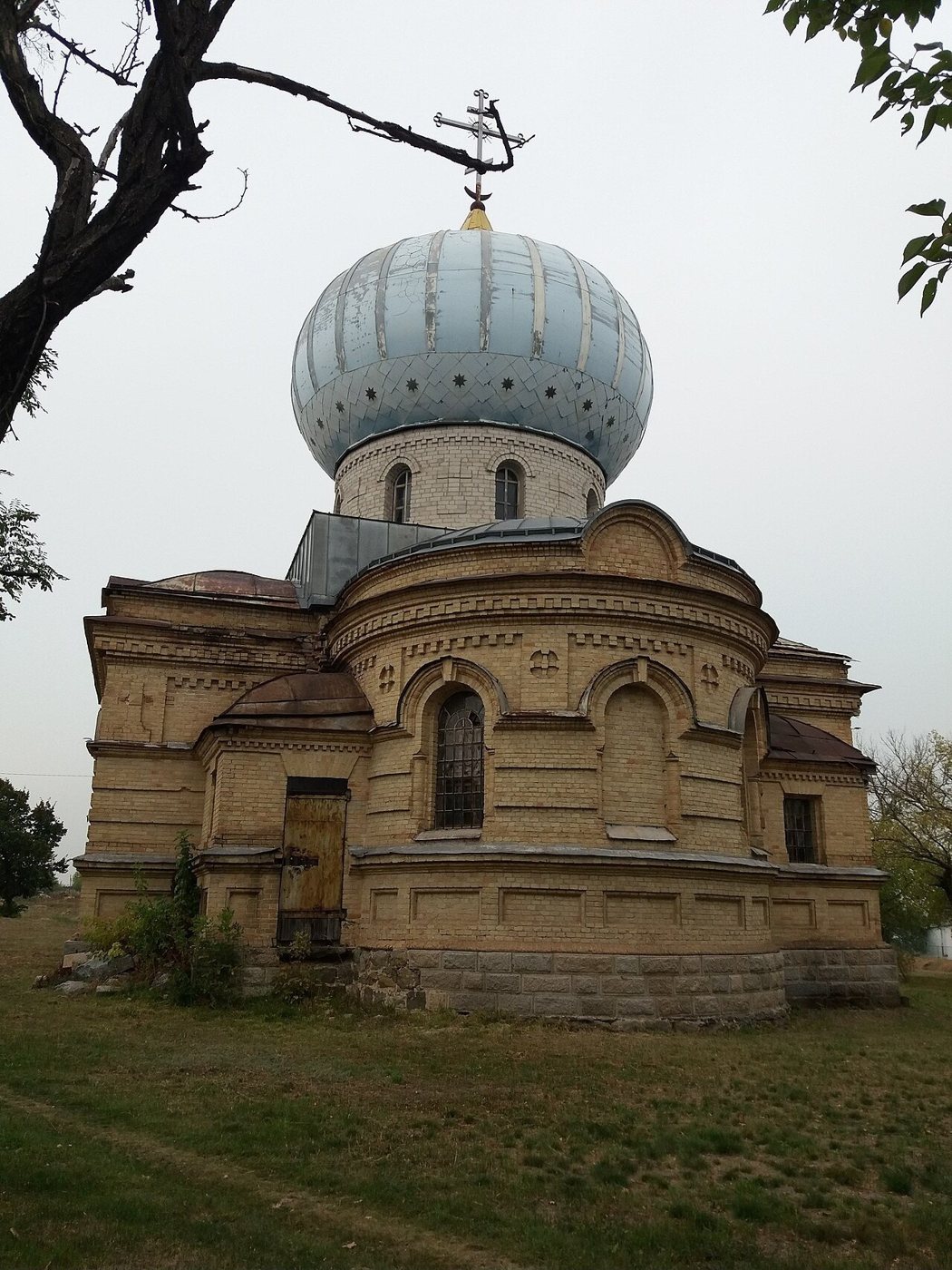
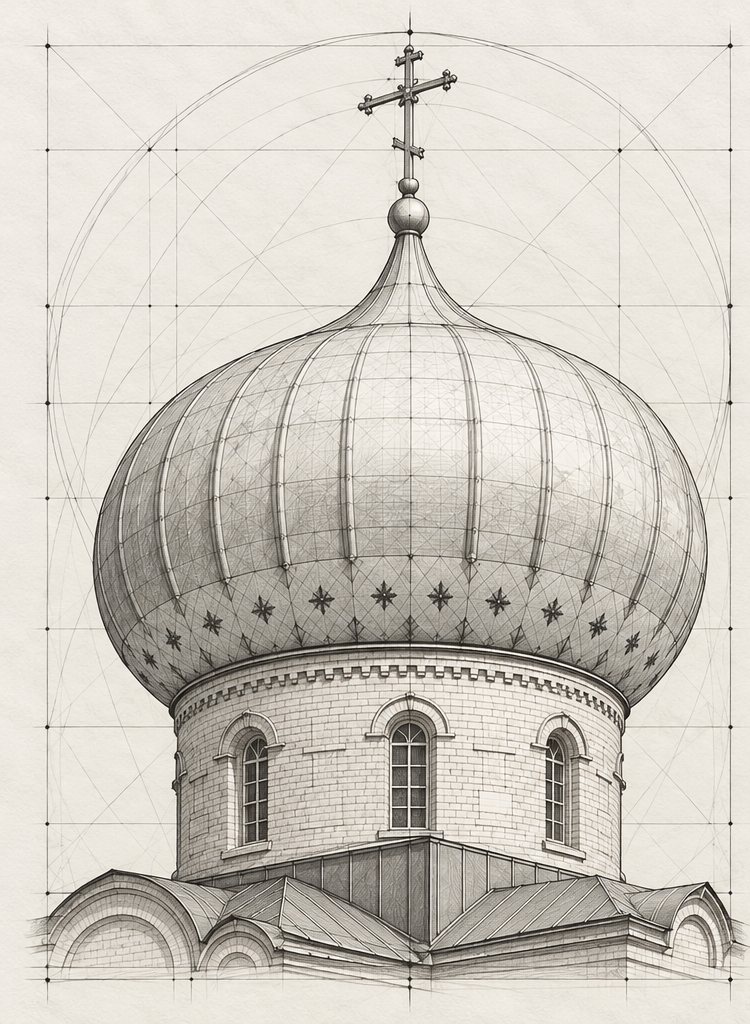
According to ZPRZ.CITY, the present dome is an exact copy of the original and weighs eight tonnes. A story told by the outlet is linked to its installation: on the day the dome was ceremonially raised, a strong wind blew up; the rector read a prayer, the wind died down, the workers finished the job — and only then did the storm rise again.
The bell tower over the entrance
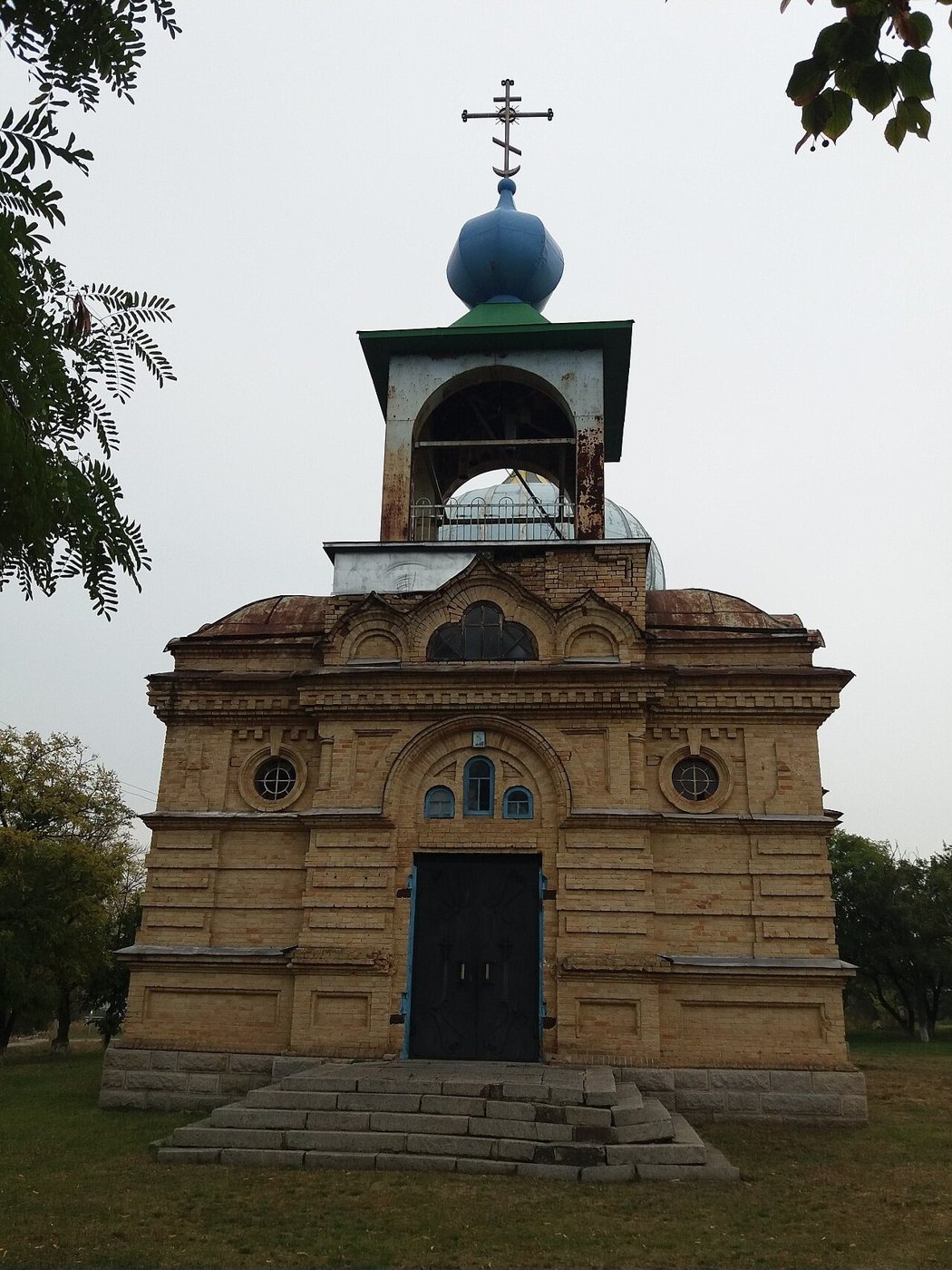
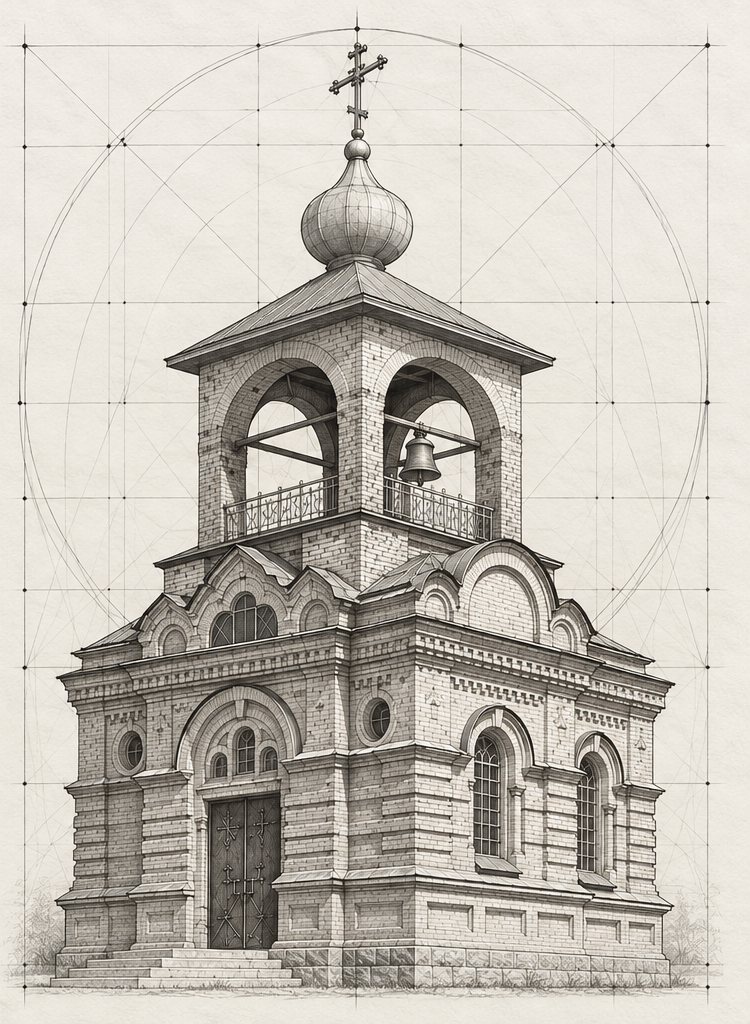
The bell tower is attached to the church rather than standing apart. This composition gathers the church into a single compact volume that reads well from afar — no small thing on the steppe, where landmarks are few. Like the dome, the present bell tower was not restored to its original form.
The paintings
Inside, the scenes of the Last Supper, the Expulsion from Paradise, the Sacrifice of Abraham and the Last Judgement survive. The Last Judgement is placed on the ceiling so that parishioners see it as they leave the church. The researcher Liudmyla Traven stresses that these are not frescoes but oil paintings, since a fresco is painted with water-based paints on wet plaster.
Who painted them is still debated. Tradition names Viktor Vasnetsov, and the composition of the Last Judgement does indeed recall his work of 1896–1904 for the church in Gus-Khrustalny. But according to Traven, Vasnetsov never came to Ternivka; the paintings were made by Volodymyr Sonin, who headed the icon-painting school of the Kyiv Pechersk Lavra in 1906–1910, and Vasnetsov’s works may have served him as models. The paintings have never been repainted, but they need professional restoration.
Stone and material
The church is a masonry building: brick walls stand on a stone plinth. For Ternivka at the beginning of the 20th century, this alone was an event — according to ZPRZ.CITY, the church was one of the first stone buildings in the village. The tiled floor has also survived: the outlet writes that it has been kept in perfect condition.
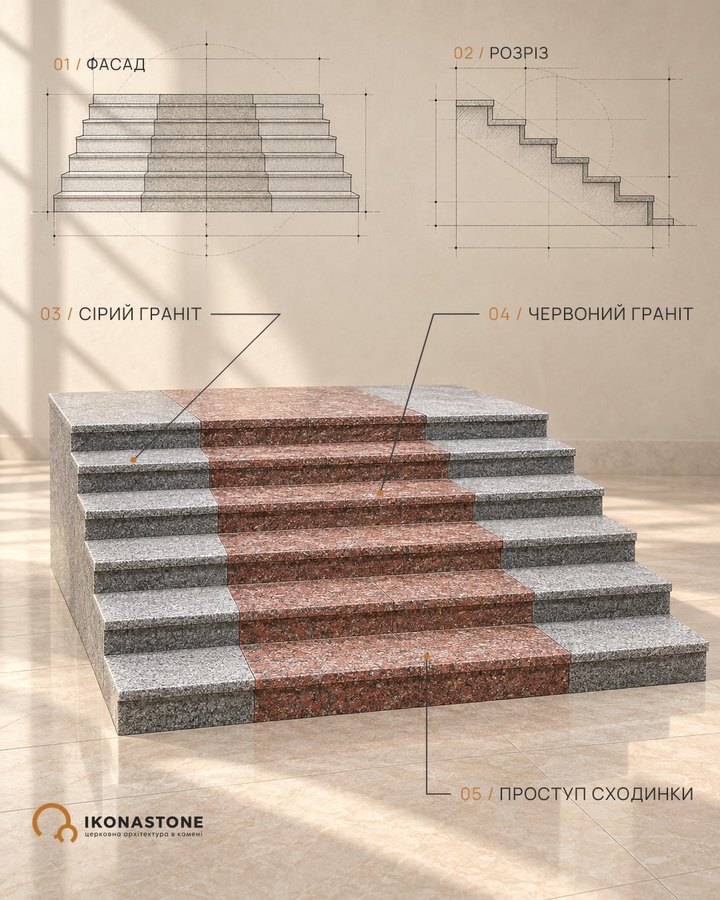
The floor is, in general, the most honest part of a church. Paintings can be plastered over and a dome rebuilt, but a floor takes footsteps, holy water and candle wax for a hundred years and quietly shows whether it was laid properly in the first place. We write separately about how to think about the floor and steps of a church from the very start. Another church of steppe Ukraine in our Guide is the Holy Trinity Cathedral in Samar.
FAQ
Where is St Elijah's Church?
In the village of Ternivka, Zaporizhzhia District, Zaporizhzhia Oblast (Vilniansk District until 2020), at 13 Tsentralna Street.
When was the church built?
In 1904, at the expense of a local landowner. The sources name the benefactor differently: Protopopov or P. Holovachov.
Did Viktor Vasnetsov really paint the interior?
So the local tradition says. The researcher Liudmyla Traven believes that Vasnetsov never came to the village and that the oil paintings were made by Volodymyr Sonin; Vasnetsov's compositions may have served as models.
Is the church in use today?
Yes, according to ZPRZ.CITY (2025), it is an active Orthodox church. The building is entered in the State Register of Immovable Monuments of Ukraine.
Sources
- Town
- Ternivka village, Zaporizhzhia District, Zaporizhzhia Oblast
- Built
- 1904
- Type
- single-altar church, cross-shaped in plan, with an attached bell tower
- Material
- masonry (brick on a stone plinth), oil paintings inside
- Research depth
- 16%