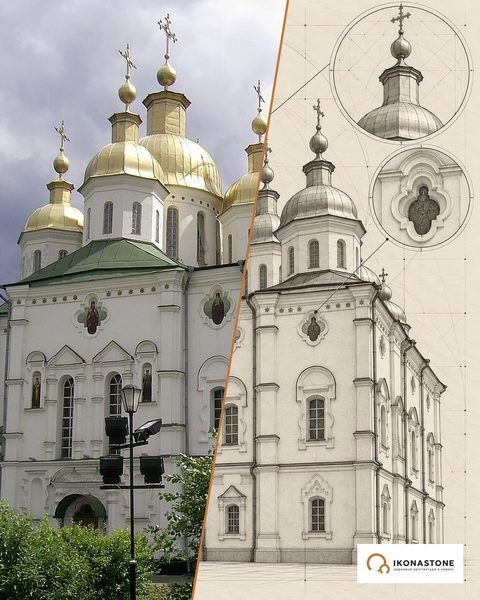
The Holy Trinity Cathedral in Samar: nine domes of wood
This cathedral is built of wood so that the domes grow one from behind another, like tiered flame. The Holy Trinity Cathedral in Samar is the only surviving wooden nine-domed church in Ukraine, and its central dome is most often said to be 65 metres tall (although the height figures in the sources differ).
In brief
| Address | 1 Soborna Square, Samar (Novomoskovsk until 2024), Dnipropetrovsk Oblast |
| Built | 1775–1778 (according to other data, 1772–1781), master builder Yakym Pohribniak |
| Type | wooden nine-domed church, Cossack Baroque |
| Material | wood |
| Status | architectural monument of national importance (No. 040049) |
| Ownership | on 15.10.2025 a court ordered the registration of state ownership of the cathedral and the bell tower |
History
Construction began in 1775, a few days before the destruction of the Zaporozhian Sich, and on 13 May 1778 the cathedral was consecrated (Wikipedia gives the dates 1772–1781). It was built by the folk master builder Yakym Pohribniak — publications call him self-taught. The founders of the church are said to have been Sich Cossacks, in particular Anton Holovatyi. According to legend, it was built without a single nail.
The cathedral was repaired in 1830, and in 1887–1888 it was rebuilt “in the old style” with changes, under the direction of the restorer Oleksii Pakhuchyi; after that a bell tower was built nearby. In Soviet times the church was used as a warehouse. Oles Honchar made it the image of his novel “The Cathedral”.
By the early 2010s the cathedral was in a dangerous state: the wooden foundation had rotted, and three of the nine domes had tilted more than a metre off their axis. Restoration began in August 2012; in 2013 the first three domes were restored, with the iron covering replaced by copper. In 2024 the city of Novomoskovsk was renamed Samar, and in 2025 a court ordered the registration of state ownership of the cathedral and the bell tower.
Architecture
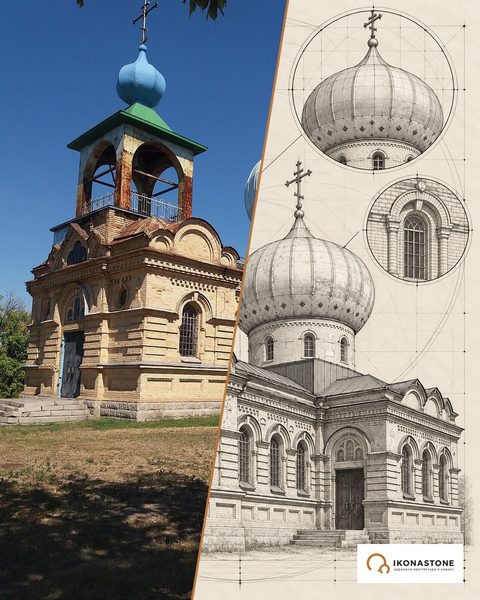
The nine domes are arranged symmetrically: the tallest in the centre, four lower ones to the cardinal points, and four more, the lowest, between them. From wherever you look, you can see eight domes: the ninth always hides behind the others. In this way the wooden building takes on the stepped, pyramidal form we know from Cossack churches, but here carried to its greatest scale.
The drawings show the form, not exact dimensions.
The central dome
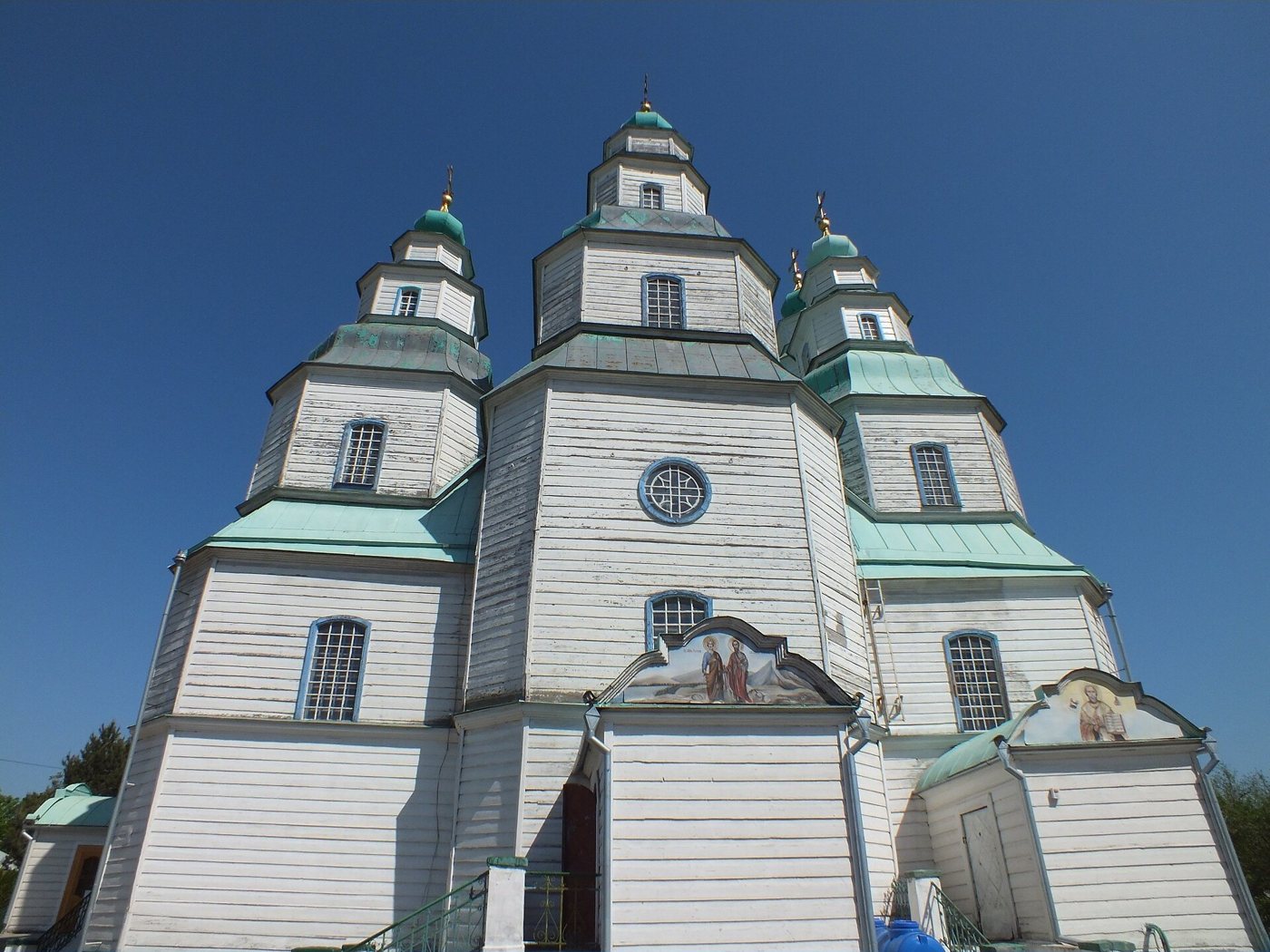
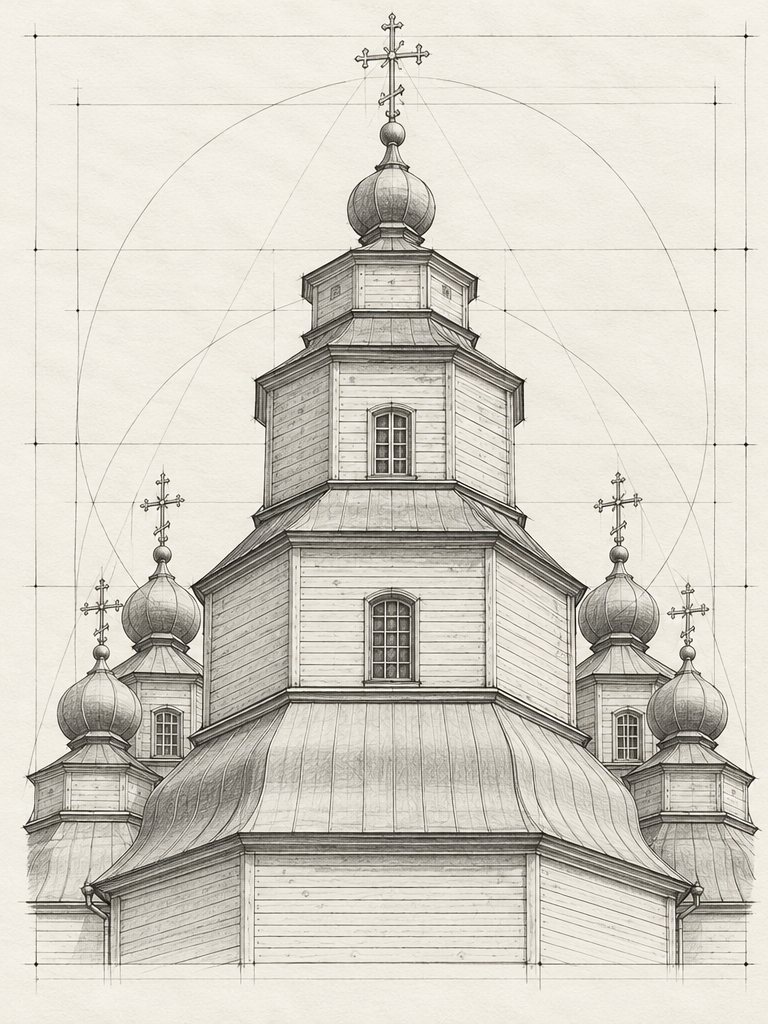
Sources give the height of the central dome differently: Wikipedia and the Judiciary of Ukraine about 65 metres, the guide “Azbuka Palomnika” 35 metres. The cathedral is called the tallest wooden church in Ukraine.
The satellite domes
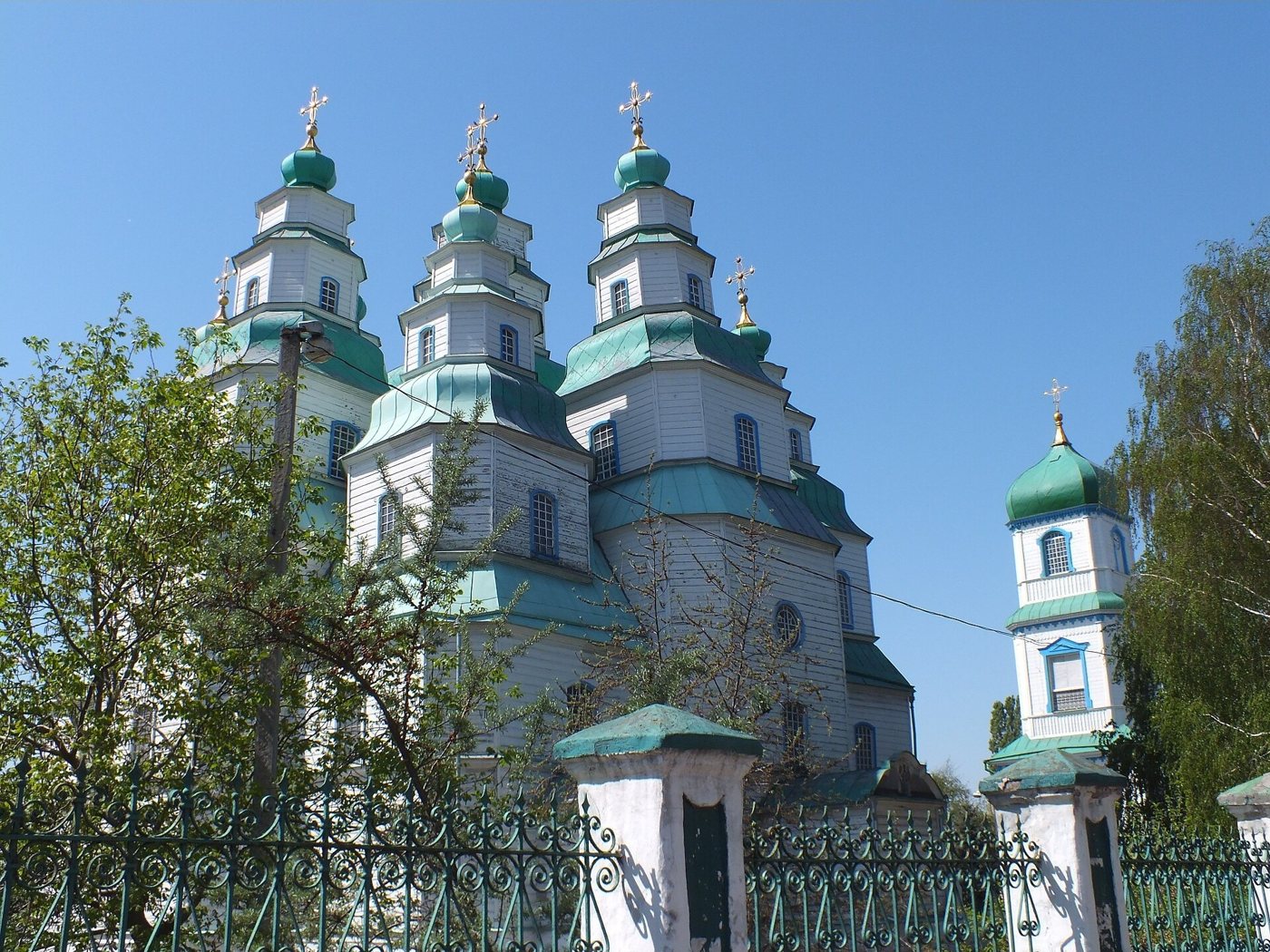
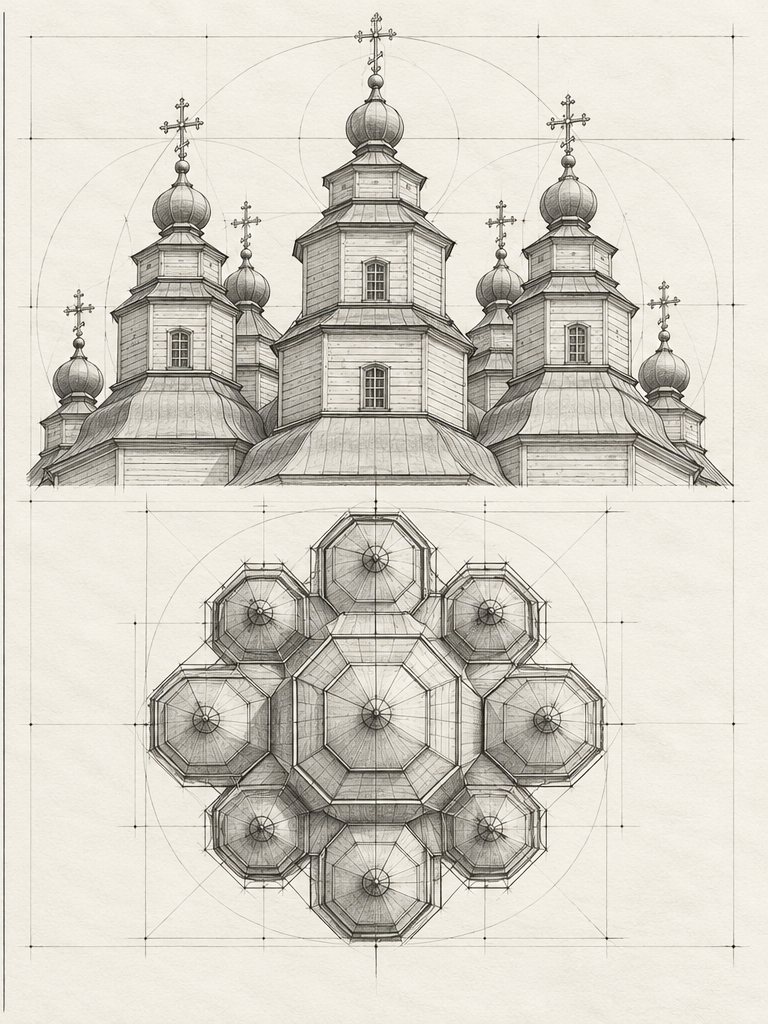
The eight side domes are not repetitions of the main one but its echo on a smaller scale. It was they that suffered most from the settling of the base: three domes tilted more than a metre off their axis.
Three altars
The cathedral has three altars: of the Holy Trinity, of the Apostles Peter and Paul, and of the Three Holy Hierarchs. Three dedications under one roof — three places where the Liturgy is celebrated. What materials an altar table is made of, and why, is explained in the article “What is an altar table made of”.
Stone and material
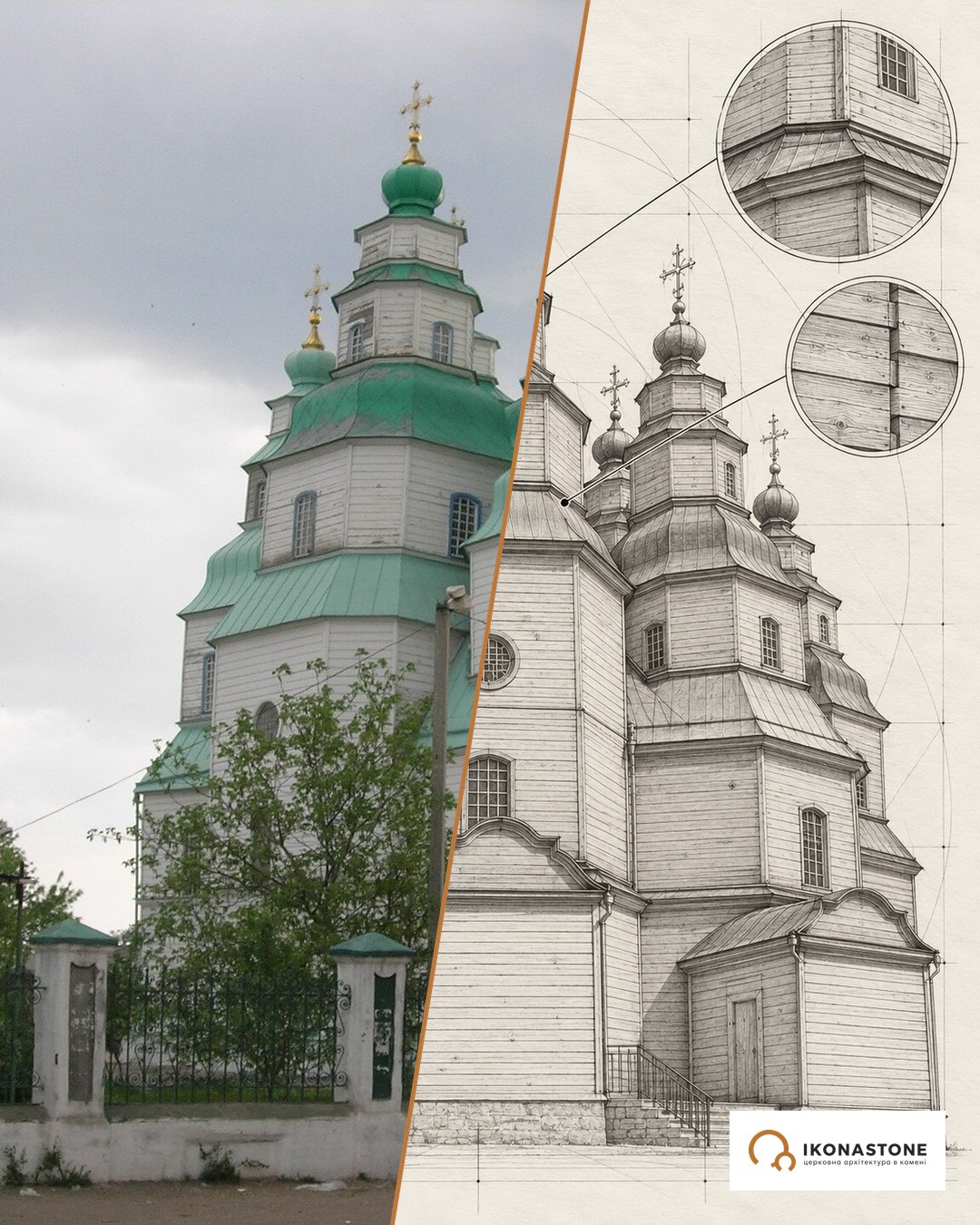
Here stone is, rather, absent. The cathedral is built of wood, and even the foundation was originally wooden. It was the first to give way to time: according to priests in the 2010s, the rotted foundation could no longer hold the structure, and the domes began to lean. The restorers replaced the failing parts of the walls and treated the timber against rot and fungus.
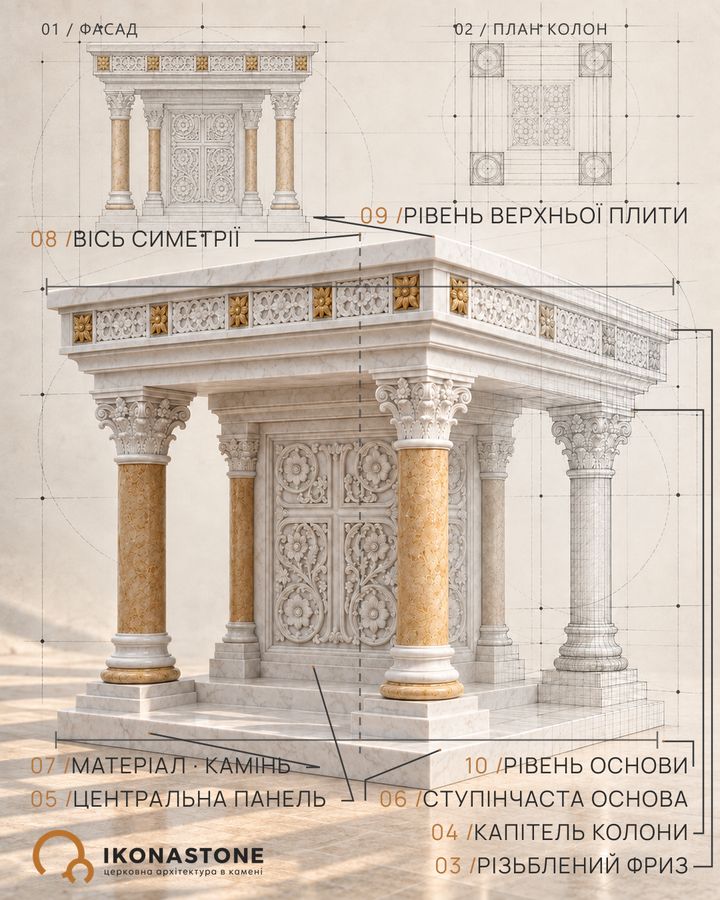
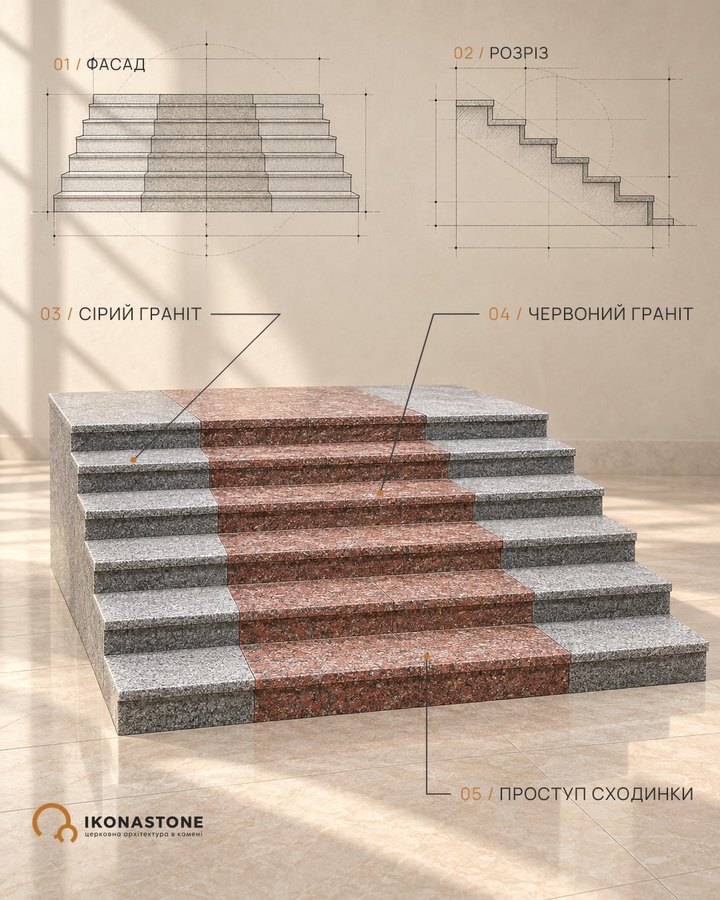
This is perhaps the main lesson for anyone who builds a church: a wall can be of any material, but where it meets the ground, water and people’s feet, a material that does not rot is needed. That is why even beside wooden churches, stone plinths, porches and steps are not a tribute to fashion but an extension of the building’s life. We design stone steps and floors for the specific church.
FAQ
Where is the Holy Trinity Cathedral located?
In the city of Samar, Dnipropetrovsk Oblast, at 1 Soborna Square. Until September 2024 the city was called Novomoskovsk.
When and by whom was the cathedral built?
Construction began in 1775, the cathedral was consecrated on 13 May 1778, and the side altars in 1780 (according to UNIAN and the guide "Azbuka Palomnika"; Wikipedia gives 1772–1781). It was built by the folk master builder Yakym Pohribniak; its founders are said to have been Zaporozhian Cossacks, among them Anton Holovatyi.
Was the cathedral really built without nails?
So the legend says, and it is repeated by journalists and local sources alike. We have no documentary confirmation. According to one description, the log frames of the walls and domes are joined with wooden pegs, while the outer cladding was fixed with iron nails.
Who does the cathedral belong to?
The cathedral and the bell tower are architectural monuments of national importance. On 15 October 2025 a court, on a claim by the prosecutor's office, ordered the registration of state ownership of the cathedral and the bell tower. Wikipedia notes that the church is used by a UOC (MP) community.
Sources
- Wikipedia: Trinity Cathedral, Samar
- Judiciary of Ukraine: the tallest wooden church returned to state ownership
- Radio Svoboda: the cathedral celebrated in Honchar's novel (2010)
- Radio Svoboda: restoration of the Holy Trinity Cathedral (2012)
- Radio Svoboda: three of the nine domes restored (2013)
- UNIAN: the square by the Holy Trinity Cathedral opened in Novomoskovsk (2013)
- Azbuka Palomnika: Holy Trinity Cathedral (Novomoskovsk)
- Fakty: list of renamed settlements (September 2024)
- Town
- Samar (Novomoskovsk until 2024), Dnipropetrovsk Oblast
- Built
- 1775–1778 (according to other data, 1772–1781)
- Type
- wooden, nine-domed
- Material
- wood
- Research depth
- 17%