Wayside crosses and shrines of Volyn: what has survived
In Polissia a wayside cross was almost always made of oak.
The journal Patriyarkhat describes the crosses of Polissia like this: almost without exception wooden, of hewn oak, the most durable wood of Polissia, no less than a metre and a half tall, the tallest being ten metres. The architect Leonid Maslov, who in 1937 described the crosses of north-western Volyn, writes that near the village of Zalisy in the Kovel area three crosses stand in a row across the road at each of the four entrances. Crosses stand in the fields too, and on waterlogged, marshy ground.
The occasions, according to Maslov, varied. In remembrance of cholera and plague. To commemorate the liberation from serfdom. “To the glory of God”, “for the remission of sins”, “for a better harvest”. And by streams and wells, adds Patriyarkhat, a cross was set up in memory of the baptism of the forefathers.
Then came the 1960s. According to the same journal, almost all the wayside crosses of Polissia were then destroyed within a year. At the end of the 1980s, the journal writes, the reverse process began.
It is all the more telling that the cross the publication Volyn.com names as the oldest known is a stone one. It stands near the village of Zymne in Volyn and is dated to the thirteenth century. It is 308 centimetres tall, of which 205 are above ground.
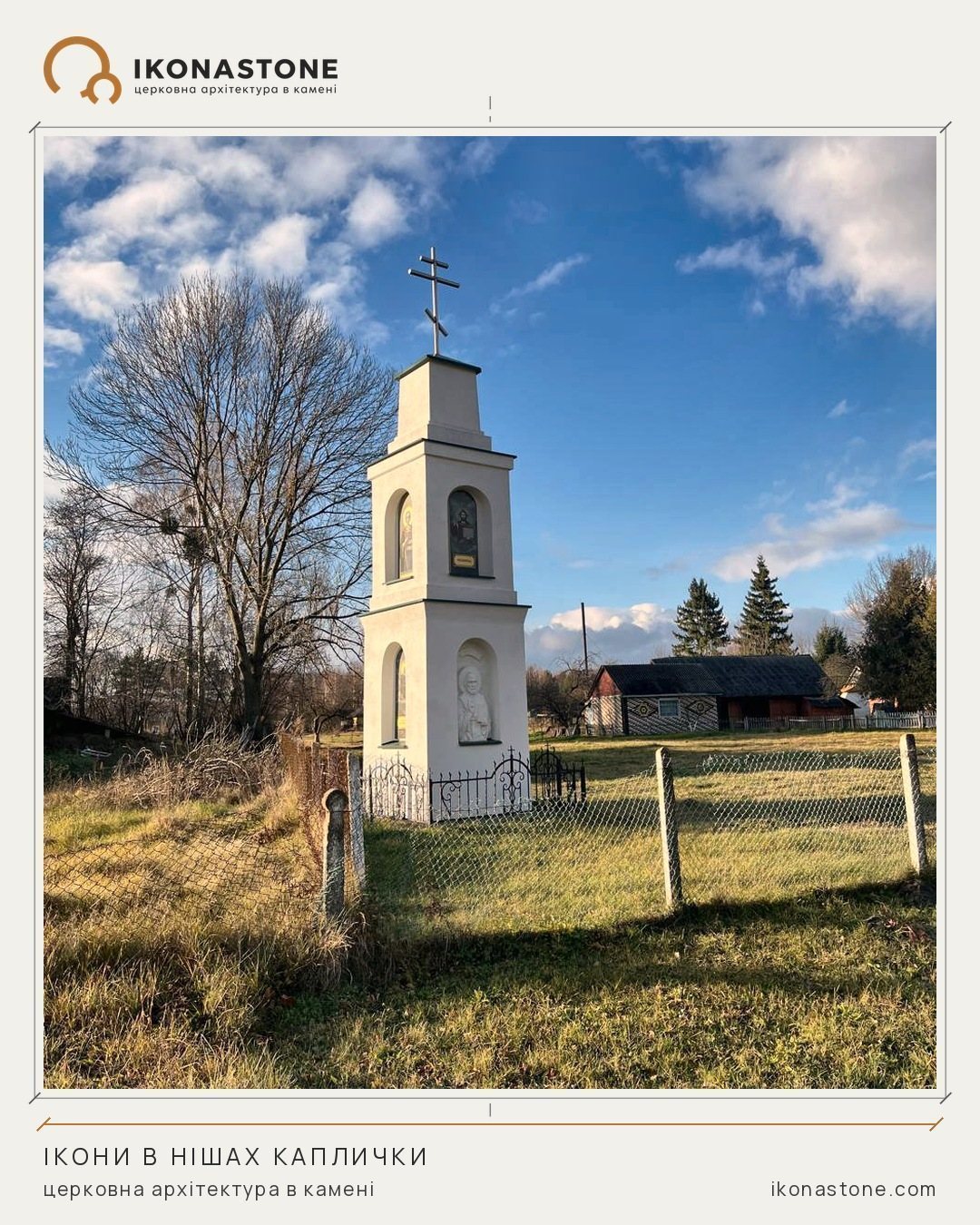
Now to the wayside shrines. Polish literature has a term of its own for them, kapliczka słupowa: a shrine in the form of a wooden, stone or masonry pillar. The pillar may carry a roofed lantern housing the figure of a saint; there are also pillars with niches. We have not yet found a reliable scholarly description of Volyn pillar shrines in particular. So we shall not invent a history for them.
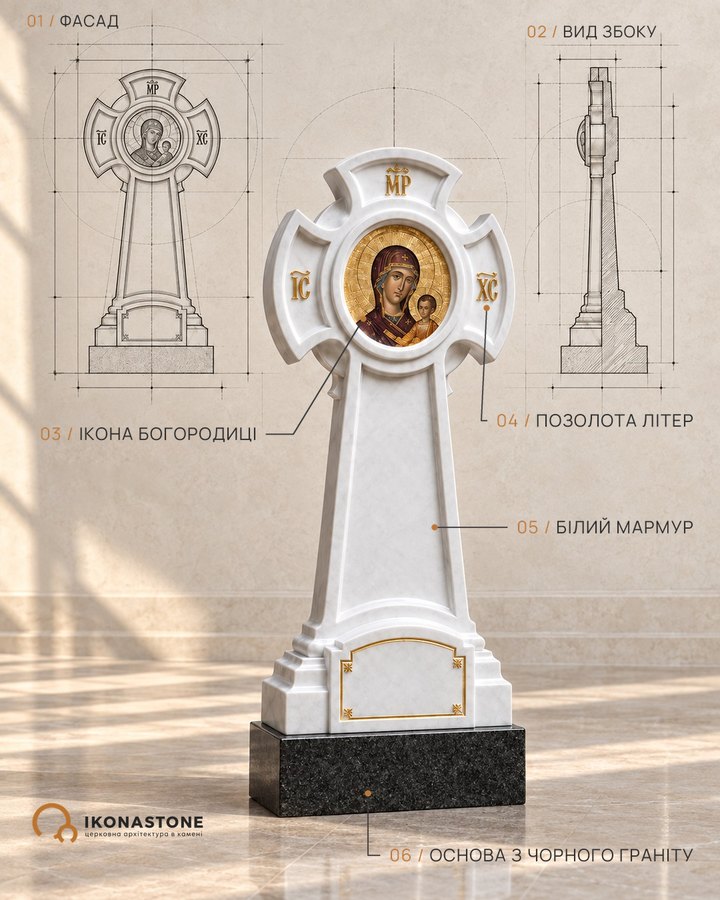
What we do know is what people come to us with: a shrine is being put up or restored, and then entirely practical questions arise. What will be in the niche. What it is made of. Whether it will withstand rain, frost and sun in an open place.
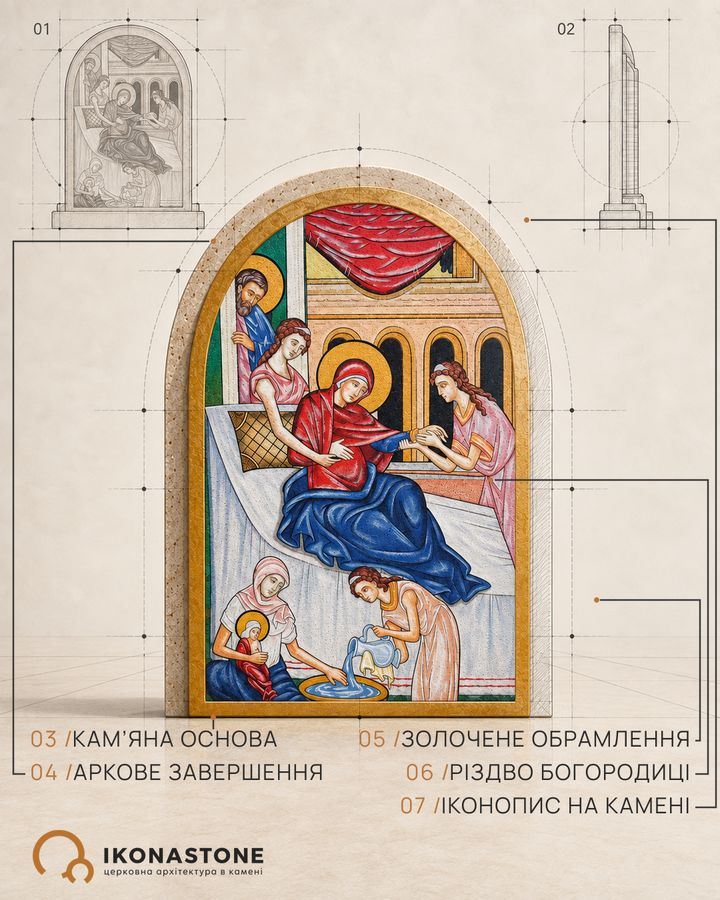
For niches we make icons on stone: the image is engraved with a diamond tool and painted with pigment. The size and the shape, the arch included, we make to fit the existing niche.
A wayside shrine has no watchman. So the material for it is chosen as if there would never be anyone nearby.