Column, capital, frieze: how to read an order
Some details take up a few millimetres on a drawing and decide everything in the actual space. The capital is one of them.
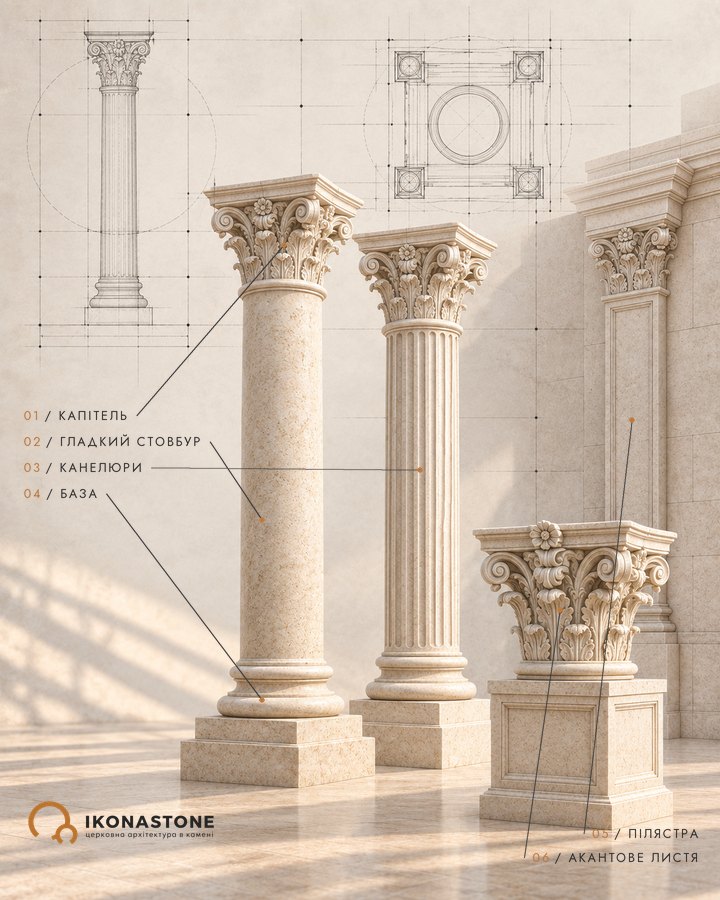
Let us begin with the ABC. An order, as Britannica defines it, is a style of classical architecture recognised by the type of column and entablature. A column consists of a shaft, a base and a capital. The entablature, the horizontal part above the columns, also has three layers, from bottom to top: architrave, frieze, cornice.
There are five principal orders: Doric, Ionic, Corinthian, Tuscan and Composite. The Doric and Ionic took shape in ancient Greece, where the Corinthian capital also appeared; the Tuscan and Composite were added by the Romans.
They are distinguished first of all by the capital. The Doric is the simplest: a square slab, the abacus, rests on a round cushion, the echinus. In the Ionic, two scrolls, the volutes, appear between them. Britannica calls the Corinthian order the most elegant of the five; its capital has two rows of stylised acanthus leaves and four scrolls.
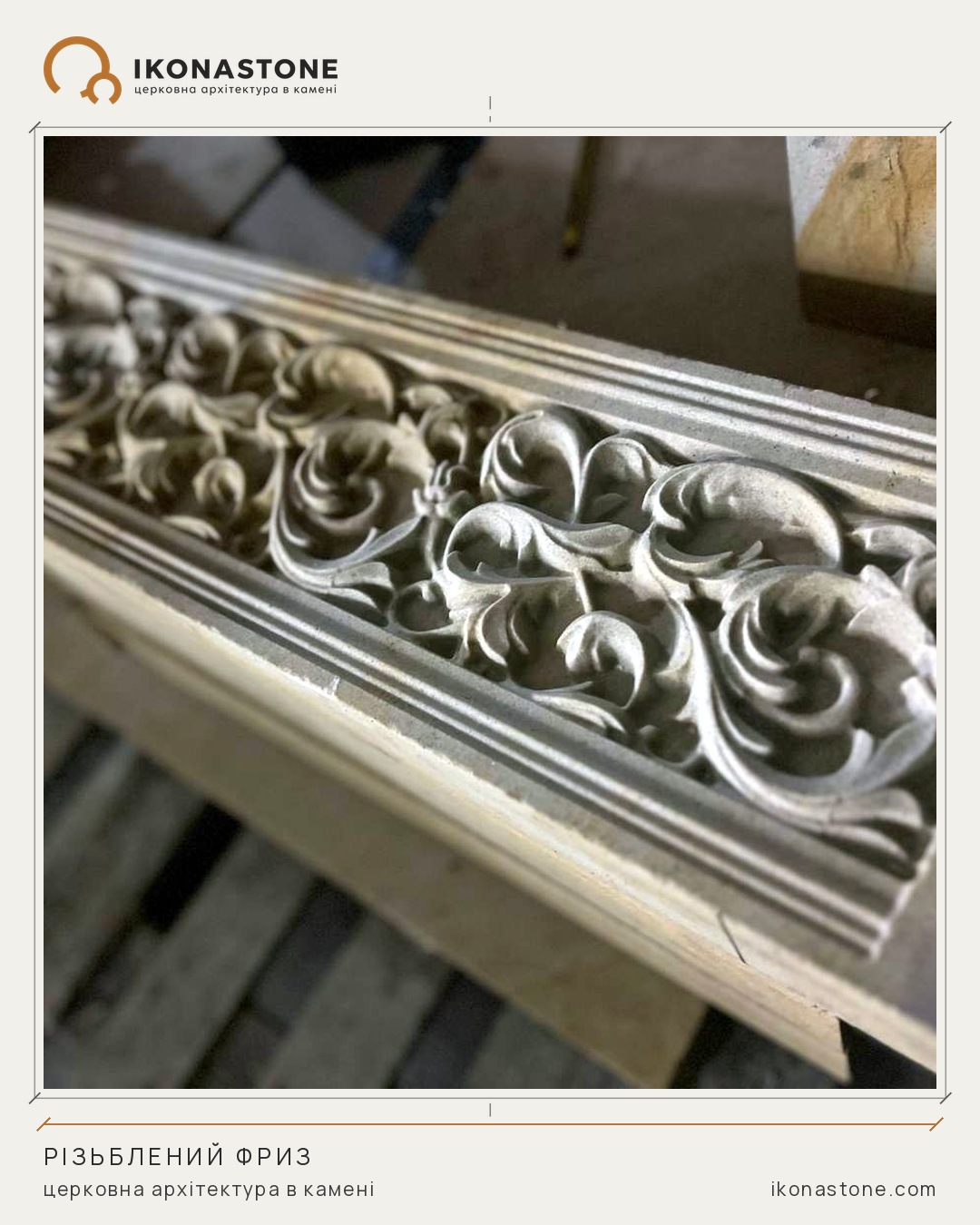
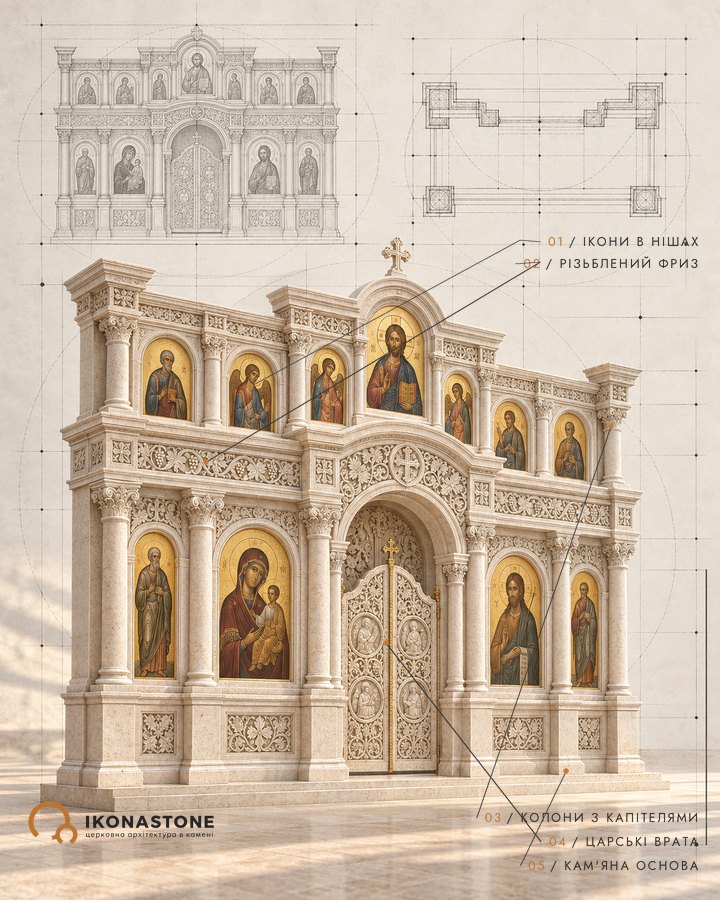
The frieze, too, gives away its family. In the Doric order it consists of triglyphs, projections with three vertical grooves, and metopes, the spaces between them. In the Ionic, Corinthian and Composite it is continuous, and is often covered with a relief of figures.
The most interesting part is how all this is measured. The unit is not the metre but the column itself: the diameter of the shaft at its base. A column may be described as “eight lower diameters high”. The Tuscan has seven, the Corinthian and Composite ten each. And in the canon drawn up by Renaissance architects, all the dimensions are derived from the diameter: change it and everything shifts, from base to cornice. That is why an order cannot be “stretched a little”.
There is one more subtlety, which a stonemason feels in the hands. The shaft of a column is not straight: it is given a barely perceptible swelling, the entasis. The explanation in the same encyclopaedia: this corrects the optical illusion by which an evenly tapering column would look concave or weak.
After antiquity this ABC was treated more freely. In the basilica of Santa Maria delle Grazie in Grado (sixth century), about which we wrote earlier, the ten nave columns are all different: they were probably taken from older buildings. The church stands. And Romanesque capitals, several centuries later, are already inhabited by fantastic beasts, birds and figures.
Why should a rector or a donor know this? So that the conversation with the craftsman is shorter. “Pilasters with Corinthian capitals and a carved frieze” is already almost a brief. “Something nice with columns” is not yet.
If you are thinking about columns, pilasters or capitals for a church, begin with two things: the height of the interior and what already stands in it. An order that argues with the existing architecture always loses. Even if it is carved flawlessly.