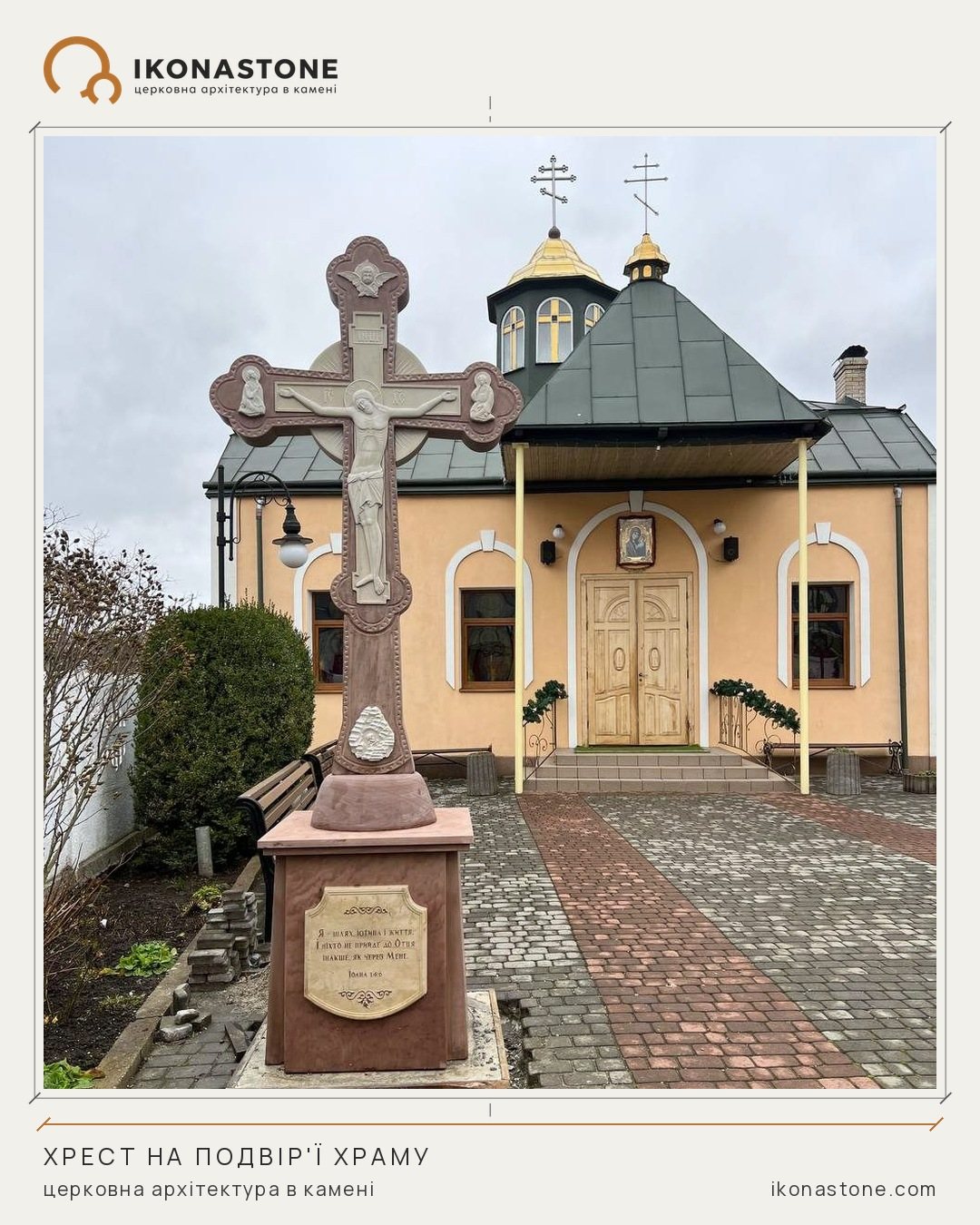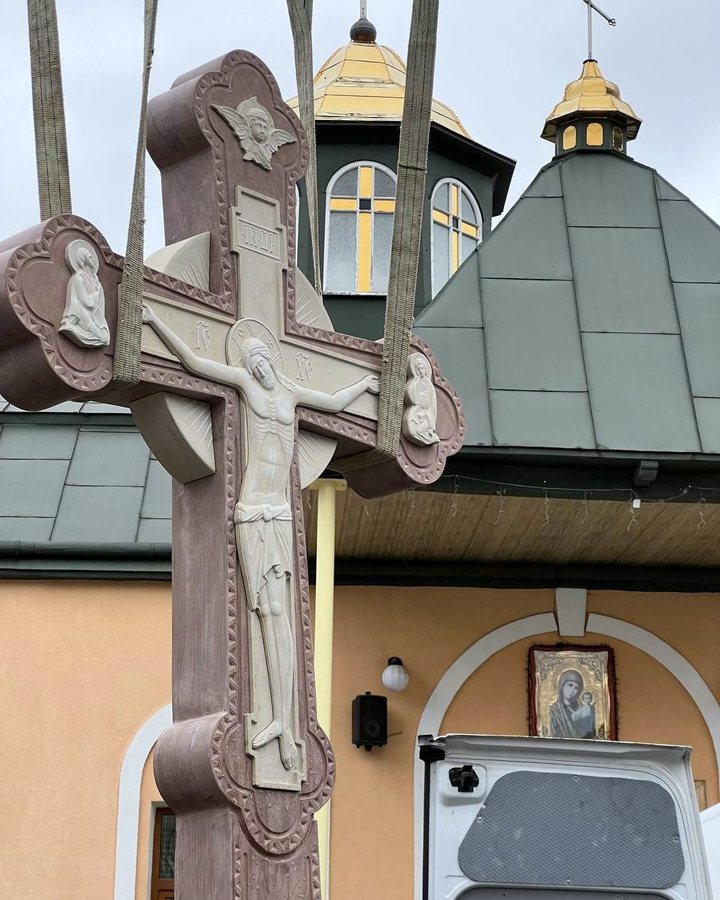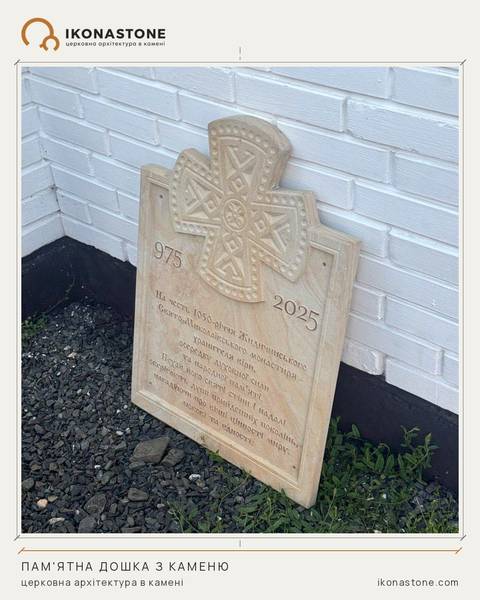
Wayside cross: where it stands and what to decide before the stone
A cross by the road is seen by everyone who drives past it. Few look closely. And yet it is the first to announce that beyond the bend lies a village where people pray.
On where such crosses were set up, the Encyclopedia of Modern Ukraine is brief: wayside and veneration crosses were erected at the entrances to a town or village and by forest roads. At the beginning of the twentieth century, in Podillia alone, there were about 4,500 wayside and homestead crosses and “figures”.
North-western Volyn was described in 1937 by the architect Leonid Maslov. Near the village of Zalisy in the Kovel area, he writes, three crosses stand across the roads at each of the four entrances. Crosses stand both by the road and in the peasants’ fields. They were set up in remembrance of an epidemic of cholera or plague, to commemorate the liberation from serfdom, “to the glory of God”.
There is also an occasion that looks forward: a cross on the site of a future church. It is blessed on a plot where there is not yet a church. This is done both in the Orthodox Church of Ukraine and in the Ukrainian Greek Catholic Church.
Now to the material. In Polissia, according to a description in the journal Patriyarkhat, wayside crosses are almost without exception wooden, of hewn oak, from one and a half to ten metres tall. And in Busha in the Vinnytsia region, according to the same encyclopedia, nineteenth-century crosses of local sandstone survive in the old cemetery. What divides wood from stone here is not faith but geology.
And an honest word about the canon. We have not found any one table of proportions for a wayside cross that could be cited. The form of the cross varies too. Which form to choose and which inscriptions to put on the stone is not ours to decide. That is a matter for the community and its rector.
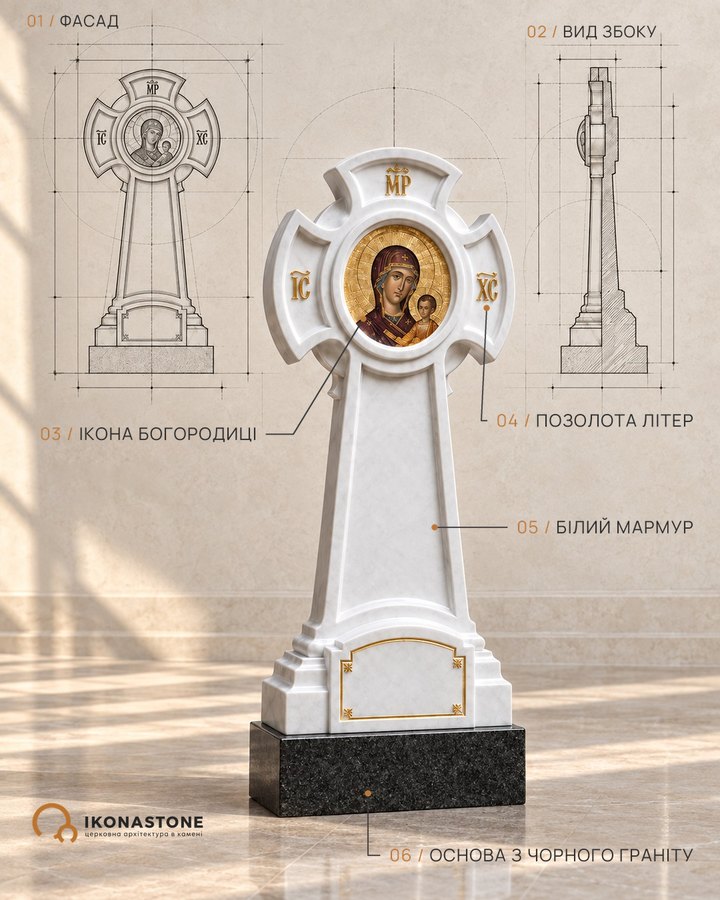
Our part begins after that decision, and it is prosaic. Where the cross will stand and from what distance it is seen. What is beneath it: soil, a slab or a slope. Which stone goes at the bottom. For the base we use granite: it is denser and draws almost no moisture from the ground. White marble we keep for what stands above.
All of this is settled on the drawing. A stone cross set up by the road cannot easily be moved afterwards.