Iconostasis: wood, metal or stone
A priest looking for a new iconostasis usually pictures wood. Carved, gilded, familiar since childhood: it is the main tradition of our churches, and there are good reasons for that. But the iconostasis was not always made of wood.
What an iconostasis is
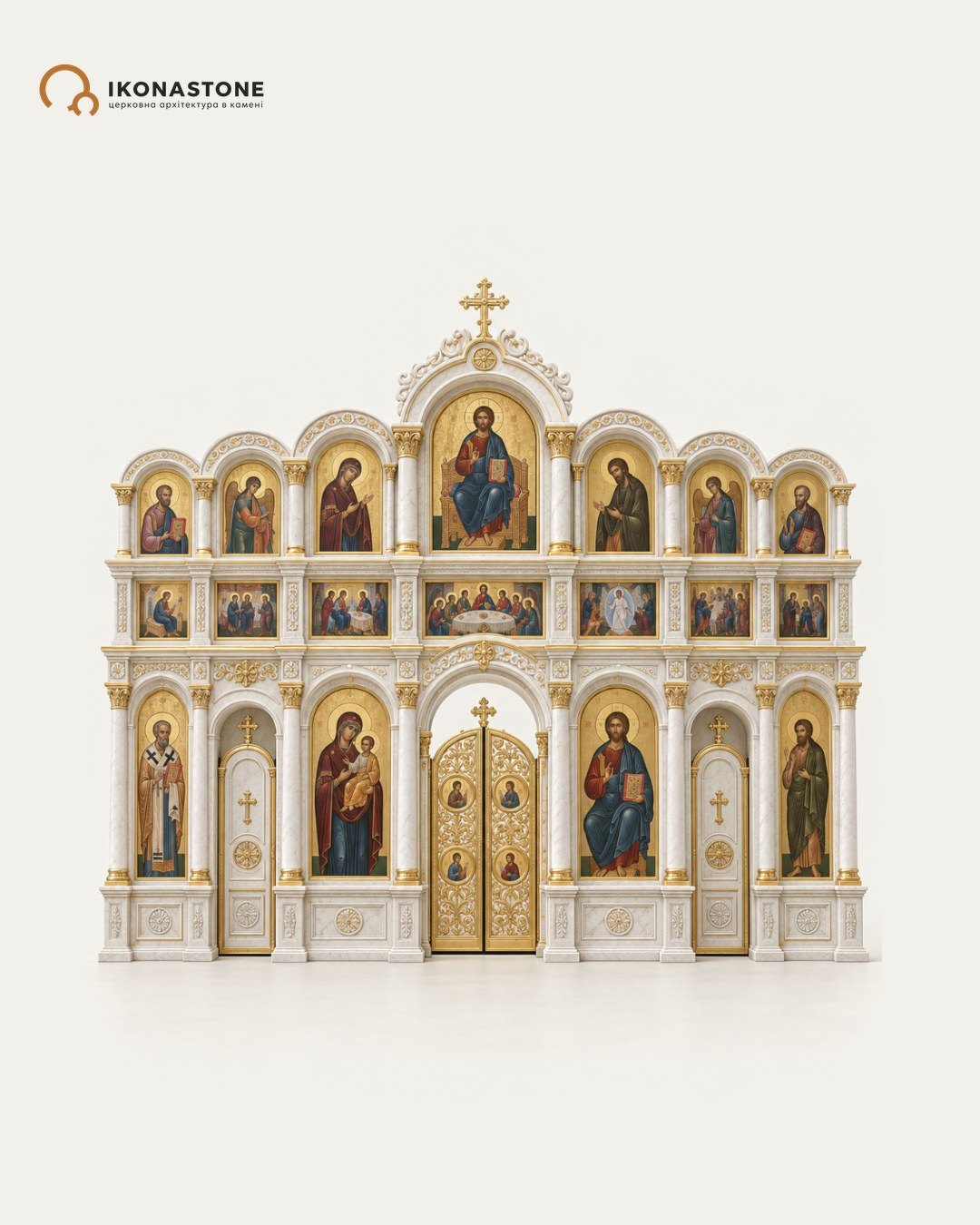
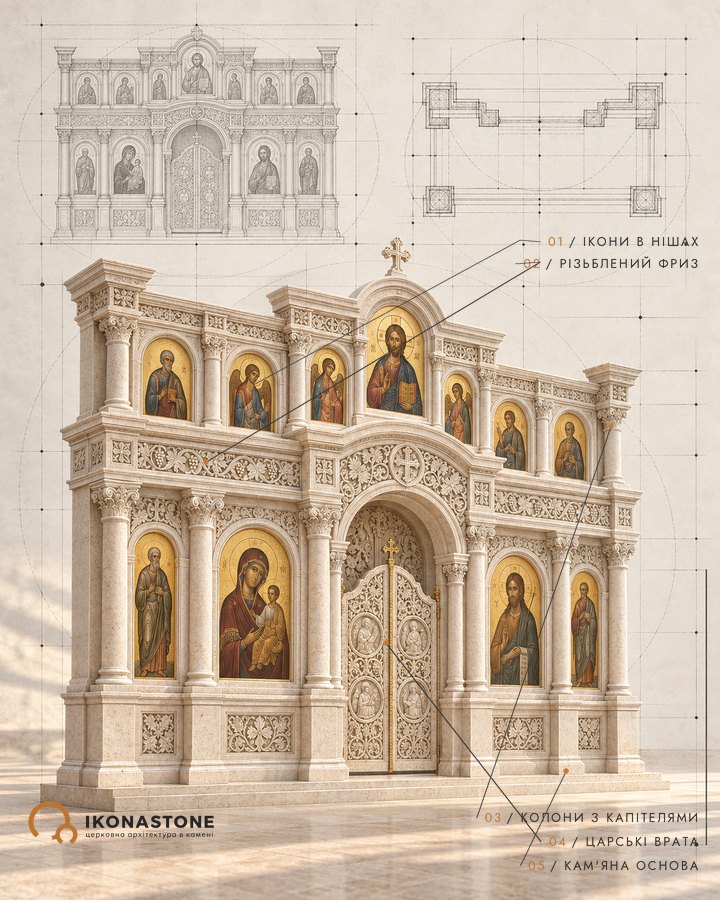
An iconostasis is a screen of icons between the sanctuary and the rest of the church. A classic tall iconostasis has five tiers: local, Deesis, feasts, prophets and patriarchs, with the Royal Doors in the centre. In Rus’, solid multi-tier iconostases took shape in the late 14th and the 15th century.
First there was stone
The forerunner of the iconostasis is the Byzantine chancel barrier, the templon. It was built of marble columns and slabs, with an architrave laid across the columns. One of the earliest barriers known to archaeologists is in the basilica of the Stoudios Monastery in Constantinople, from around 463. In Hagia Sophia, according to the description by Paul the Silentiary in 563, the barrier was formed by twelve marble columns sheathed in silver.
Painted icons on the architrave and between the columns appear later, and carved wooden templons later still, after the 13th century. Of the early barriers, mostly stone ones have survived: wooden ones decayed, and silver ones were looted and cut apart, as the crusaders did in Hagia Sophia in 1204. Stone proved to be the most enduring witness.
Does the canon prescribe a material
We have found no church rules that require a particular material for an iconostasis. Iconostases are made of wood, stone and metal; historically there have even been porcelain ones, as in St Vladimir’s Church in Mariánské Lázně in the Czech Republic. So the choice of material is not a question of canon but a question of the church itself: its climate, structure, concept and budget. The design of the iconostasis itself, as before, is agreed with the parish priest and made with the blessing of the ruling bishop.
What to compare
| Material | What it offers | What to consider |
|---|---|---|
| Wood | Warm, light, traditional carving, familiar gilding | Sensitive to swings in humidity: when the church is heated in winter, humidity drops, and the wood and gilding develop cracks, flaking and blistering. It burns |
| Metal | Fine, openwork patterns; the old tradition of silver barriers | Historically, metal barriers have hardly survived; looks cold unless combined with other materials |
| Stone | Does not burn or dry out, barely affected by changes in humidity; marble and granite hold their shape for centuries | Heavy: marble and granite weigh about 2.7–2.9 tonnes per cubic metre, so the floor and foundation under the iconostasis should be assessed by a structural engineer. Requires precise drawings and installation |
Stone today
Marble iconostases are not only a Byzantine antiquity. In Greece they spread from the end of the 16th century; in Kyiv, St Volodymyr’s Cathedral has an iconostasis of multicoloured marble; in Belgrade, St Mark’s Church received a marble iconostasis in the early 1990s.
Most often stone is combined with other materials: a stone framework of columns, cornices and niches, with icons painted on wood panels. This way the iconostasis gains the durability of stone, while the icons remain what they have always been.
If your church is choosing an iconostasis, compare the options before the sketch: we design stone iconostases for a specific sanctuary wall.
Wood and stone are not rivals. What matters is only that the material suits the church, not the catalogue.