Grado: a sixth-century basilica where every column is different
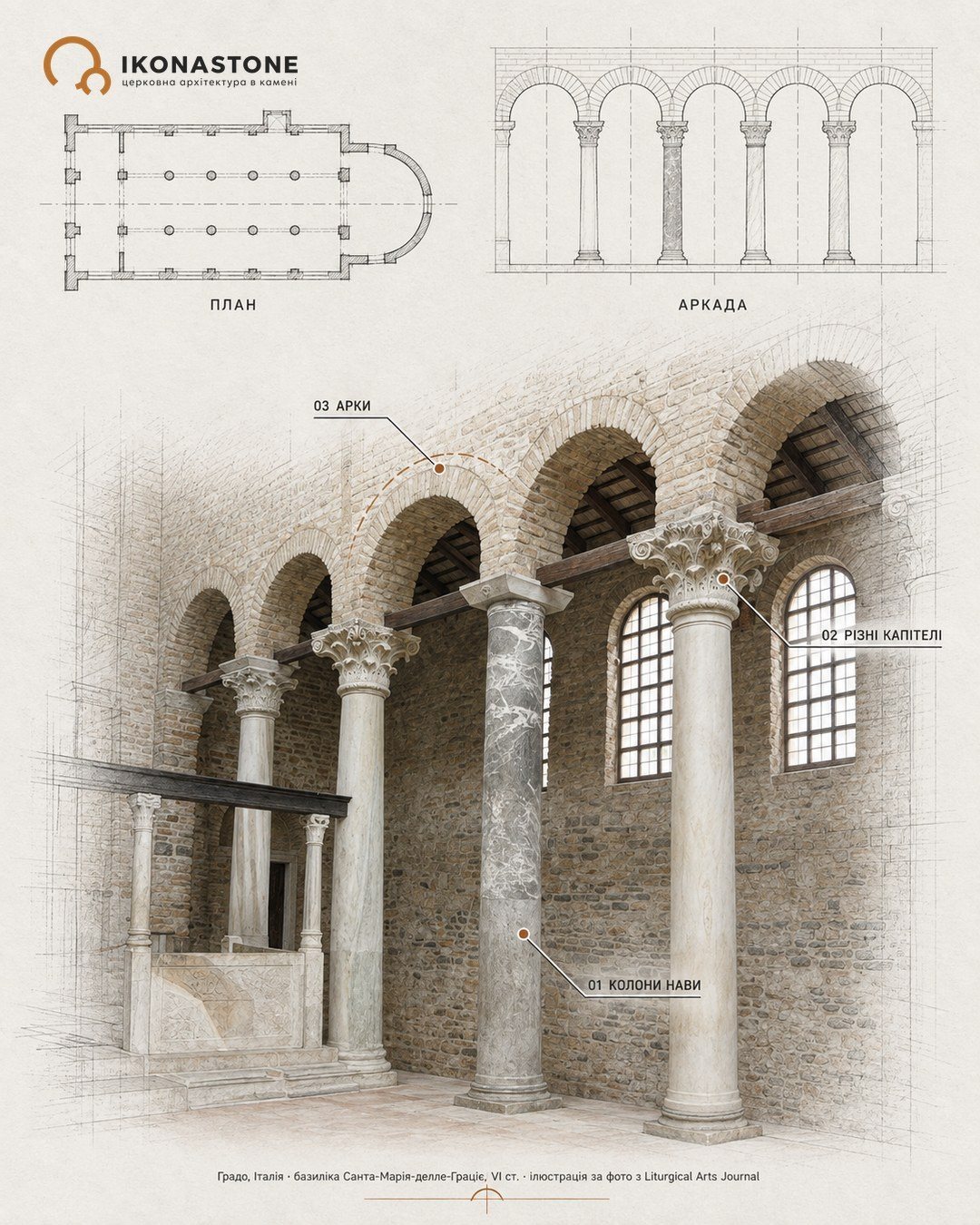
The nave of this basilica has ten columns, five on each side. Each is in a different style.
In a new project this would be called a mistake. Here it is a biography. The different columns, as the Liturgical Arts Journal suggests, are spolia: they were taken from older buildings and set up a second time.
The basilica of Santa Maria delle Grazie stands in Grado, in north-eastern Italy. It was built in the sixth century, commissioned by Elias, Patriarch of Aquileia, on the foundations of a still older church. The journal calls it one of the oldest buildings of Christian worship on the northern Adriatic coast.
The most interesting things here are made of stone. The altar stands on an opus sectile floor, made up of stone pieces cut to shape; it covers the whole presbytery. Both the altar and the floor are said to have been kept from a fifth-century basilica. Behind the altar, in the curve of the apse, is the synthronon, the bench for the clergy.
The presbytery is separated from the nave by a sixth-century balustrade. On its slabs one sees Greek crosses, pairs of doves and a kantharos, a large drinking cup. On the second slab are a Latin cross, another pair of doves and peacocks, a sign of resurrection and eternal life.
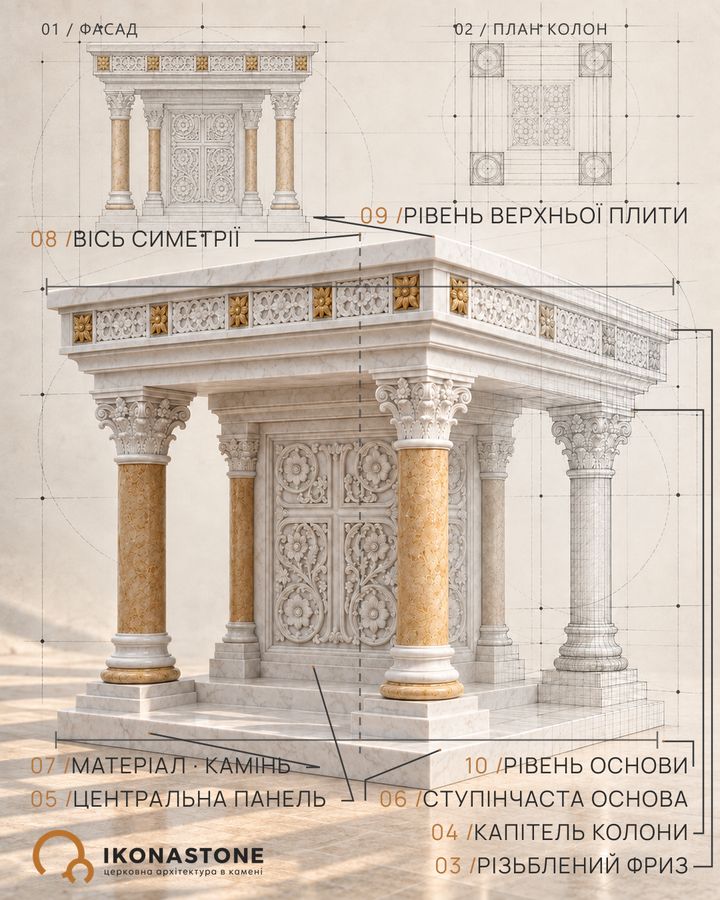
In the side aisles lie fifth-century mosaics, about a metre below the floor of the nave: this indicates the original level of the earlier basilica. There was also a canopy over the altar, a ciborium (ciborium magnum). It has not survived; its remains are displayed along the wall. In 1924 the basilica was restored and some of the additions of later centuries were removed.
What the workshop sees here. The balustrade is fifteen hundred years old and still separates the presbytery from the nave. And the columns, if they really are spolia, had already served in older buildings and were put to work here a second time. We know of no quieter argument in favour of stone.
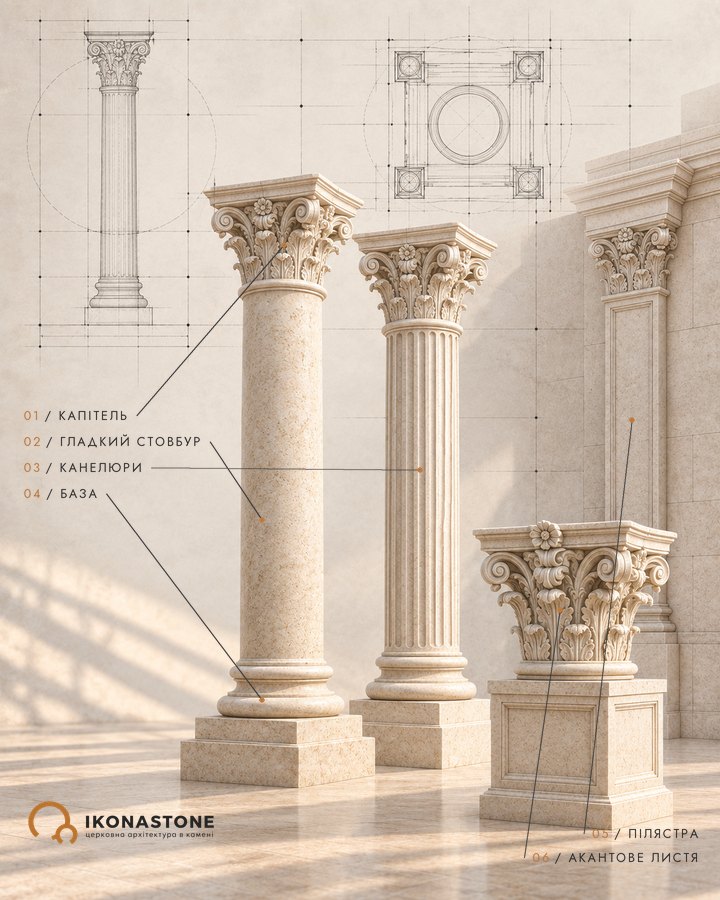
And one more thing. Ten different columns stand in one nave. Unity in a church rests on proportion and rhythm, not on identical details. This is worth remembering when columns, pilasters and capitals appear in a project.