Granite, marble or limestone: what withstands the Ukrainian climate
Stone has one awkward trait: it remembers mistakes well. Especially those made in winter.
For stone, the Ukrainian climate is not about heat or cold. It is about water that thaws by day and freezes by night. Water in the pores of stone expands by roughly nine per cent as it freezes. Stone will not notice one such cycle. It will notice many, every winter.
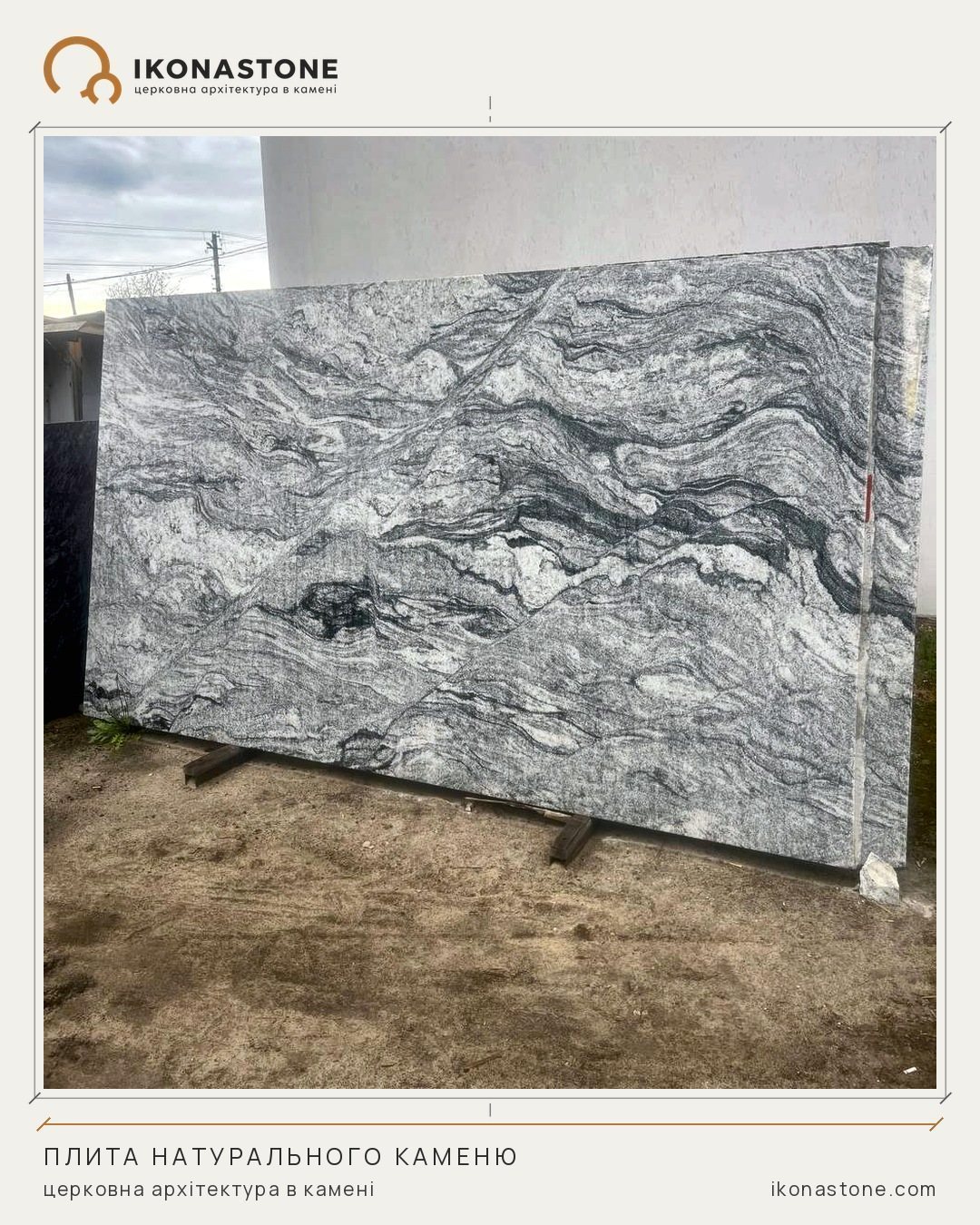
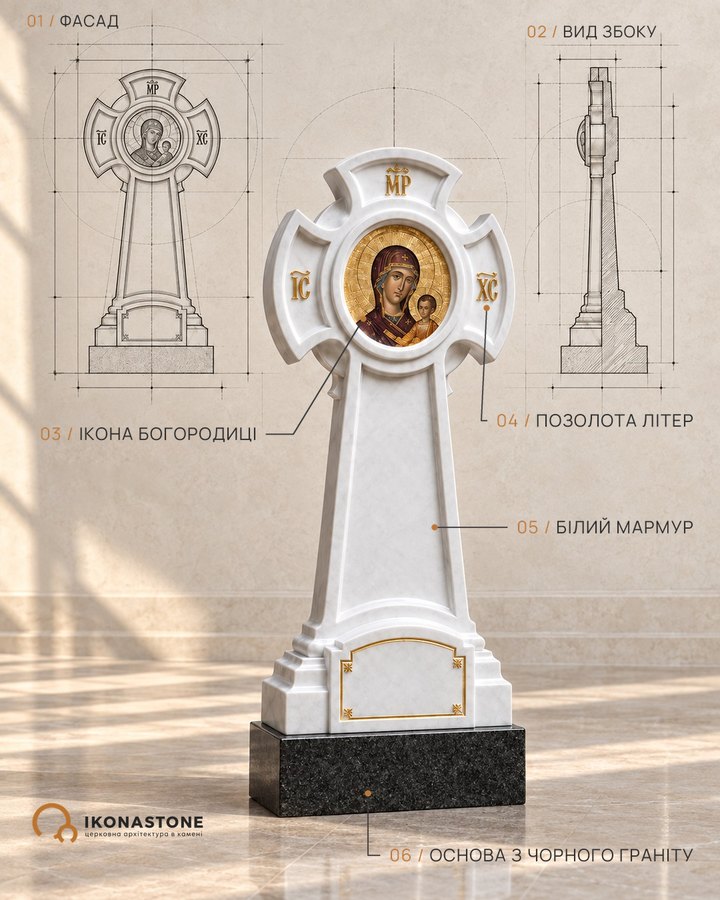
Granite is a dense igneous rock with very low water absorption. That is why granite is set where stone meets the ground and moisture: bases, plinths, steps. It is hard to carve in fine detail, but it is highly resistant to frost and moisture.
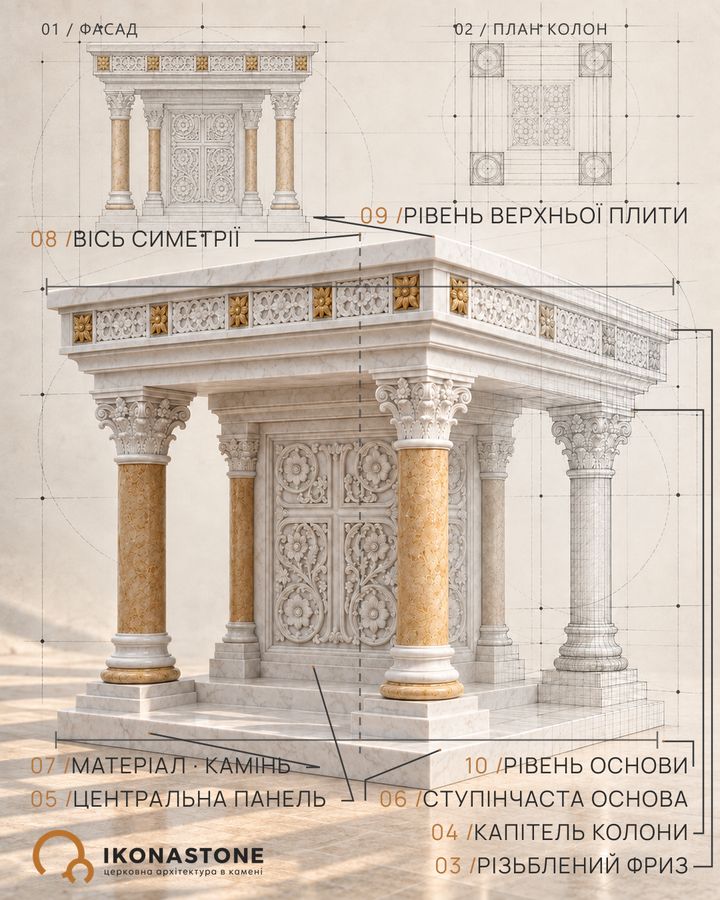
Marble is a metamorphic rock consisting mostly of calcite, more rarely of dolomite. In a church it gives depth of colour, light within the slab and a soft polish. Outdoors, calcite slowly dissolves in acid rain, and a polished surface grows matt over the years. So marble is chiefly for interiors or for sheltered details.
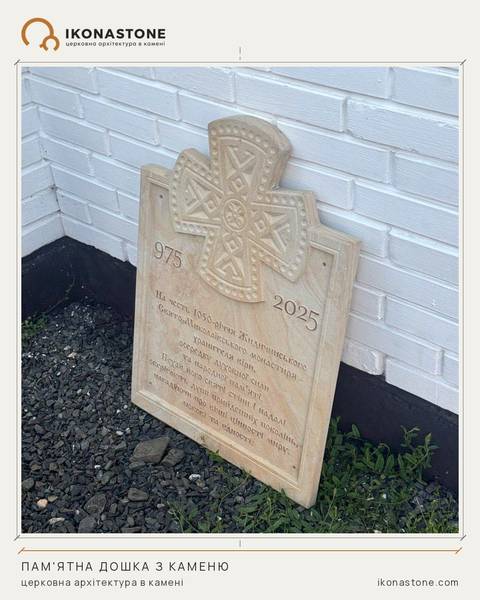
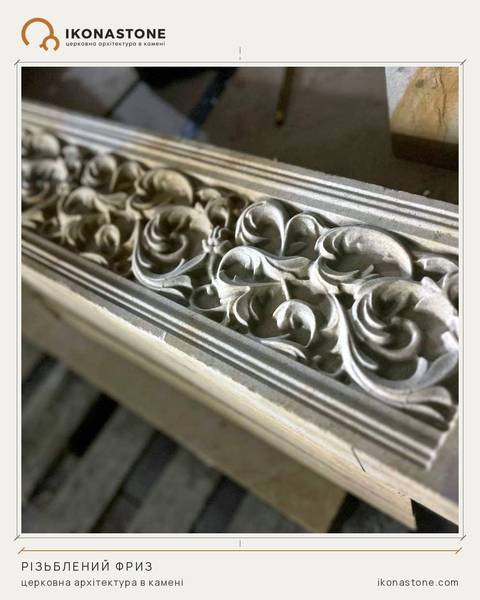
Limestone is a sedimentary rock, and the difference between its varieties is enormous: from dense stone that does well on a façade to soft, porous stone that is better kept under a roof. Dense, fine-grained limestone carves easily and takes fine detail, which is why sculptors like it. But outdoors only the dense varieties hold carving for long: soft and porous ones lose fine relief over the years. For outdoor use limestone is chosen carefully, and thought is given to where water will run off its horizontal surfaces.
Hence a simple rule that practice suggests: granite below, near the ground; marble and limestone where they are seen at closer range and where water does not stand.
If the piece will be outdoors, tell us where it will stand and we will suggest which stone will last longer there.